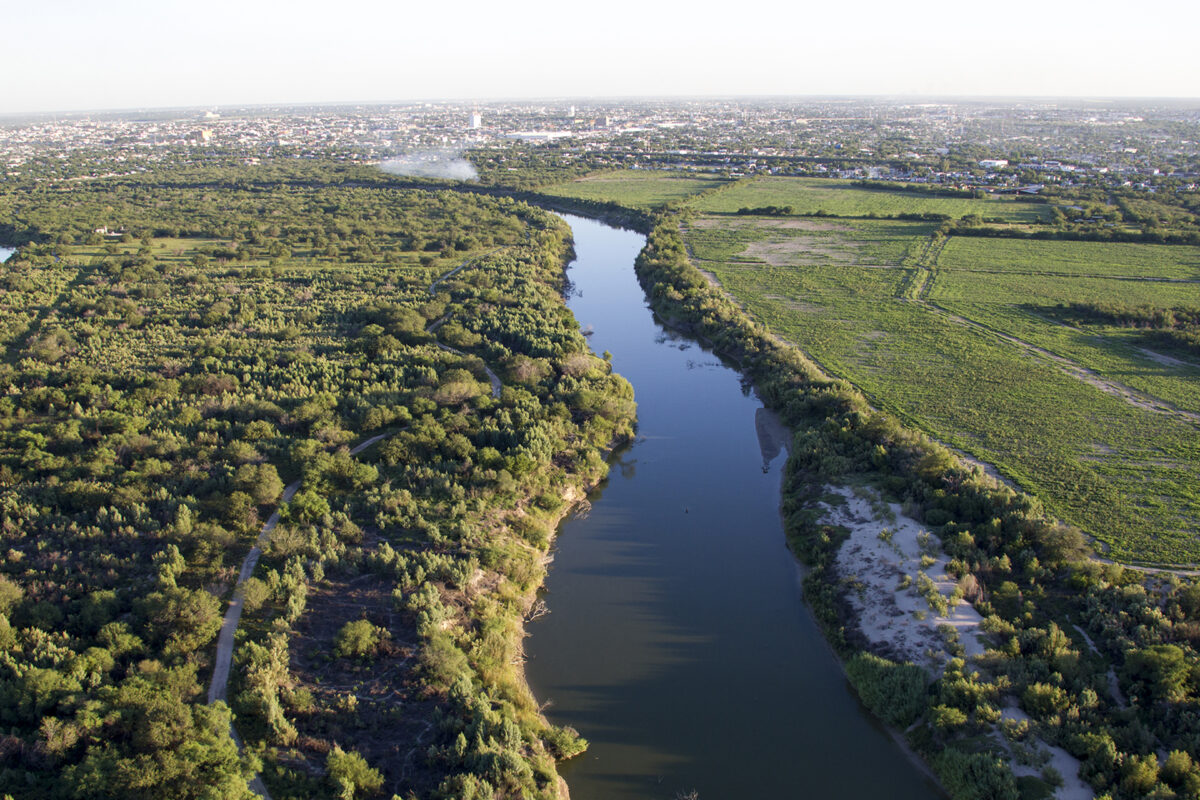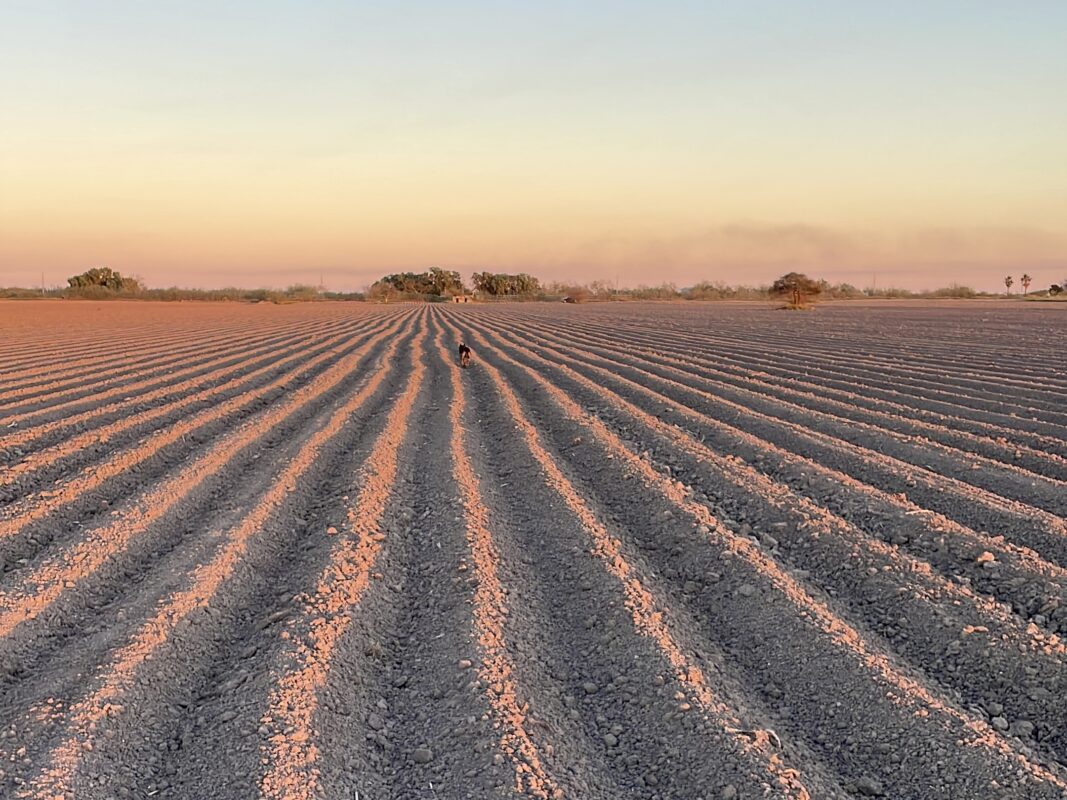
MATAMOROS, Tamaulipas — Farmers across northern Tamaulipas are leaving hundreds of thousands of acres unplanted, and drought is no longer the only reason.

Courtesy of | Rogelio García Moreno
Increasingly, farmers say the decision comes down to economics: Planting can mean taking on debt to grow a crop that may ultimately sell for less than it cost to produce.
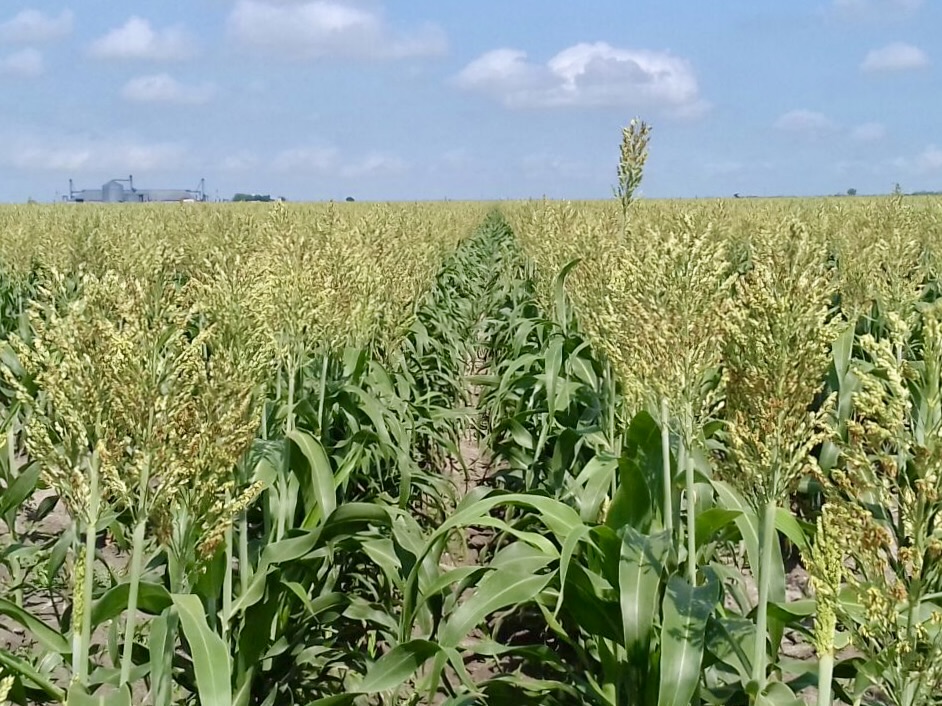
That calculation is threatening agriculture across one of Mexico’s major grain-producing regions, where nearly half the land programmed for the latest sorghum cycle was never planted.
Rogelio García Moreno, president of the Asociación Agrícola de Matamoros, is calling it a “gigantic SOS” to state and federal authorities.
“At these numbers, it simply doesn’t work,” García Moreno said, estimating that more than 90% of producers lost money in the latest cycle. “The more you plant, the more you lose.”
The consequences extend beyond individual farms.
Agricultural spending supports businesses and workers throughout northern Tamaulipas, while declining Mexican grain production can increase the country’s reliance on U.S. imports. The U.S. Department of Agriculture reports that virtually all of Mexico’s sorghum imports originate in the United States, with Texas supplying Mexico primarily by truck.
When planting doesn’t pay
García Moreno estimates the agricultural region of northern Tamaulipas encompasses about 1.73 million to 1.78 million acres of irrigated and rain-fed farmland across municipalities including Matamoros, Valle Hermoso, San Fernando, Río Bravo, Reynosa and Miguel Alemán.
The problem, he said, is increasingly the production equation.
García Moreno estimates planting costs between $244 and $256 per acre, while farmers have recently received about $182 to $188 per ton for their crops.
Farmers still have to account for expenses and deductions associated with threshing, transportation, moisture and impurities.
USDA reporting supports the pressure producers describe. Its Mexico grain and feed update reported Tamaulipas sorghum prices at about $207 per metric ton and said producer groups reported that prevailing prices and yields were insufficient to cover production costs.
More than 800,000 acres go unplanted
The economic pressure is increasingly visible in how much land is actually being farmed.
Antonio Varela, Tamaulipas’ secretary of Rural Development, said about 1.69 million acres were programmed for the 2025-26 fall-winter sorghum cycle. Only about 869,500 acres were established.
That means more than 823,000 acres — nearly half the planned acreage — went unplanted.
The state expected production of about 800,000 tons, compared with a historical average of about 2 million tons.
García Moreno similarly estimated that northern Tamaulipas historically produced between 1.8 million and 2.2 million tons of sorghum, compared with roughly 500,000 to 600,000 tons in the latest cycle.
The decline is significant compared with the state’s broader agricultural base. INEGI’s 2022 Agricultural Census recorded 2.53 million tons of grain sorghum production in Tamaulipas across roughly 2.42 million acres.
USDA’s March 2026 Mexico Grain and Feed Annual also illustrates the uncertainty surrounding Mexican sorghum production. USDA staff estimated 2025-26 production at 2.9 million tons, below the official USDA estimate of 4.3 million tons, while projecting imports of 800,000 tons.
Even having water isn’t enough
Perhaps the clearest indication that the problem extends beyond drought can be found in Irrigation District 026 along the Río Bravo.
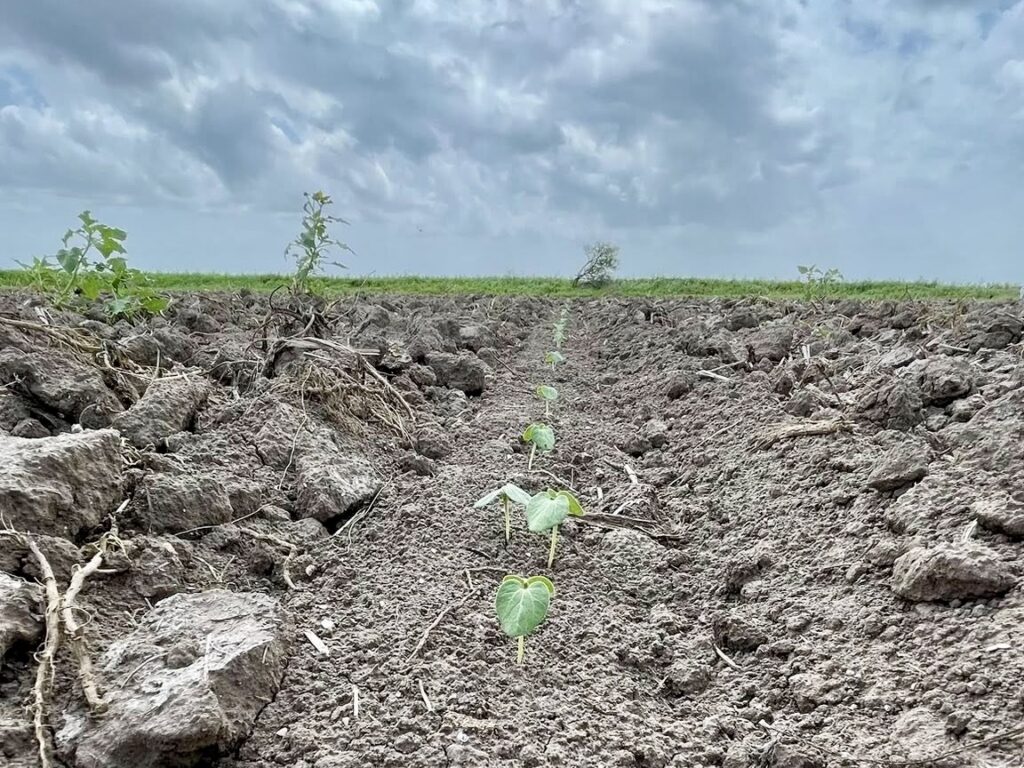
García Moreno said the district had sufficient water for a full irrigation cycle and roughly 148,000 acres could have been planted with white corn.
More than half remained unplanted.
The reason, he said, was that producers did not want to risk investing in a crop that could lose money.
Water can make planting possible. It does not necessarily make planting profitable.
For García Moreno, that distinction is critical. Farmers also need working capital, access to credit and enough certainty about crop prices to justify investing in another planting cycle.
Competing with U.S. farmers
Mexican farmers also face structural disadvantages when competing with producers north of the border, García Moreno said.
He points to differences in financing, government support and input costs, including diesel, which he estimates costs about $6.09 per gallon in Mexico.
His description of the disparity is blunt: Mexican farmers are competing with U.S. producers “on crutches.”
That competition has implications on both sides of the border.
When Mexican production falls, the country can turn to imported grain to make up the difference. USDA says Texas is a principal route for U.S. sorghum shipments into Mexico, with the grain moving primarily by truck.
That means continued declines in northern Tamaulipas production could make U.S. grain an increasingly important part of Mexico’s supply.
Farming’s next generation
The immediate financial pressure is also creating a longer-term concern: whether younger generations will want to continue farming.
García Moreno cited a national average farmer age of about 58 and estimated that farmers in northern Tamaulipas are closer to 63 to 65. His regional figure is an estimate rather than an official statistic.
Younger generations, he said, are increasingly reluctant to take on an occupation where producers can invest heavily in a crop and still lose money.
The question, then, extends beyond the next harvest: Who will continue farming northern Tamaulipas if the economics no longer attract a new generation?
The effects reach beyond farms
The economic consequences don’t stop at the edge of a field.
Agricultural spending flows through communities including Valle Hermoso, San Fernando, Río Bravo and Matamoros, supporting businesses and workers connected to farming.
When farmers plant less — or have to immediately use their proceeds to repay debts — less money circulates through those economies, García Moreno said.
Farmers also face another geographic disadvantage. Much of the grain produced in Tamaulipas must travel long distances to major processing and livestock markets in central Mexico, adding transportation costs that further squeeze margins.
Farmers want more certainty
García Moreno isn’t simply asking for temporary assistance.
He is calling for a broader commercialization strategy across northern Mexico that would give farmers greater certainty that crops can be sold at prices high enough to cover production costs and provide a margin.
Courtesy of | Rogelio García Moreno
More predictable returns could also make lenders more willing to finance planting. Banks are less likely to extend credit when there is little confidence that a crop will generate enough revenue for farmers to repay their loans.
The Tamaulipas government has announced efforts to develop new markets and add value to the state’s sorghum production, including a focus on white sorghum and products for human consumption.
But García Moreno argues producers need a broader response addressing commercialization, financing and prices.
His immediate concern is what happens if the amount of idle farmland continues growing.
If roughly half of the region’s agricultural land is going unplanted today, García Moreno warns that the share could climb to 60% in the next cycle.
Over time, he said, northern Tamaulipas risks losing its position as one of Mexico’s major grain-producing regions.
Farmers are willing to plant, he said. What they increasingly lack is enough economic certainty to make planting worth the risk.

Anayancy Ulloa
Reporter
Anayancy Ulloa Luna is a contributor to the Rio Grande Valley Business Journal who hails from Reynosa in the Mexican state of Tamaulipas. Ulloa has a long history as a U.S.-Mexico region business expert in marketing, formerly the editorial director of Mexico Industry.
Most Read
- Is SpaceX quietly building a data center at Starbase? Job postings offer clues
- 25 Mexican businesses eye McAllen expansion after city pitches U.S. market entry program
- SpaceX’s futuristic city of Starbase finalizes massive 7,100-acre annexation. Here’s what we know.
- McAllen metro keeps selling more homes as Brownsville-Harlingen market sees 17% drop through August
- Rio Grande LNG moves closer to getting even bigger at Port of Brownsville
Get the latest business news delivered to your inbox every morning for free.
Try 30 Days Free!
Get full access to award-winning journalism covering business, real estate, health care, economic trends, and the people shaping the Rio Grande Valley.
30 Days Free!
$9.95/month
Limited time offer
Subscription renews after your 30 day free trial at $9.95/mo.
Included Benefits
- Unlimited access to all articles
- Daily business news and analysis
- Subscriber-only content and features
Stories That Matter
- South Texas College plans $4.7M makeover of cosmetology, security facilities in McAllen
- Mission’s first Small Business Expo puts $25K on the line for local entrepreneurs
- McCoy’s gives $10K, tools to launch Mid-Valley construction academy
- UT Health RGV performs new digestive procedure for first time in the Valley
- Edinburg ISD rejects nearly $6M offer for prime land near La Sienna despite $15M budget deficit
- TSTC bets on advanced manufacturing to meet RGV’s industrial boom
- McAllen’s nonstop Mexico City flight is back
- Pharr’s cross-border business push earns international recognition
- Brownsville eases drought restrictions after nearly three years as Rio Grande reservoir levels improve
- Texas A&M’s $53.5M McAllen research center will tackle water, food security and Valley health