Farmers in northern Tamaulipas are planting fewer acres, cutting higher-value crops, and shifting into livestock production as severe water shortages leave them operating without guaranteed irrigation — and without insurance protection to absorb potential losses.
“We are now rainfed — that is, we depend entirely on natural rainfall to produce, with no guaranteed irrigation or permanent water infrastructure,” José Luis Pérez Miranda, a sorghum and okra producer in Valle Hermoso, Mexico, told the Rio Grande Valley Business Journal. “There is no water, no assured irrigation. Everything depends on rainfall.”
The current agricultural cycle began without assured irrigation deliveries, forcing producers to decide whether to plant under dry conditions or leave fields idle — knowing there is no backup water supply if rainfall fails.

Courtesy of | José Luis Pérez Miranda
“Many people are still uncertain about whether to plant or not because of the lack of moisture, and there is also discouragement because there will be no irrigation to establish and develop the crop,” Pérez Miranda said.
The uncertainty comes as Mexico and the U.S. announced a new bilateral understanding under the 1944 Water Treaty aimed at strengthening treaty compliance during an extreme drought affecting the border region.
According to a joint statement from the U.S. Department of State and the U.S. Department of Agriculture, Mexico committed to deliver a minimum of 350,000 acre-feet of water per year during the current five-year cycle and to establish a plan to eliminate accumulated deficits from the previous period. The agreement also establishes monthly follow-up meetings.
During a visit to the Rio Grande Valley on Monday, U.S. Agriculture Secretary Brooke Rollins said Mexico committed to releasing 202,000 acre-feet of water before March and to “increase deliveries dramatically” afterward.
In the short term, however, irrigation restrictions remain in place in northern Tamaulipas.
Reduced acreage, higher exposure
Pérez Miranda said the impact is already visible on his farm.
Under normal conditions, he plants about 371 acres. This year, he planted roughly 321 acres, leaving about 49 acres idle because of insufficient moisture.
“We’re going to leave those [49 acres] unfinished because we don’t have enough moisture to plant,” he said.
Higher-value crops have been cut more sharply.
“If we used to plant between [49 and 74 acres] of okra, this year we’ll plant only [about 25… or 12 acres],” he said.
Pérez Miranda said his situation is not unique.
“If there are 10 farmers, at least 50% have already planted,” he said. “The other 50% are still deciding whether to plant or wait for moisture.”
Sorghum in the region requires roughly 145 to 148 days from planting to harvest. Without guaranteed irrigation, that growing period increases both production risk and financial exposure.
Water shortages have also disrupted access to agricultural insurance.
“Insurance companies are no longer willing to insure irrigated farmland because there will be no water,” Pérez Miranda said. “It’s a hard blow to agriculture.”
Without irrigation, insurers are unwilling to underwrite coverage — effectively removing protection schemes against crop losses.
Producers now carry the full financial risk of the cycle if rainfall fails.
Trade pressure and financing strain
Beyond water, producers face additional economic pressure.
Pérez Miranda cited limited access to financing, uncertainty in grain prices, and the inflow of grain from the U.S. into the domestic market as factors affecting the economic viability of farmers in northern Mexico.
Imported grain increases supply in the domestic market, pressuring local prices at a time when producers are already facing higher risk and reduced irrigation capacity.
The result, he said, is an increasingly fragile production model.
Shift toward livestock
Facing mounting uncertainty, Pérez Miranda said he is making changes to his operation.
Courtesy of | José Luis Pérez Miranda
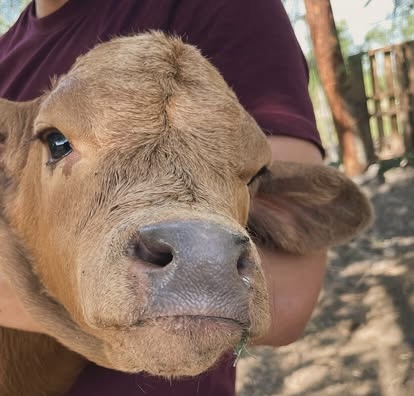
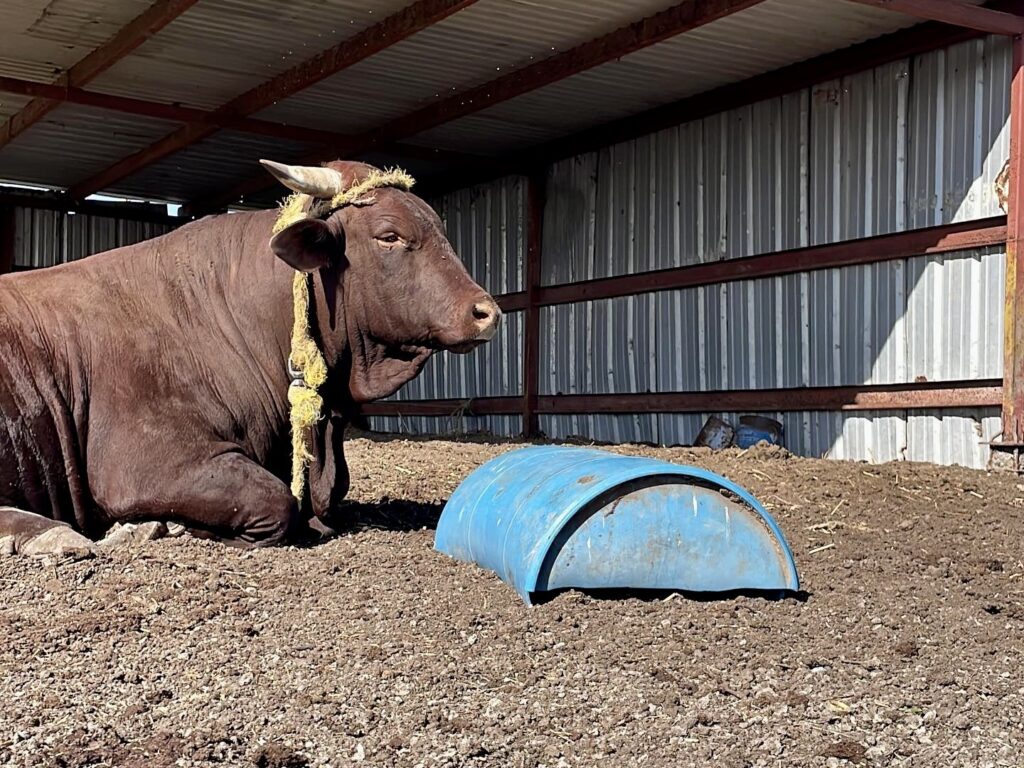
“I’m going to shift more toward cattle, raising livestock and developing meat production for local consumption,” he said.
But even that pivot carries risk.
Producers across Tamaulipas are monitoring the spread of the New World Screwworm, a threat that could disrupt livestock sales and exports.
Pérez Miranda’s farm already has cattle, but it was not managed as a formal line of business.
“We already had cows, but we didn’t really manage them as such. This year we’re fully committing to it,” he said.
The strategy leverages locally produced red sorghum as feed, integrating grain production into meat output.
Still, the transition requires new capital investment.
“The equipment to plant and harvest sorghum is already in place, as well as storage. Now it’s about adapting corrals, infrastructure, and feed mixes,” Pérez Miranda said.
Courtesy of | José Luis Pérez Miranda
A bull costs about $3,500. A cow ranges from roughly $2,050 to $2,350. An initial herd, he said, requires an estimated $14,700 in startup investment.
High cattle prices are influencing the decision.
“We’ve never seen such high prices per pound of live cattle,” Pérez Miranda said.
Cattle prices range between $2.25 and $2.90 per pound, depending on production system and animal condition.
Last year, he said, they sold calves weighing between 400 and 440 pounds for about $940 each.
“At that time, prices ranged between [$1.45 and $2.10 per pound],” he said.
Long-term modernization, short-term gap
Pérez Miranda acknowledged irrigation modernization projects promoted by the Tamaulipas state government that could benefit the region over the long term. However, he stressed that those improvements are not immediate solutions.
For the current agricultural cycle, producers remain without assured irrigation.
The mismatch between long-term infrastructure planning and short-term production cycles leaves farmers exposed to rainfall variability and market swings.
He said the conditions are also discouraging younger generations from entering agriculture.
“As a young person, how do you want to enter a primary sector that’s in decline?” he asked. “There’s no way to survive economically from this.”

Anayancy Ulloa
Reporter
Anayancy Ulloa Luna is a contributor to the Rio Grande Valley Business Journal who hails from Reynosa in the Mexican state of Tamaulipas. Ulloa has a long history as a U.S.-Mexico region business expert in marketing, formerly the editorial director of Mexico Industry.
Most Read
- Is SpaceX quietly building a data center at Starbase? Job postings offer clues
- 25 Mexican businesses eye McAllen expansion after city pitches U.S. market entry program
- SpaceX’s futuristic city of Starbase finalizes massive 7,100-acre annexation. Here’s what we know.
- McAllen metro keeps selling more homes as Brownsville-Harlingen market sees 17% drop through August
- Rio Grande LNG moves closer to getting even bigger at Port of Brownsville
Get the latest business news delivered to your inbox every morning for free.
Try 30 Days Free!
Get full access to award-winning journalism covering business, real estate, health care, economic trends, and the people shaping the Rio Grande Valley.
30 Days Free!
$9.95/month
Limited time offer
Subscription renews after your 30 day free trial at $9.95/mo.
Included Benefits
- Unlimited access to all articles
- Daily business news and analysis
- Subscriber-only content and features
Stories That Matter
- McAllen’s job market keeps climbing while Brownsville loses ground
- Mission EDC launches search for new CEO with salary up to $190K
- Texas transportation leaders to discuss Rio Grande Valley infrastructure at Mission summit
- Mission’s first Small Business Expo puts $25K on the line for local entrepreneurs
- McCoy’s gives $10K, tools to launch Mid-Valley construction academy
- UT Health RGV performs new digestive procedure for first time in the Valley
- South Texas College plans $4.7M makeover of cosmetology, security facilities in McAllen
- TSTC bets on advanced manufacturing to meet RGV’s industrial boom
- Pharr’s cross-border business push earns international recognition
- Brownsville eases drought restrictions after nearly three years as Rio Grande reservoir levels improve