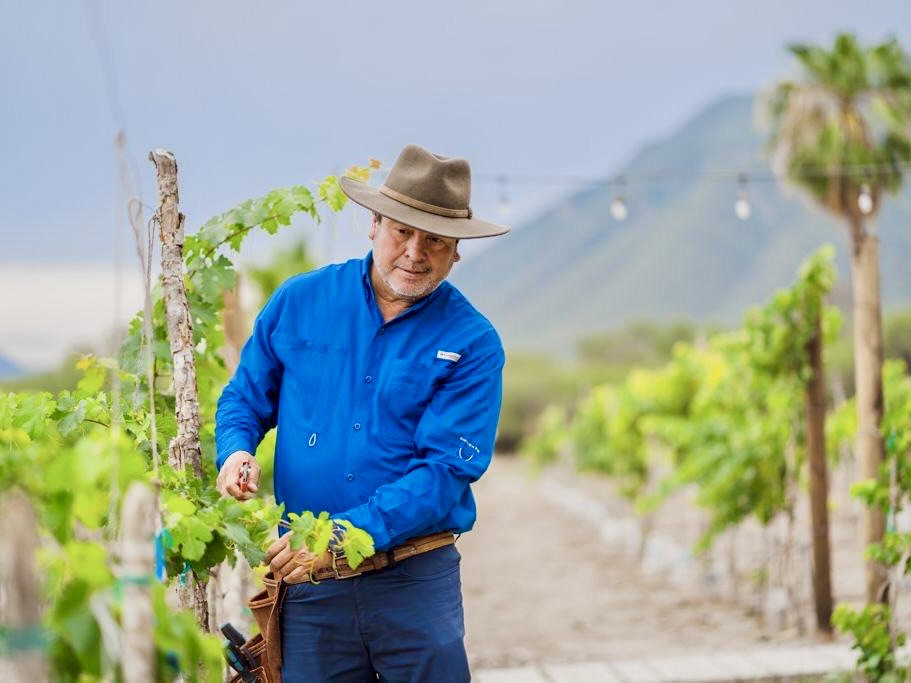
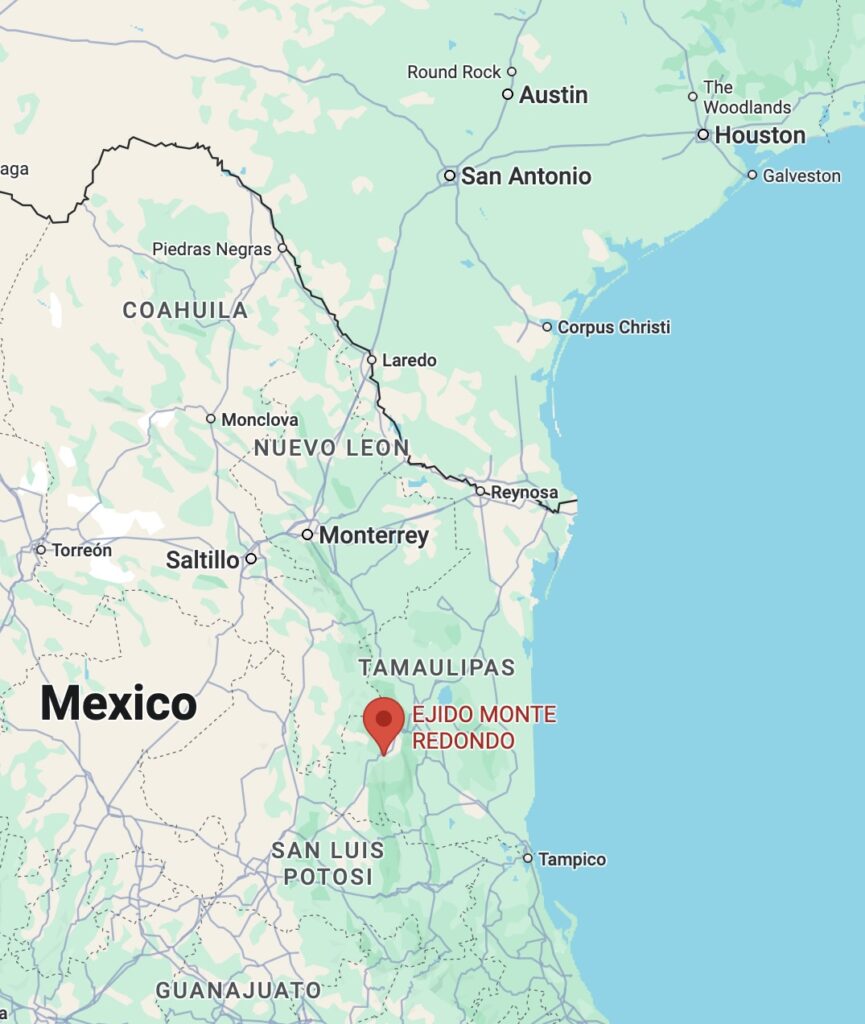
In the Tamaulipas Highlands, a region long tied to cattle ranching and traditional crops, Viñedo Monterredondo is testing whether wine production can become more than a novelty.
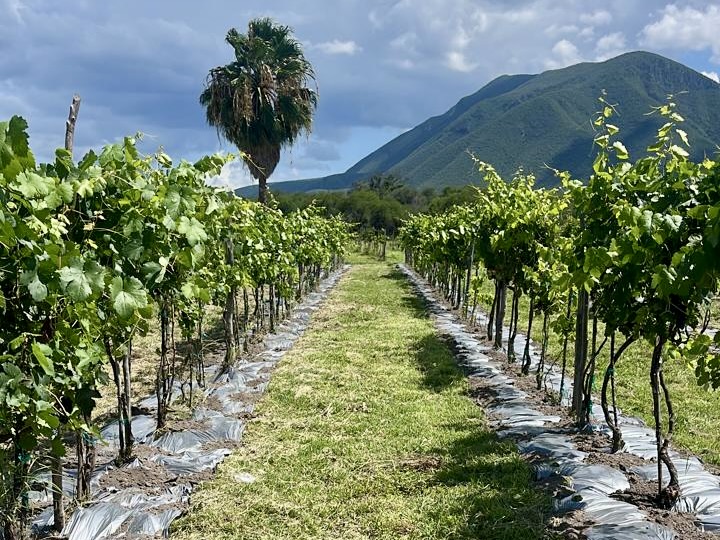
The private project, located in the ejido Monterredondo at kilometer 105 of the Victoria–Tula highway in Jaumave, is introducing grape cultivation in a state with little to no winemaking tradition.
The effort is led by entrepreneur Eloy Reyna, who said the idea grew out of years spent around the wine trade in Tamaulipas.
“It all comes from a personal interest, a long-standing passion for wine,” he said. “I was involved in buying and selling wine to bring it to Tamaulipas, and every year I traveled to learn what wineries were doing.”
Testing wine in Tamaulipas
Reyna acquired the land in late 2018. The first planting trials began in 2019, when the vineyard set out to answer a basic question: what, if anything, could survive and produce quality fruit in the climate and soil conditions of the Tamaulipas Highlands.
Courtesy of | Eloy Reyna
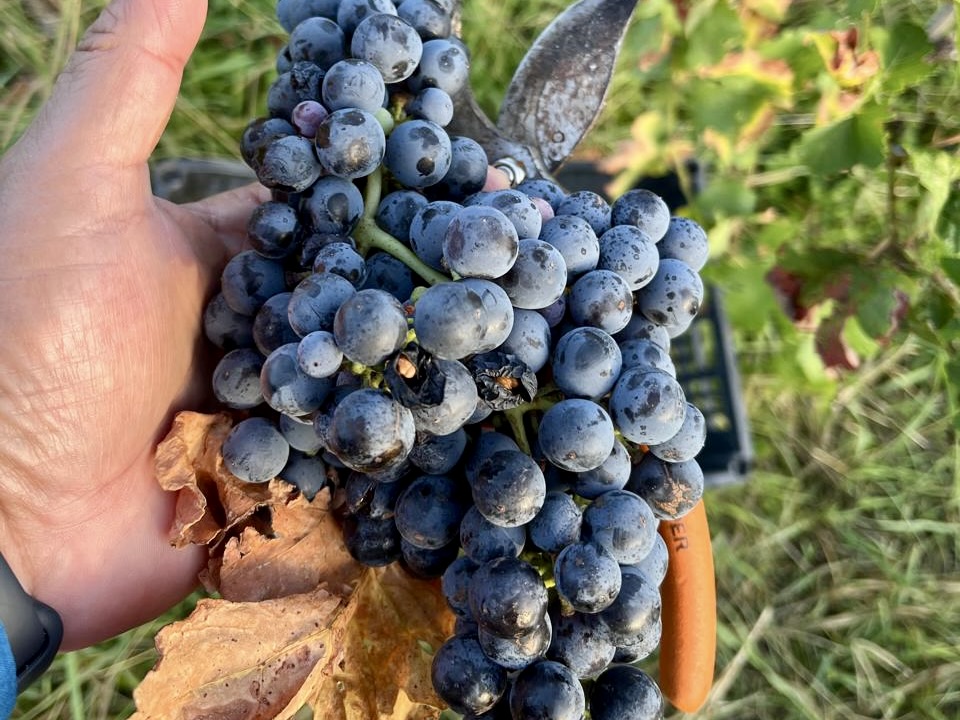
During that first stage, the project planted five French varieties — Syrah, Merlot, Malbec, Tempranillo and Cabernet Sauvignon.
“We gave them five years to go through the adaptation process and see what grew, what developed, and what produced quality fruit,” Reyna said.
The results narrowed the focus.
After the trial period, Reyna said the project kept the grapes that showed the strongest performance under local conditions.
“Out of those five varieties, we kept Tempranillo and Malbec, which were the ones that adapted best to the soil, the climate, the water and the environment,” he said.
Those grapes were used in small young-wine trials in 2023 and 2024, part of a broader effort to evaluate fruit quality before any larger-scale commercial push.
Why Jaumave — and what it takes to grow
For now, the footprint remains small.
The vineyard began with one hectare (about 2.47 acres). Today it covers one and one-third hectares (roughly 3.3 acres).
Reyna said he is considering another expansion this year.
“This year we are considering expanding it to between 2.5 and 3 hectares,” he said.
That’s about 6.2 to 7.4 acres.
But that growth will depend largely on water.
“If you want to grow, you have to have water,” Reyna said.
Water was one of the reasons Jaumave emerged as the chosen site.
Reyna said the municipality offered a combination of factors that made the gamble worth taking.
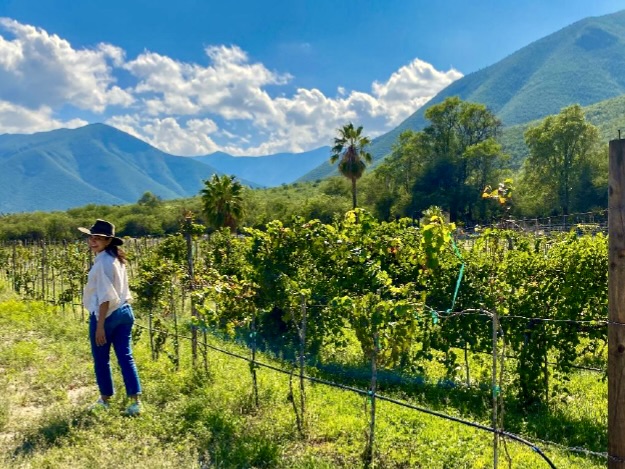
“Altitude, water, and proximity to Victoria were the factors that led me to choose Jaumave,” he said.
Courtesy of | Eloy Reyna
That decision put the vineyard in a place with little institutional memory for this kind of crop.
Reyna said one of the hardest parts of the project has been building something in a state where viticulture has no local precedent.
“Starting is difficult because you are in a place where no one else grows this crop,” he said. “Everything you do is trial and error.”
The technical hurdles have gone beyond simply choosing varieties.
Reyna said the soil where the vineyard was established has low organic matter, which forced additional work to prepare the land and manage water conditions.
The capital requirements are significant too.
“Each plant I bring costs about three euros, and each hectare requires between 3,000 and 3,200 plants,” Reyna said.
At that density, plant costs alone run from about 9,000 to 9,600 euros per hectare, or roughly $12,150 to $12,960, before other vineyard startup costs are added.
From vineyard to tourism bet
Even at that early stage, Reyna is trying to build more than a crop.
On Saturdays, the vineyard opens to visitors, offering food and wine tastings featuring bottles primarily brought from Valle de Guadalupe, which he distributes in the state.
The audience is regional.
Reyna said there is already demand for this kind of experience even before the vineyard reaches full production.
“Most of the visitors come from the border region,” he said. “Many people also visit from Tampico.”
Groups typically range from 15 to 20 people, though the site has also received full buses and private reservations for family events. That tourism layer is central to the project’s long-term vision.
Reyna is not only trying to prove grapes can grow in Jaumave. He is trying to test whether a winery, tastings, tours, and food service can create a new rural economic niche in the municipality.
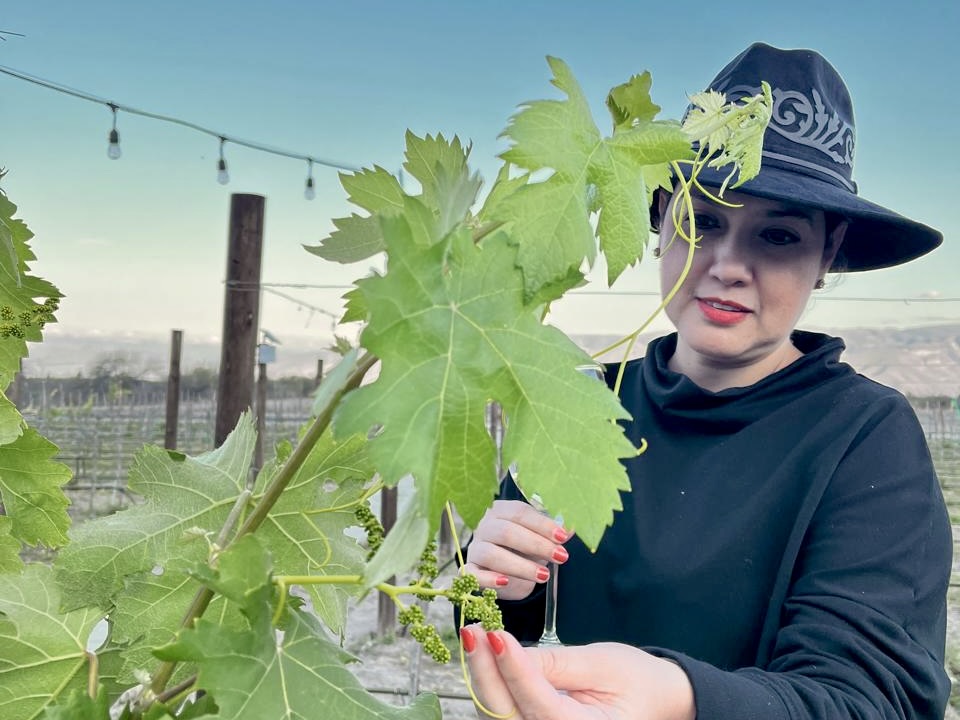
The wine itself is still in early stages.
Courtesy of | Eloy Reyna
“The first wine trial I made became the first wine label produced in the state of Tamaulipas,” Reyna said.
That first blend combined Tempranillo, Cabernet Sauvignon and Malbec.
“I think it’s very interesting, and I personally liked it,” he added.
This year could mark a more important production step.
Reyna said the maturity of the vines may allow for stronger fruit output, with harvest expected around September. After that, the grapes would still need to move through fermentation, filtration and possibly aging before the wine could be sold.
“I think this year could be interesting for me,” Reyna said.
The broader vision extends well beyond a single harvest.
Reyna said the vineyard has been built mostly through private capital, with limited backing from public entities despite the potential tourism and economic development angle.
“We’ve tried to approach people in tourism and economic development, but there hasn’t been much interest,” he said. “We’re still pushing forward on our own.”
Even so, he said the project is meant to do more than establish a vineyard. He sees it as a possible catalyst.
“My idea is to spark development in Jaumave with this project,” Reyna said.
Courtesy of | Eloy Reyna
That future, if it materializes, would be gradual.
The expansion plan contemplates growing the vineyard to as much as 7 hectares, planted primarily with Tempranillo. At the project’s estimated density of 3,200 plants per hectare, that would amount to about 22,400 vines.
The larger ambition goes beyond planting rows of grapes.
The project also envisions a regional wine association and the development of complementary activity around tours, tastings, food, and events, effectively creating the foundation for a wine route in a part of Tamaulipas where none exists now.
For now, Viñedo Monterredondo remains what many early agricultural bets are at the start: a test of climate, capital, patience, and market demand.
But it is also a test of whether a municipality better known for ranching and conventional agriculture can carve out a new identity around wine.
Visitors can reserve Saturday visits beginning at 1 p.m. by calling +52 834 111 4247.

Anayancy Ulloa
Reporter
Anayancy Ulloa Luna is a contributor to the Rio Grande Valley Business Journal who hails from Reynosa in the Mexican state of Tamaulipas. Ulloa has a long history as a U.S.-Mexico region business expert in marketing, formerly the editorial director of Mexico Industry.
Most Read
- Is SpaceX quietly building a data center at Starbase? Job postings offer clues
- 25 Mexican businesses eye McAllen expansion after city pitches U.S. market entry program
- SpaceX’s futuristic city of Starbase finalizes massive 7,100-acre annexation. Here’s what we know.
- McAllen metro keeps selling more homes as Brownsville-Harlingen market sees 17% drop through August
- Rio Grande LNG moves closer to getting even bigger at Port of Brownsville
Get the latest business news delivered to your inbox every morning for free.
Try 30 Days Free!
Get full access to award-winning journalism covering business, real estate, health care, economic trends, and the people shaping the Rio Grande Valley.
30 Days Free!
$9.95/month
Limited time offer
Subscription renews after your 30 day free trial at $9.95/mo.
Included Benefits
- Unlimited access to all articles
- Daily business news and analysis
- Subscriber-only content and features
Stories That Matter
- McAllen’s job market keeps climbing while Brownsville loses ground
- Mission EDC launches search for new CEO with salary up to $190K
- Texas transportation leaders to discuss Rio Grande Valley infrastructure at Mission summit
- Mission’s first Small Business Expo puts $25K on the line for local entrepreneurs
- McCoy’s gives $10K, tools to launch Mid-Valley construction academy
- UT Health RGV performs new digestive procedure for first time in the Valley
- South Texas College plans $4.7M makeover of cosmetology, security facilities in McAllen
- TSTC bets on advanced manufacturing to meet RGV’s industrial boom
- Pharr’s cross-border business push earns international recognition
- Brownsville eases drought restrictions after nearly three years as Rio Grande reservoir levels improve