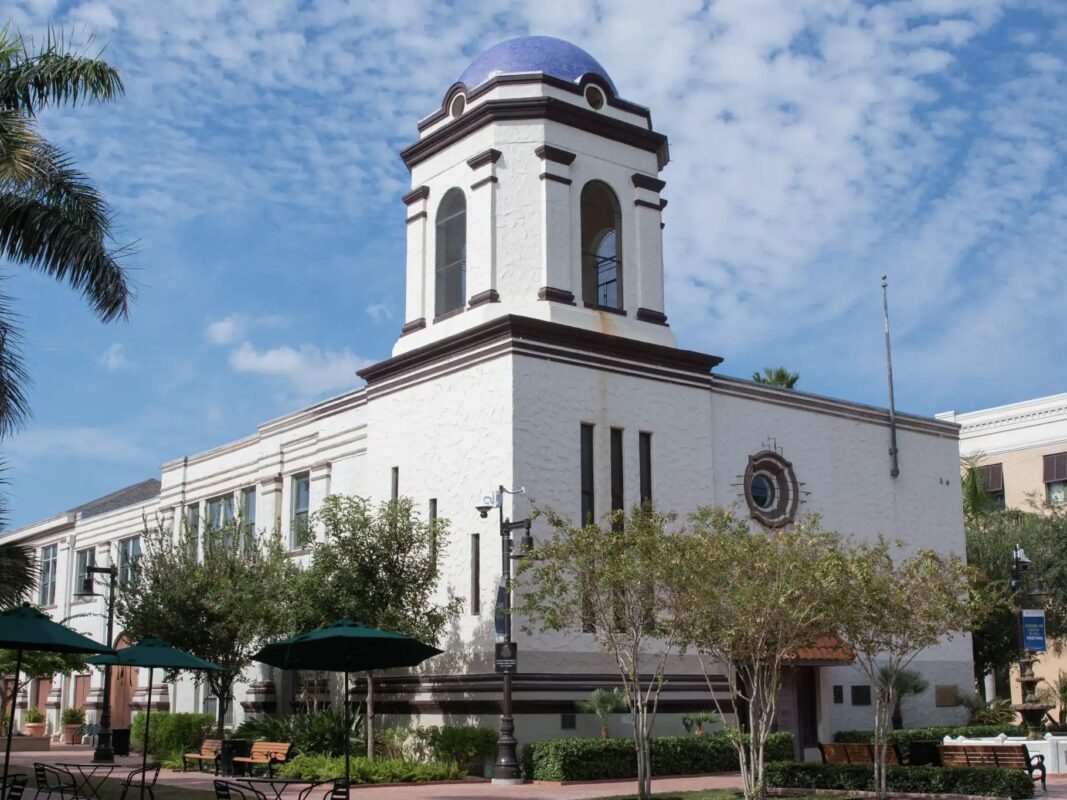
Most cities already have a local business preference rating scale as a general policy during government contracting, but in Brownsville, voters are expected to approve changes to the city’s charter on Nov. 3 that would take immediate effect and change the landscape.
Austin-based progressive political organizing group Ground Game Texas surveyed Brownsville voters about changes they would like to see in their city, and leaders say they heard residents wanted more transparency, access to jobs, safety for workers, and a “keep it local” model for taxpayer-funded contracts worth at least $1 million and one cent or more.
Organizers secured more than 8,000 signatures of registered city voters for the Brownsville First Jobs and Contracts Policy, now on the ballot as Proposition N.

The idea is that any companies hired for taxpayer-funded projects will make a good-faith effort to hire local talent and offer preference to local and small businesses — while staying under the framework of state law, which prohibits local governments from enacting new laws that contradict state rule.
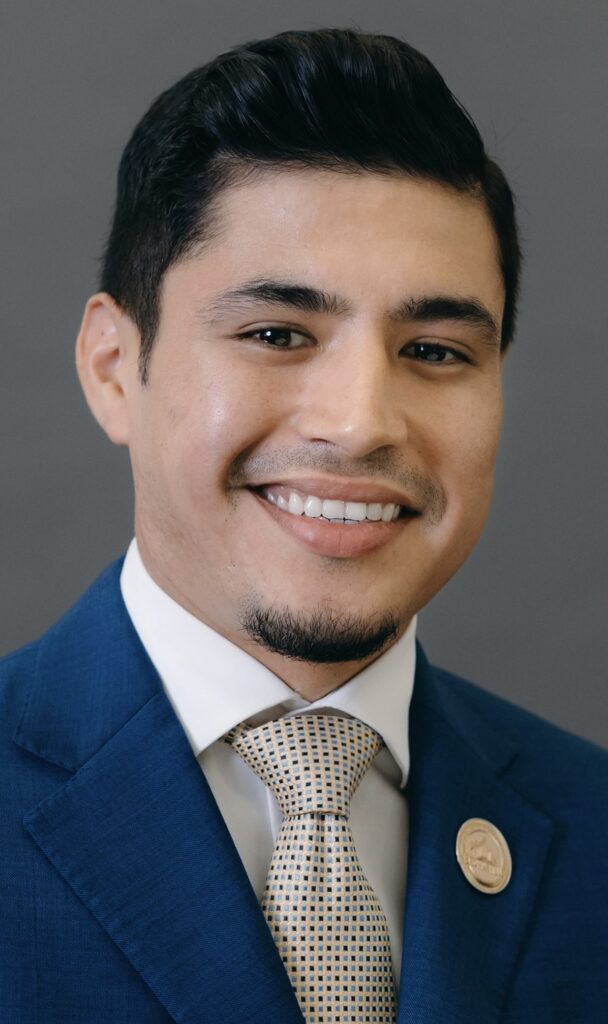
“People in Brownsville gave us feedback that they felt like too much of everything was being extracted out of Brownsville without enough being invested back into the people who live there,” said Natalie Marquez, who hails from Harlingen and is the director of campaigns and political strategy for Ground Game Texas in Dallas. “We heard it from young people who feel like there aren’t enough opportunities to build a future or have the same opportunities their parents had; they feel like [those opportunities] no longer exist.”
Local is defined as a person living in the Rio Grande Valley’s four-county region. A small business is defined as an independently owned company with 50 or fewer employees, and OSHA training refers to a 10-hour course approved by the Occupational Safety and Health Administration.
The proposed law would apply only to some of the largest contracts. As written, it would not apply to companies receiving economic incentive deals, such as manufacturers, LNG, SpaceX, America First Refining, or Saronic Technologies.
Also, not all city spending goes through a formal bidding process, such as purchases under $100,000 that require written quotes or cooperative contract agreements.
The change would apply to all city contracts worth $1,000,001 or more, requiring contractors to pay minimum wage and “may voluntarily commit to higher wage standards,” but also ensure all workers have at least 10 hours of OSHA training before starting work; contractors must carry workers’ compensation insurance in case of a worker getting hurt, plus are encouraged but not required to make good faith efforts to hire local workers and submit compliance monitoring reports of the progress.
The proposition would also enable the city to “establish scoring criteria that give preference to small businesses or businesses headquartered in the Rio Grande Valley” in alignment with state procurement laws. Businesses are encouraged to partner with local workforce development programs, unions and educational institutions in the region.
“I think if anything, this brings back more control to local businesses who maybe are fighting for these contracts and can’t get them,” Marquez said. “We want to see the data made available to the public to keep track to make sure that our policies are being implemented.”
Businesses would also be required to submit documents to the city, and the city must have a public dashboard with contract recipients and participation outcomes.
Brownsville would also be required to create and maintain a “local jobs and business access program” meant to assist small and local businesses in bidding and complying with city contracts, free technical assistance in English and Spanish, a directory of contractors who meet potential contracting requirements, quarterly outreach and training sessions, and coordination of workforce development to “grow a qualified local labor pool.”
Ground Game Texas gathered 8,400 signatures — above the 6,000 or 5% of registered voters required.
Marquez said she’s confident that measure will pass in November.
“We even got buy-in from local businesses and people with influence who care about these things. We’re not some socialist group from Austin that some of these people try to say about us. Everybody who works for us in our campaign is homegrown,” she said. “I think success to us in this passing is more Brownsville residents knowing about this and having access to city-funded job opportunities, more local and small businesses getting a meaningful opportunity to compete and our biggest thing is that we want workers to get appropriate training and have safer workplaces.”
The city of Brownsville already offers some weighted advantage during the procurement process to local businesses for projects that are not federally funded and defines local as any company based in Cameron County, according to its website.
Brownsville city commissioners were advised by staff in mid-June that the proposition “goes a step further” than the existing policy.
The city of Brownsville did not immediately respond to a request for an interview for this news story.
Brownsville District 1 City Commissioner Bryan Martinez said he hoped the measure would be considered in May 2027 instead of November and that “it’s a very polarizing time for us to hold a charter election,” he said during a mid-June charter amendment meeting.
The organizing group did not meet with the city’s charter amendment committee, in part because any changes to the language could invalidate the proposition on the ballot, since signatories may not agree with any changes proposed by the city.
Ground Game Texas has already been active in other Rio Grande Valley cities in recent years.
The group succeeded in forcing the city of Edinburg to adopt a $15-an-hour minimum wage for city workers in 2023.
The ballot proposition did not go to the voters; instead, city council members voted to simply adopt the measure for the workforce as a phased-in process. Mayor Omar Ochoa recently touted the fiscal year 2026 minimum wage on social media as a way to attract and retain workers in the city.
Organizers were less successful in a campaign in McAllen where voters sought to limit campaign finance contributions to $500 per donor. In 2024, voters approved the cap as a change to the McAllen city charter. But the change was challenged in court, and the amendment was struck down by a judge in 2026.
As for whether they may pick up any other hot-button topics, from cannabis to data centers in the Rio Grande Valley or other home-grown ballot initiatives? Not right now, but stay tuned.

Kristen Mosbrucker-Garza
Reporter
Kristen Mosbrucker-Garza is a versatile multimedia news reporter who lives and works along the Texas-Mexico border in Hidalgo County. Mosbrucker-Garza is a news reporter for the Rio Grande Valley Business Journal. During her career she's worked for the McAllen Monitor, San Antonio Business Journal, The Advocate Newspaper in Louisiana, Phoenix New Times, and public media outlets in Baltimore and Philadelphia.
Most Read
- 5×5 Brewing plots $2.5M comeback with new Edinburg brewpub near UTRGV
- Hundreds are vying for jobs in Brownsville. Here’s what jobseekers are seeing in the market
- Workforce leaders say the Rio Grande Valley job market isn’t what you think
- What Toyota’s $3.6B San Antonio expansion could mean for the Rio Grande Valley
- Turkish shipbuilder Karpower buys 302 acres near Port of Brownsville
Get the latest business news delivered to your inbox every morning for free.
Try 30 Days Free!
Get full access to award-winning journalism covering business, real estate, health care, economic trends, and the people shaping the Rio Grande Valley.
30 Days Free!
$9.95/month
Limited time offer
Subscription renews after your 30 day free trial at $9.95/mo.
Included Benefits
- Unlimited access to all articles
- Daily business news and analysis
- Subscriber-only content and features
Stories That Matter
- McAllen metro added 4,500 jobs through October, while Brownsville lost 300 jobs over the year
- Brownsville Mayor John Cowen elected chair of Texas Border Coalition
- La Plaza Mall celebrates 50 years of retail growth in McAllen
- Mission’s first Small Business Expo puts $25K on the line for local entrepreneurs
- McCoy’s gives $10K, tools to launch Mid-Valley construction academy
- Texas education leader says college graduation rates have improved, but too many students are still missing out
- UT Health RGV performs new digestive procedure for first time in the Valley
- TSTC bets on advanced manufacturing to meet RGV’s industrial boom
- Pharr’s cross-border business push earns international recognition
- Brownsville eases drought restrictions after nearly three years as Rio Grande reservoir levels improve