If you eat guacamole on Super Bowl Sunday, odds are it passed through Pharr.
The Pharr–Reynosa International Bridge serves as the primary entry point for Mexican avocados bound for U.S. supply chains ahead of the Super Bowl.
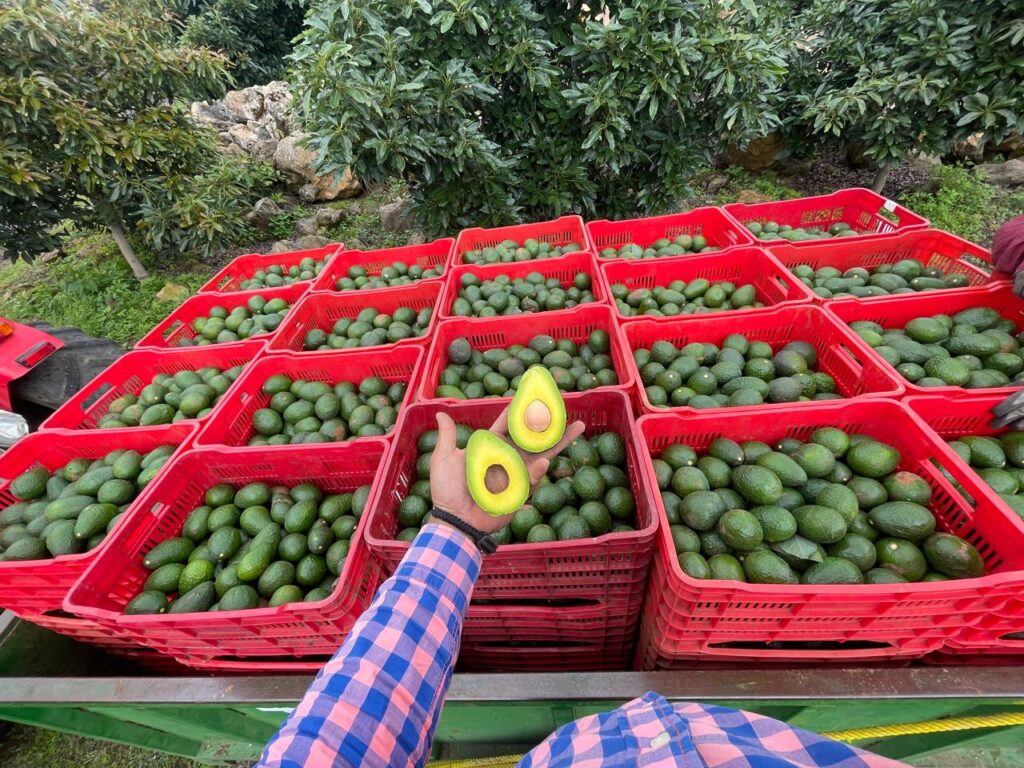
Courtesy of | Aguacates La Bonanza
Producers and industry groups project that about 280 million pounds of Mexican avocados will be shipped to the U.S. during the four weeks leading up to this year’s Super Bowl.
That’s an 11% increase over last year, according to the Association of Avocado Producers and Exporting Packers of Mexico (APEAM).
For the Rio Grande Valley, that surge translates into hundreds of additional truck crossings, tens of millions of dollars in cargo value, and one of the busiest logistics periods of the year.
“The Pharr International Bridge is the main gateway for this operation, processing approximately 70% of all avocados entering the United States from Mexico,” Pharr Bridge Director Luis Bazán told the Rio Grande Valley Business Journal.
A Super Bowl supply chain
The Super Bowl remains the single largest avocado consumption event in the United States.
In a typical Super Bowl season, more than 114,000 metric tons of avocados are consumed nationwide, with most of those shipments arriving in the weeks before the game. For 2026, the projected 127,000 metric tons shows just how massive this period has become for growers, packers, and logistics operators on both sides of the border.
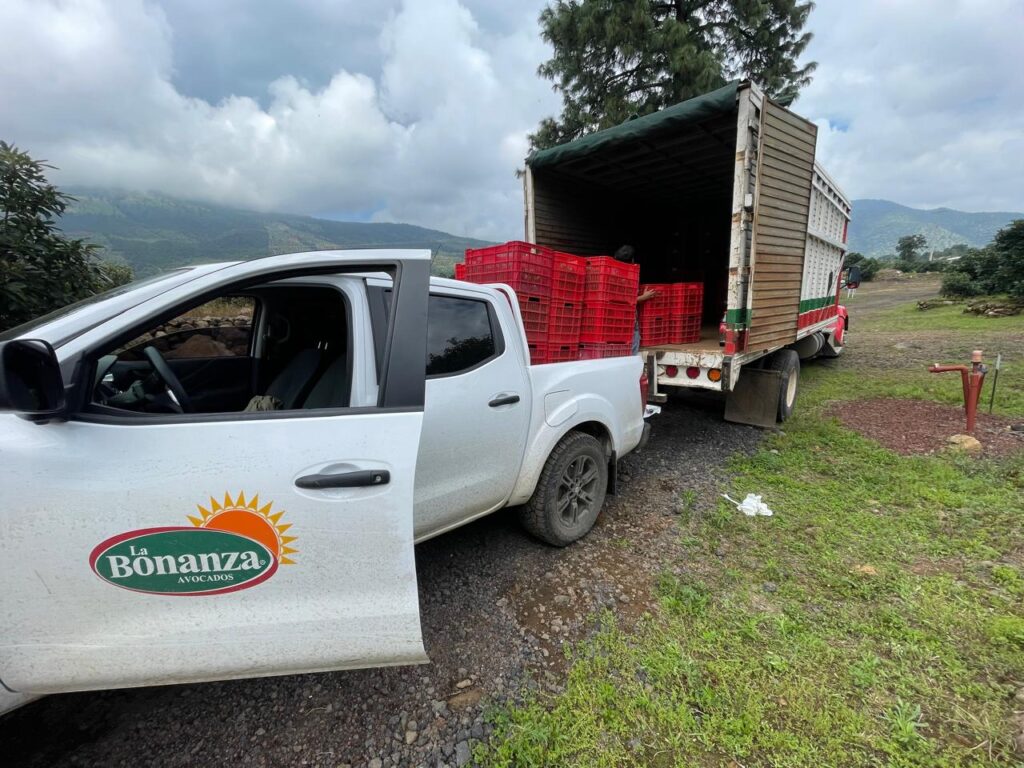
Courtesy of | Aguacates La Bonanza
Álvaro Luque, president and CEO of Avocados From Mexico, said the season is about making sure retailers and food service operators have what they need when demand spikes.
“This record projection is not just about volume, but about certainty in quality, size availability, and promotional supply,” Luque said in a news release. “Our programs are designed to support partners year-round, especially during peak demand periods such as the Big Game.”
Last week marked the busiest week of the season, with roughly 38,000 metric tons shipped ahead of the showdown between the Seattle Seahawks and the New England Patriots at Levi’s Stadium in California.
Beyond the Super Bowl, Mexican avocado is also very much in demand during Cinco de Mayo and the summer season.
Pharr’s peak month
January is the busiest avocado month of the year at the Pharr International Bridge.
During January, Pharr processes an average of 170 to 200 avocado trucks per week. In January 2025 alone, 695 avocado trucks crossed through Pharr, marking the annual peak.
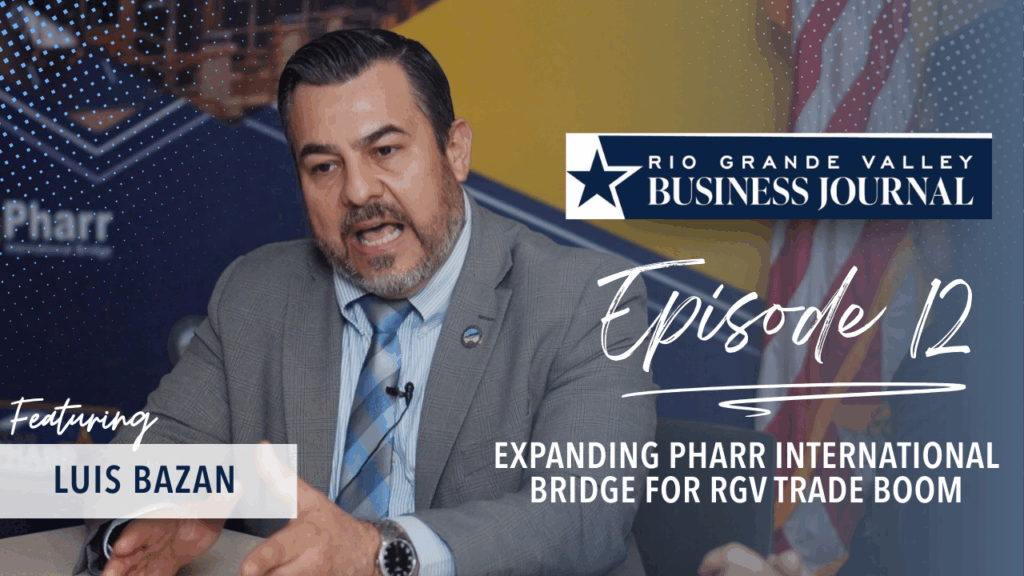
Bazán said the surge begins about four weeks before the Super Bowl.
“Volumes start to rise gradually in December, but the most aggressive spike occurs in the first and second weeks of January to ensure the product is ripe and fully distributed to store shelves,” he said.
The surge is also reflected in cargo value.
Last year, avocado shipments moving through Pharr jumped 18% in one month. They rose from about $205 million in December 2024 to nearly $242 million in January – a roughly $37 million increase in cargo value.
Mexican avocado giant expands to Pharr
For Aguacates La Bonanza, soaring U.S. avocado demand is reshaping how — and where — the company moves product, and it recently chose to invest in Pharr.
Gabriel Alejandro Villaseñor Zurita, president of Aguacates La Bonanza, said the company operates under a vertically integrated model that controls every step of the supply chain.
“We are producers, packers, processors, exporters, and distributors in the U.S.,” Villaseñor said.

Courtesy of | Aguacates La Bonanza
That structure allows the company to supply major retail and food-service chains nationwide, including Costco, Walmart, and H-E-B, as well as restaurant brands such as Chipotle, Cava, and Mi Cocina.
During peak demand periods tied to major consumption events such as the Super Bowl, Villaseñor said the company ships about 1,700 truckloads per week, totaling roughly 5,100 to 5,200 truckloads over a three-week span to supply the U.S. market.
Roughly 90% of Aguacates La Bonanza’s shipments into the U.S. move through Pharr, making the city the primary gateway for its cross-border operations.
To support that volume, the company is expanding its footprint in South Texas.
As part of its logistics growth, Aguacates La Bonanza is developing a new 110,000-square-foot warehouse in Pharr, Texas, where the groundbreaking took place last November.
“We are currently finishing the first phase. The contractors are scheduled to deliver it on the last day of October,” Villaseñor said.
The facility will be used for product handling and distribution.
Villaseñor said the company’s expanding footprint in Pharr reflects the scale of labor required to move avocados from orchards in Mexico to U.S. store shelves.
“Across the entire value chain — from Mexico to the United States — around 12,000 families are involved through direct and indirect employment,” Villaseñor said.
From orchard to U.S. shelves
Transporting avocados from Michoacán to Texas takes approximately 18 hours.
Once harvested, avocados reach U.S. markets within three to five days.
However, Villaseñor emphasized the long-term nature of avocado production.
“An avocado tree requires five to seven years to reach adequate production levels, depending on orchard altitude,” he said.
Produce industry outlook
For the broader produce industry, the Super Bowl marks the start of the strongest sales cycle of the year.

“This avocado season is extremely important. It’s one of the most relevant days of the year for the product,” said Dante Galeazzi, president and CEO of the Texas International Produce Association.
“It’s when sales begin to ramp up and when consumers start thinking about avocados again,” Galeazzi said.
After a period marked by water constraints in Mexico and higher consumer prices, Galeazzi said the market is showing signs of stabilizing.
“Now that inflation is lower and consumers better understand pricing, we have another opportunity to grow sales,” he said.

Anayancy Ulloa
Reporter
Most Read
- USMCA won’t die in 2026 — but it’s entering a new, uncertain phase, RGV trade expert says
- Mission lands one of its largest private investments with $50M aluminum manufacturing plant
- Vice President J.D. Vance cancels South Texas visit ahead of Port of Brownsville event
- New $1.6M food hall aims to transform downtown Edinburg with dining, retail and events
- South Texas builders say ICE raids are back, mourn death of slain construction worker
- Sluggish job growth across the Rio Grande Valley continues through June, data shows
Get the latest business news delivered to your inbox every morning for free.
Try 30 Days Free!
Get full access to award-winning journalism covering business, real estate, health care, economic trends, and the people shaping the Rio Grande Valley.
30 Days Free!
$9.95/month
Limited time offer
Subscription renews after your 30 day free trial at $9.95/mo.
Included Benefits
- Unlimited access to all articles
- Daily business news and analysis
- Subscriber-only content and features
Stories That Matter
- USMCA won’t die in 2026 — but it’s entering a new, uncertain phase, RGV trade expert says
- Cameron County wants input on a highway that could lead to SPI’s second causeway
- Rio Grande Valley job growth slows to a trickle through July
- Brownsville reschedules vote on SpaceX disannexation request
- New statewide push to reduce Texas’ uninsured population starts in the Rio Grande Valley
- Mission’s first Small Business Expo puts $25K on the line for local entrepreneurs
- TSTC bets on advanced manufacturing to meet RGV’s industrial boom
- STC built the nation’s first nursing apprenticeship. Its first class just went 10-for-10.
- Pharr’s cross-border business push earns international recognition
- STC puts AI to work across 55 courses — from construction sites to car repair
- McCoy’s gives $10K, tools to launch Mid-Valley construction academy