Editor’s note: This story is Part 2 of a three-part series examining the potential return of the New World Screwworm to Texas and the risks to the state’s economy and wildlife.
Read Part 1: The worms are coming: Texas braces for a nightmare it once barely survived
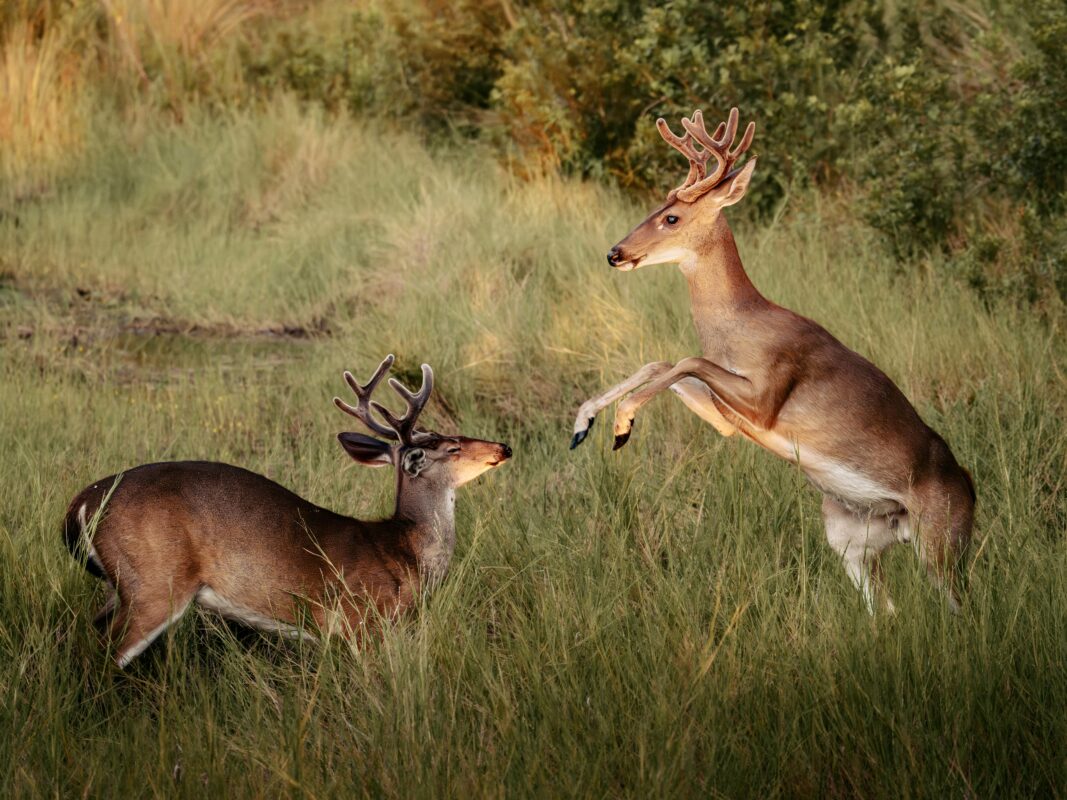
In 1971, Edinburg outdoors columnist Wayne Ferrell wrote about going hunting one Autumn evening before screwworm eradication efforts began in South Texas.
Ferrell, who had climbed up into a tree to hunt, saw a buck step into sight just before sunset. Obviously sick, the deer wobbled within 40 yards of Ferrell’s tree.
It toppled over three times before Ferrell finally took pity on the creature and shot it.
When Ferrell walked up to the buck, he counted 17 wounds on its hide, all of them rancid with flesh-eating screwworms.
Ferrell couldn’t determine the origin of the wounds and didn’t even saw off the buck’s 12-point antlers — the smell kept him from getting close.
The deer, Ferrell reckoned, weighed less than 50 pounds.
“He was merely a mass of rotten skin and bones,” he wrote.
That buck was one of countless Texas wild animals that succumbed to screwworm infestations before the pest’s eradication from the state in the 1980s.
Though the economic impact of screwworms is more often viewed through the lens of livestock, the maggots can infest any warm blooded animal and could threaten Texas’ multi billion dollar wildlife industry.
Paul Johnson sells hunts on Los Encinos, his 2,000-acre ranch near Falfurrias. He remembers being a teenager in the ‘60s and seeing screwworms in cattle. He’s never seen an infestation in game animals.
“I think it could be an issue. Hopefully the department of agriculture’s gonna work on it quick enough,” he said, referring to facilities being planned for sterile fly distribution at Moore Field.
Johnson could have a lot at stake if those prevention measures don’t stop a Texas screwworm outbreak.
“It’s a concern for wildlife,” he said. “Course, I’ve got a ranch that’s got all kinds of other exotic animals too, African animals that are more valuable than cattle.”
Johnson sells white-tailed deer hunts on his ranch. A trophy buck can go for more than $12,000, not including lodging, meals and a daily ranch fee.
He also sells exotic hunts for animals like wildebeest ($6,900 for a bull), gemsbok ($7,900) and addax (also $7,900).
Los Encinos is one of hundreds of ranches across the state selling exotic game hunts. The people who hunt white-tailed deer on the ranch are just a few of hundreds of thousands of deer hunters in Texas.
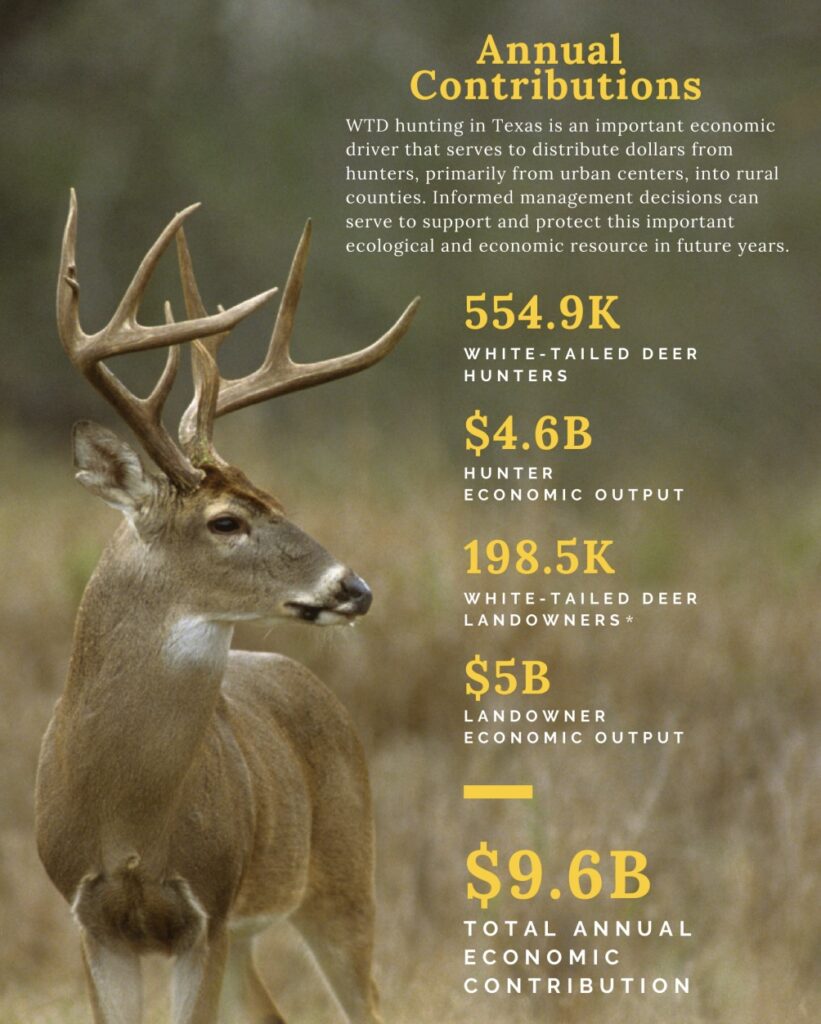
A recent study estimated white-tailed deer hunting in Texas contributes $9.6 billion to the economy annually.
Exotic game in Texas, estimates in the past few years say, is at least a $1.5 billion industry.
That doesn’t include the economic impact associated with other Texas game or non-hunting wildlife recreation.
A study in 2011 found that birdwatching in the Rio Grande Valley contributed $463 million to the local economy, a number that’s predicted to be even higher now.
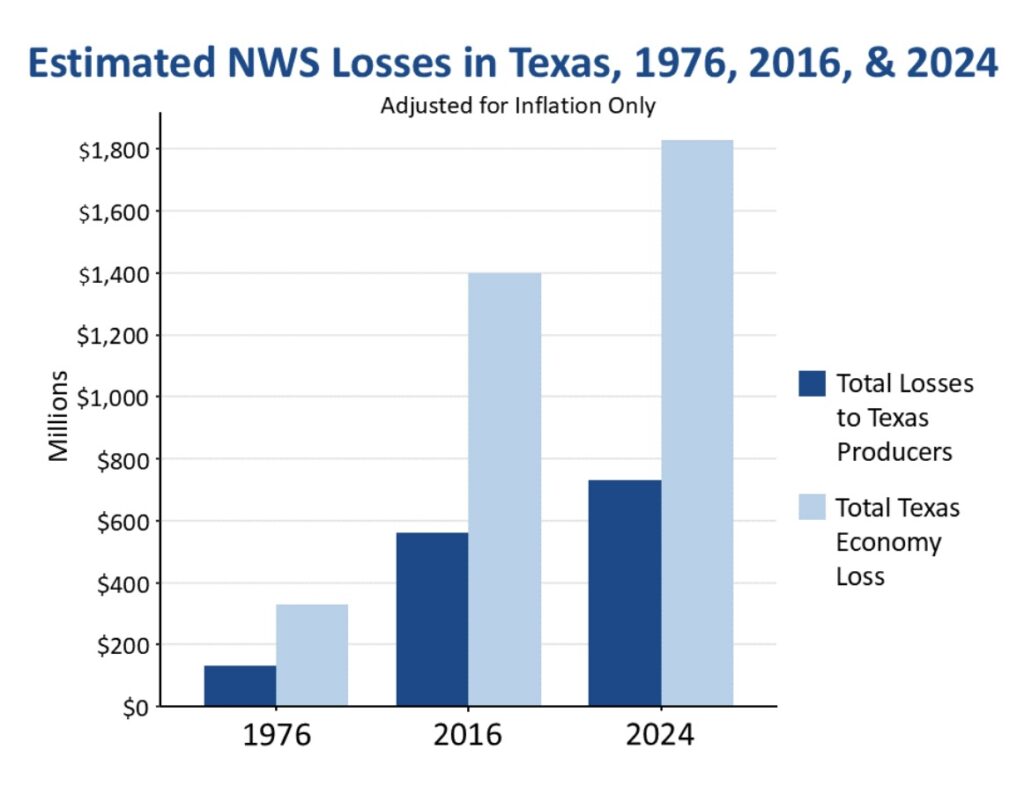
Screwworms could devastate large swathes of those industries, though Texas A&M AgriLife Extension Entomologist Sonja Swiger says it’s not abundantly clear exactly what that impact will look like.
“The disadvantage is that it was never really reported like we did with cattle back in the ‘70s,” she said. “But what we know from then to know is that the wildlife populations have grown immensely since we eradicated the screwworms and they believe a lot of that growth in those populations can be attributed to removing the screwworms.”
There is, however, one recent example from the United States of what screwworms may do to Texas’ wildlife.
Read more: South Texas ranchers brace as flesh-eating screwworm advances toward border
Key deer infestation
Florida Key deer are the smallest subspecies of white-tailed deer. A mature buck is about the size of a golden retriever.
Endangered, there’s probably less than a thousand of the deer, which spend their lives swimming from key to key.
In 2016 screwworms threatened to drive Key deer extinct.
In July of that year a biologist noticed a deer with maggots in a leg wound.
In February, U.S. Agriculture Secretary Brooke Rollins attributed the spread there to an infestation in a dog.
Other USDA reports said the pest could have come calling in a wide range of ways.
They could have arrived with an infested person or animal who had travelled to the keys — legally or illegally. Perhaps they’d hitched a ride inside a boat or on some kind of animal hide. They might have even flown there.

Courtesy of | Texas A&M AgriLife Extension Service | Valerie Preziosi
Regardless of how the screwworms arrived, they quickly became a dire threat for the key’s little toy deer.
Within two months, mortality rates for bucks reached levels that were about twice as high as normal.
Deer began dying in droves.
People who lived in the keys started seeing their beloved little deer wandering around like zombies, half their faces missing.
When a deer was clearly past saving, police or wildlife officials euthanized it with a bolt gun.
Officials and volunteers began administering Doramectin, a parasite medication, to the deer and in October, when over 100 deer died, the USDA began releasing sterile flies by the million.
A few dogs, a pair of cats, a raccoon and someone’s pet pig were infested as well, but Key deer — particularly bucks — bore the brunt of the impact.
According to a study, 15% of Key deer population were euthanized or died because of screwworm infestations between July and October of 2016, more than nine in 10 of those fatalities were adult males.
The study noted the outbreak happened during breeding season, when bucks are in the rut, sparring with each other and trading minor injuries.
Despite the death toll, the outbreak wasn’t predicted to have a significant impact on the Key deer’s population.
That wasn’t a foregone conclusion.
Had the flies arrived earlier in the year, when does were birthing fawns, mother and offspring both vulnerable to the screwworms, the outbreak “would likely have a significant population impact,” researchers found.
It was fortunate, one wildlife official noted during the outbreak, that screwworms had turned up in the keys and not in somewhere less manageable — like Texas.
Texas Parks and Wildlife Department efforts
If screwworms do wind up in Texas, said rutting bucks and newborn fawns will probably be particularly susceptible.
Estimates put mortality rates for deer at about 80%.

“So that’s huge. And definitely worth protecting and being cognizant of,” Texas Parks and Wildlife Department wildlife veterinarian Dr. J. Hunter Reed said at an informational talk in November.
Screwworms’ wouldn’t just affect deer.
According to TPWD, there have historically been confirmed cases in white tailed deer, racoons, rabbits and possums, along with suspected cases in bobcats, coyotes, badgers, mountain lions and foxes.
The Valley’s birding industry, however, may not be as significantly impacted.
Heavily muscled birds — like turkeys and ducks — can be infested with screwworms, according to the department, though birds on the whole are less susceptible.
Despite the grim outlook on screwworms’ potential impact, Reed said he’s confident in detection efforts.
Earlier this year, the department stepped up those efforts.
On Jan. 25, Gov. Greg Abbott instructed TPWD and the Texas Animal Health Commission to jointly establish a response team to work with stakeholders and coordinate information-sharing.
“The mission for the Response Team is clear: to lead Texas’ prevention and response efforts and ensure that Texas remains informed, prepared, and aligned to prevent the re-emergence of this destructive parasite,” Abbott wrote.
TPWD has been asking people to keep an eye out for screwworms for over a year.
If anyone does encounter an animal they think could be infested with screwworms, they should contact a TPWD wildlife biologist.
Read more: Tamaulipas ranchers brace for screwworm risk amid drought and export shutdown

Matt Wilson
Reporter
Matt Wilson is a Hidalgo County–based freelance reporter and contributor to the Rio Grande Valley Business Journal. He previously covered education and general assignment for The Monitor, frequently writing about the dramatic ways business changed during the coronavirus pandemic. Before that he worked as a reporter in rural Central Texas where he covered everything from house fires to school board meetings.
Most Read
- Is SpaceX quietly building a data center at Starbase? Job postings offer clues
- 25 Mexican businesses eye McAllen expansion after city pitches U.S. market entry program
- SpaceX’s futuristic city of Starbase finalizes massive 7,100-acre annexation. Here’s what we know.
- McAllen metro keeps selling more homes as Brownsville-Harlingen market sees 17% drop through August
- Rio Grande LNG moves closer to getting even bigger at Port of Brownsville
Get the latest business news delivered to your inbox every morning for free.
Try 30 Days Free!
Get full access to award-winning journalism covering business, real estate, health care, economic trends, and the people shaping the Rio Grande Valley.
30 Days Free!
$9.95/month
Limited time offer
Subscription renews after your 30 day free trial at $9.95/mo.
Included Benefits
- Unlimited access to all articles
- Daily business news and analysis
- Subscriber-only content and features
Stories That Matter
- Mission’s first Small Business Expo puts $25K on the line for local entrepreneurs
- McCoy’s gives $10K, tools to launch Mid-Valley construction academy
- UT Health RGV performs new digestive procedure for first time in the Valley
- Home sales down in McAllen metro, flat in Brownsville metro — see data
- TSTC bets on advanced manufacturing to meet RGV’s industrial boom
- Pharr’s cross-border business push earns international recognition
- Brownsville eases drought restrictions after nearly three years as Rio Grande reservoir levels improve
- Texas A&M’s $53.5M McAllen research center will tackle water, food security and Valley health
- Valley has a seat at the table in Austin, but TxDOT says leaders must get their act together
- STC puts AI to work across 55 courses — from construction sites to car repair