Last April, Michael Francis, past president and current newsletter editor for the Fort Worth Audubon Society, led a group of birders to the Rio Grande Valley for a four-night stay. They checked into the Alamo Inn B&B, ate at local restaurants, paid entry fees at birding sites and state and national parks, and shopped locally.
“That’s what we do,” Francis, who lives in Fort Worth, said. “My wife loves it there.”
They’re among thousands of birders who descend on the Valley every year to see hundreds of species — and in the process pour hundreds of millions of dollars into the economy.
You can almost hear the ka-ching when the spring and fall migrations roll around.
Economic impact
Pinning down an exact number is difficult across Starr, Hidalgo, Willacy, and Cameron counties. The last formal economic study of nature tourism — including birding — was done by Texas A&M University, which estimated that in 2011, visitors contributed $463 million to the local economy and supported about 6,613 full- and part-time jobs.
“From a very practical standpoint, if it generates $250 million or $500 million, it generates a lot,” said Ron Garza, Associate Vice President for Workforce & Economic Development for The University of Texas, Rio Grande Valley.
“There’s no doubt those nine World Birding Centers and all the other areas that birders know as a culture – they are prime assets,” Garza said. “The biggest lesson is the communities of the Rio Grande Valley know the assets that they have, and treasure and take care of them.”
Sue Griffin, chair of the Rio Grande Valley Birding Festival, based in Harlingen and now in its 32nd year, said, “In 2024, we estimate that we booked 2,462 hotel nights in Harlingen.” A decades-old study put festival dollars going into Harlingen at a few million, but birding’s broader impact on the Valley “is quite large.”
“There are probably 15 to 20 companies that specialize in birding tours,” Griffin said. “And all of them have tours to the RGV. And that is year-round … They are renting vans, they are staying in our hotels, eating meals in our different restaurants, and paying entry fees at different locations.”
Global draw
The RGV is home to the World Birding Center, comprised of nine state parks in partnership between local municipalities, the Texas Parks and Wildlife Department, and the U.S. Fish and Wildlife Service. The Valley also boasts several national wildlife refuges and the National Butterfly Center. Besides Griffin’s fall birding festival, there’s also the Spring Chirp festival in Weslaco.
“The total species list for the Rio Grande Valley is 535 species, which is really high for such a geographically small area in the U.S.,” said John Brush, urban ecologist for the city of McAllen and Quinta Mazatlán, one of the World Birding Center sites.
Some are one-time sightings, like the Bat Falcon documented in 2021 at the Santa Ana National Wildlife Refuge, he said. Normally found further south in Mexico, it drew thousands of people from across the country to see it. One couple he met “had driven overnight from the border of Texas and Oklahoma, and they saw it, and then had to drive back.”
Courtesy of | Upsplash | Diane Theresa Hendrick
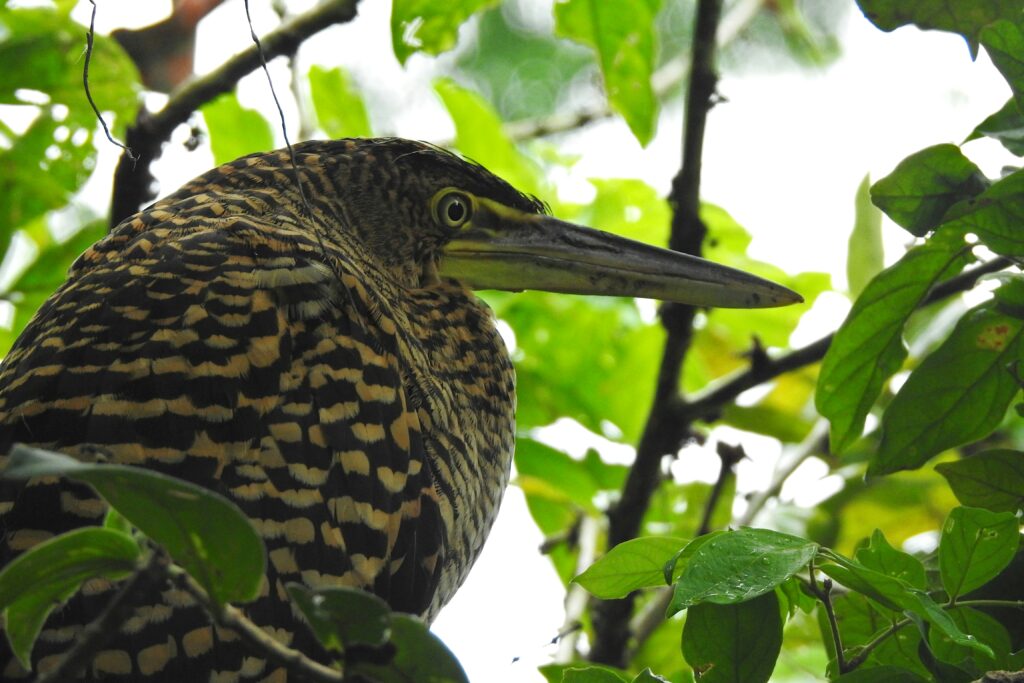
Or like the Bare-throated Tiger-Heron, also normally found south of the border, seen in 2010 near Laredo. It compelled Francis and a couple of friends to get in the car and drive from Fort Worth to the RGV.
But “probably 350-400 are ones that are seen almost every year in the RGV, which includes permanent resident birds, seasonally resident birds, and transitory birds,” Brush said.
While 80% of Quinta Mazatlán’s 50,000 annual visitors are from the RGV, the rest are national and international visitors, many of them birders.
Brush has met tourists from the United Kingdom, Canada, and other countries.
“I did a tour one time for a group of folks from Sweden who came to the RGV and did a multi-day birding tour,” Brush said.
Courtesy of | Upsplash |
Aleksandar Popovski
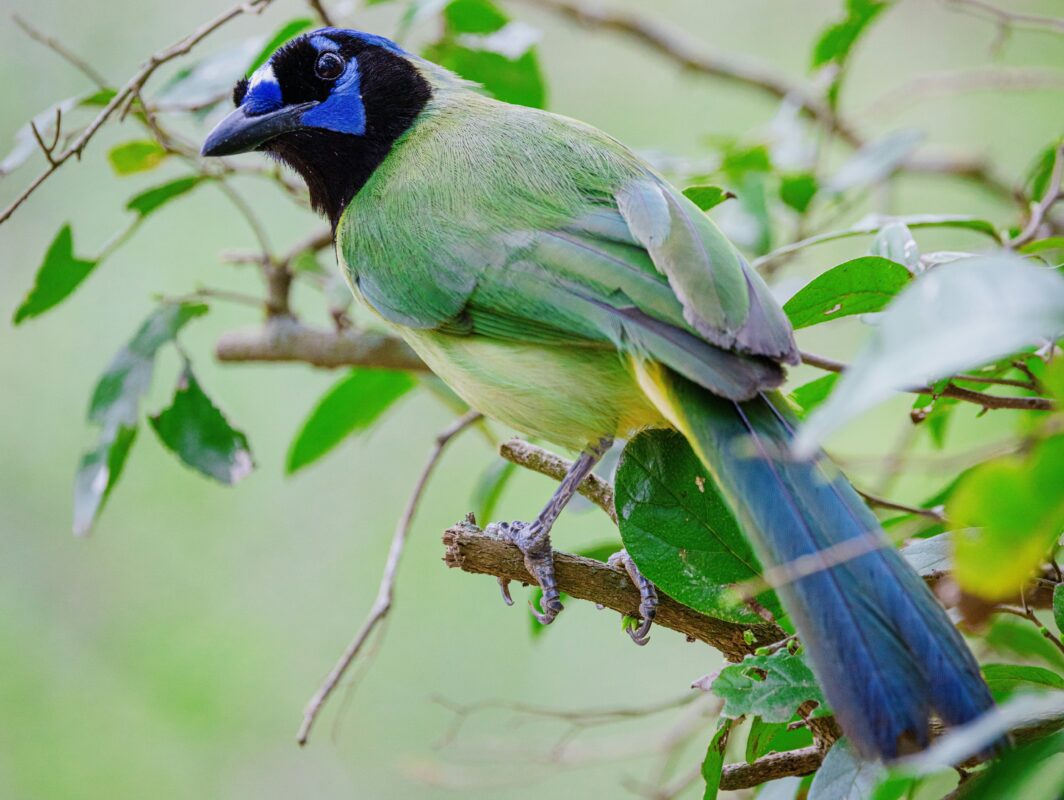
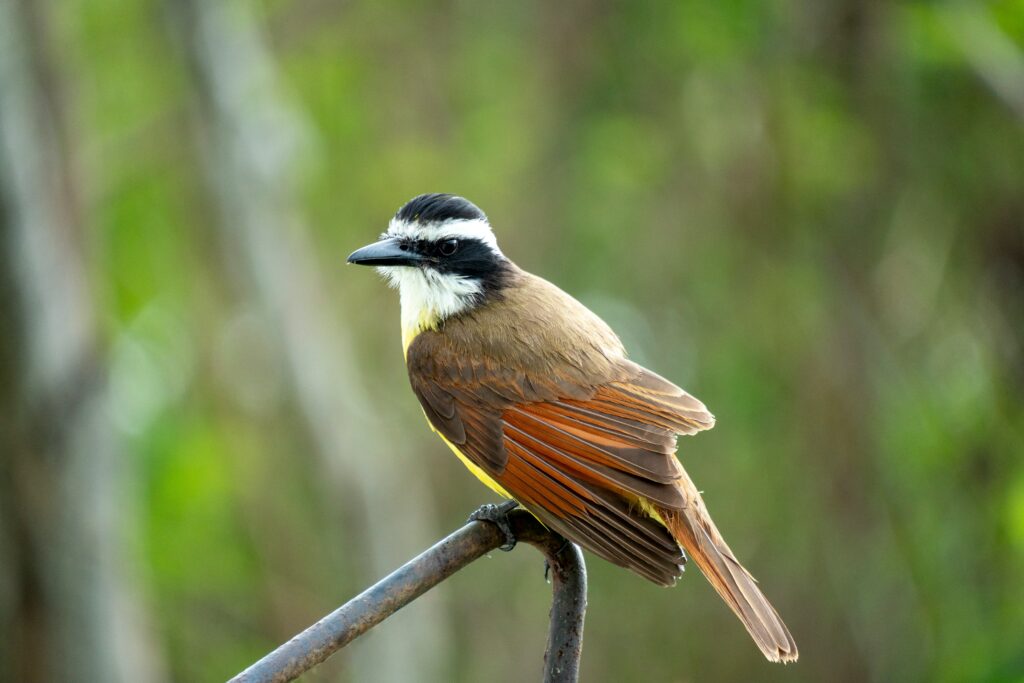
He recently took an informal survey asking people what species they’d most enjoyed seeing. The top five were the Green Jay, Plain Chachalaca, Great Kiskadee, Altamira Oriole, and Aplomado Falcon.
Down the road at the Laguna Atascosa National Wildlife Refuge, George “Georgie” Garcia, a U.S. Fish and Wildlife Ranger, said the refuge sees about 300,000 visitors annually.
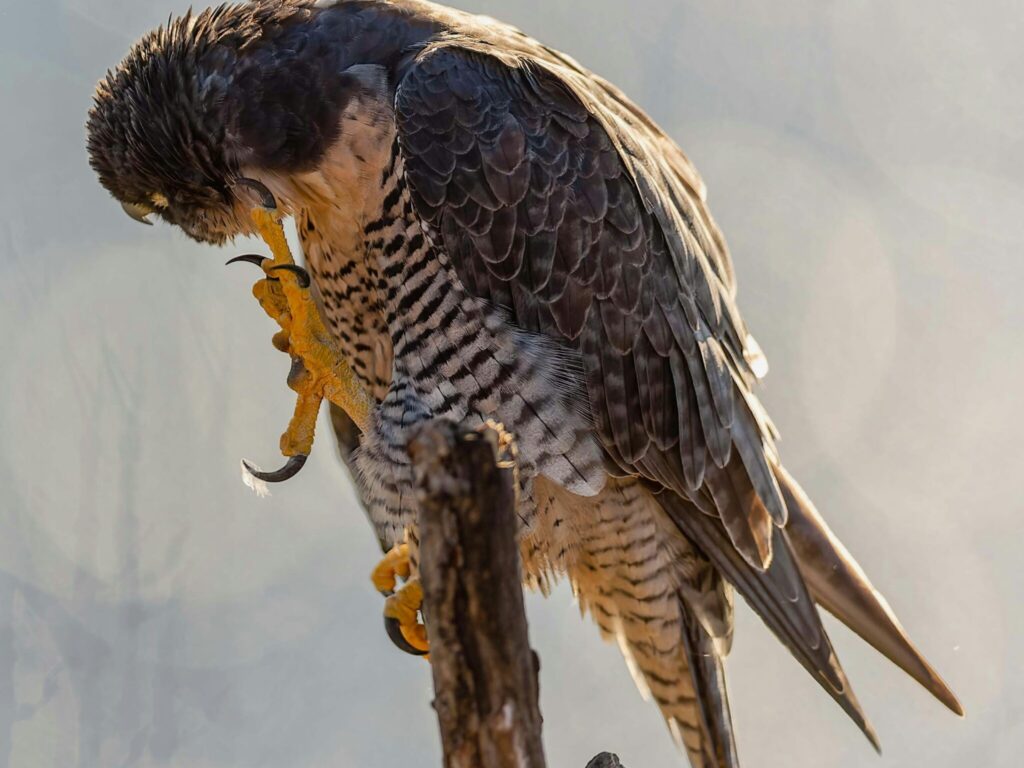
“We receive people from Europe, the UK, Finland, Ireland, Mexico,” he said. “They’re trying to get a number of bird species, or they come with a specific bird species in mind – looking for that one bird, the Aplomado Falcon or the Green Jay.”
Courtesy of | Upsplash | Jongsun Lee
The Laguna Atascosa refuge was originally designated for the protection of the Redhead Duck, and 80% of the species’ population “rests here during the winter,” Garcia said. There have been 417 species of birds documented at Laguna Atascosa, “more than any other wildlife refuge across the United States and our territories.”
This year’s plentiful rainfall should bring a “phenomenal” fall for birding, he added. To see as many species as possible, he recommends walking the trails rather than sticking to the visitors’ center.
Wildlife conservation
Mary Jo Bogatto, conservationist and owner of Cactus Creek Ranch, a 400-acre-plus native wildlife ranch designed with the help of The Nature Conservancy, said she’s had visitors from as far away as India. “They’ll travel that far with their children, so their children will have that education.”
This year marks the 30th anniversary of Cactus Creek Ranch, which has been featured in the Netflix documentary Birders, Texas Monthly Magazine, and other publications. Bogatto, a regular speaker at the RGV Birding Festival, hosts university professors and students doing research and bird banding projects. Her ranch holds the longevity record for a Black-crested Titmouse banded in 2011 at the age of 8 years and 11 months, and a Bronzed Cowbird banded in 2015 at 9 years and 1 month.
New roads, wind turbines, and nearby SpaceX put pressure on wildlife, but so do too many visitors. It’s a balance, she said. The dollars ecotourists spend “are protecting our wildlife.”
Likewise, the birding festival, Griffin said.
“Over the years, we have sponsored college graduate students on their research projects. … And we established parrot nest box sites throughout the city [for] one year. So, it just depends on what year it is, what needs come up.”
For Brush, the impact is two-fold: “When we know people are spending time and money to see what we see on a day-to-day basis, it’s cultivating appreciation from those of us who live here.”

Beatriz Terrazas
Reporter
Beatriz Terrazas is a photojournalist and writer whose work has appeared in The Dallas Morning News and Fort Worth Star-Telegram. A Nieman Fellow at Harvard, she was part of the Morning News team that won the 1994 Pulitzer Prize for International Reporting. She’s covered underserved communities, border life, and human-impact stories.
Most Read
- SpaceX’s futuristic city of Starbase finalizes massive 7,100-acre annexation. Here’s what we know.
- 25 Mexican businesses eye McAllen expansion after city pitches U.S. market entry program
- Australian company plans to build a $607M lithium refinery at the Port of Brownsville. It’s a big bet on America’s battery future
- Starbase cancels meeting to consider annexing 444 acres relinquished by Brownsville
- SpaceX reschedules Starship’s first flight around the Earth
Get the latest business news delivered to your inbox every morning for free.
Try 30 Days Free!
Get full access to award-winning journalism covering business, real estate, health care, economic trends, and the people shaping the Rio Grande Valley.
30 Days Free!
$9.95/month
Limited time offer
Subscription renews after your 30 day free trial at $9.95/mo.
Included Benefits
- Unlimited access to all articles
- Daily business news and analysis
- Subscriber-only content and features
Stories That Matter
- A Brownsville startup wants to deliver water in space. First, it needs $7M
- $10M apartment complex planned in Hidalgo
- Edinburg looks to attract new franchise businesses with matchmaking event
- T-Mobile plans fiber-optic internet expansion in Mercedes
- New Harlingen airport CEO eyes Mexico flights, cargo expansion and more development
- Mission’s first Small Business Expo puts $25K on the line for local entrepreneurs
- McCoy’s gives $10K, tools to launch Mid-Valley construction academy
- UT Health RGV performs new digestive procedure for first time in the Valley
- TSTC bets on advanced manufacturing to meet RGV’s industrial boom
- Pharr’s cross-border business push earns international recognition