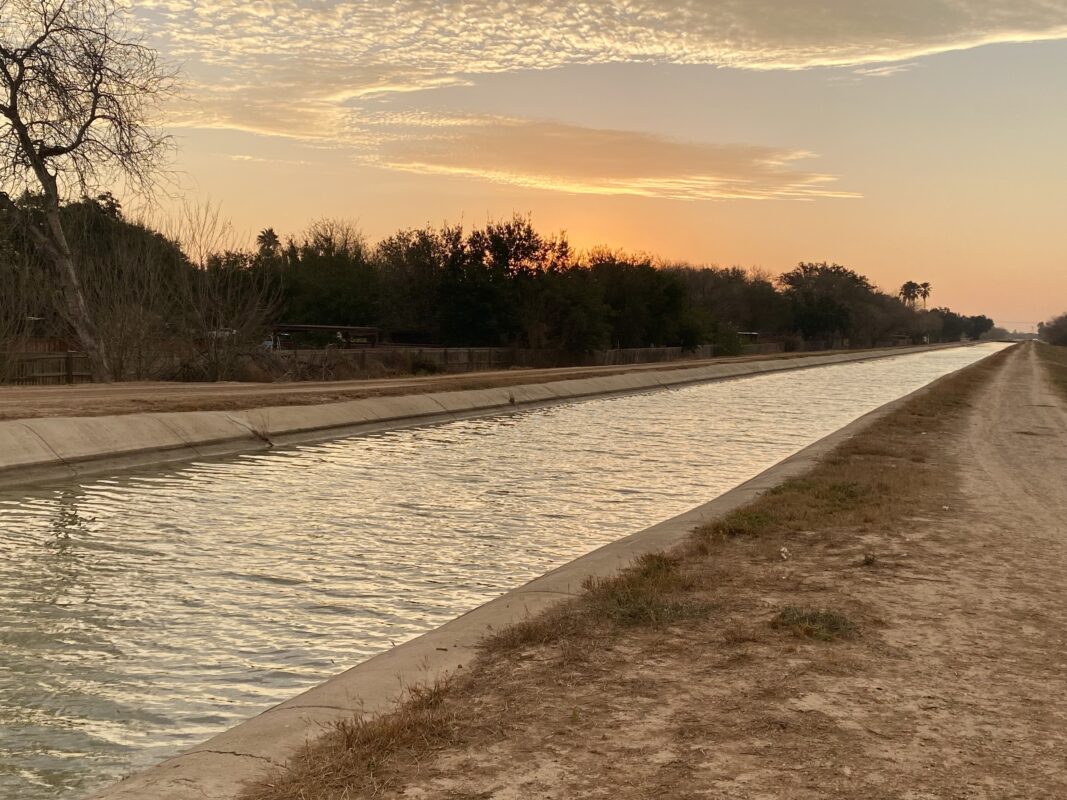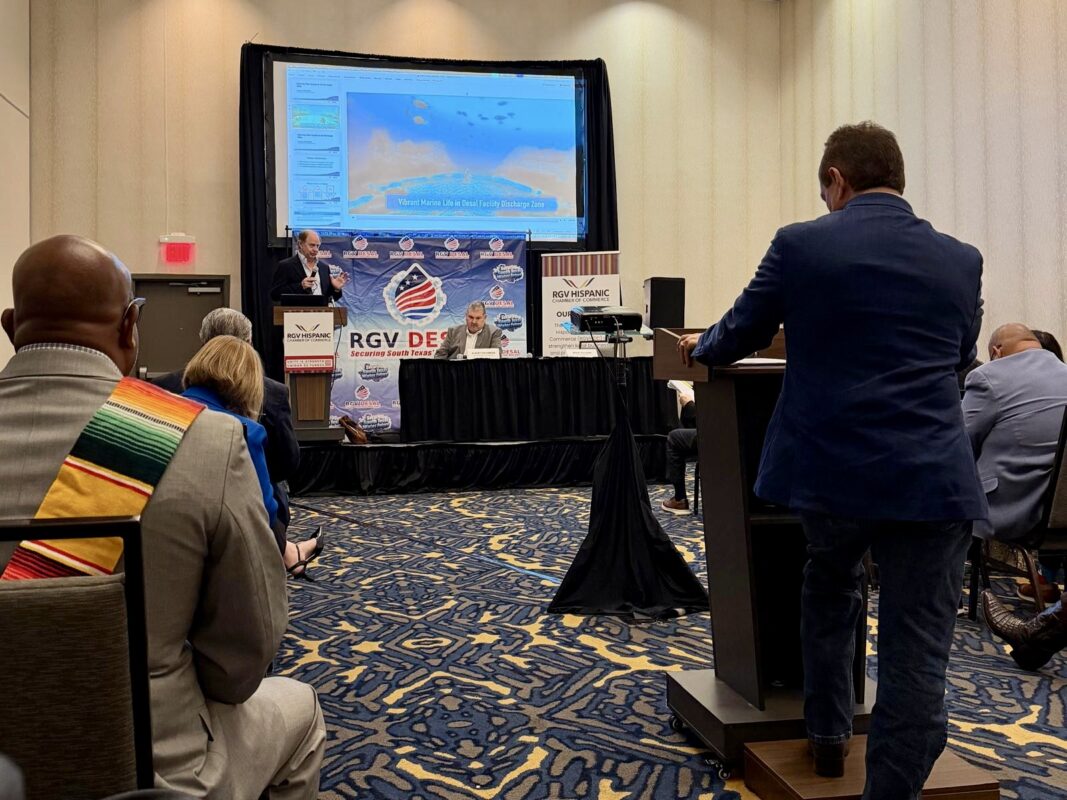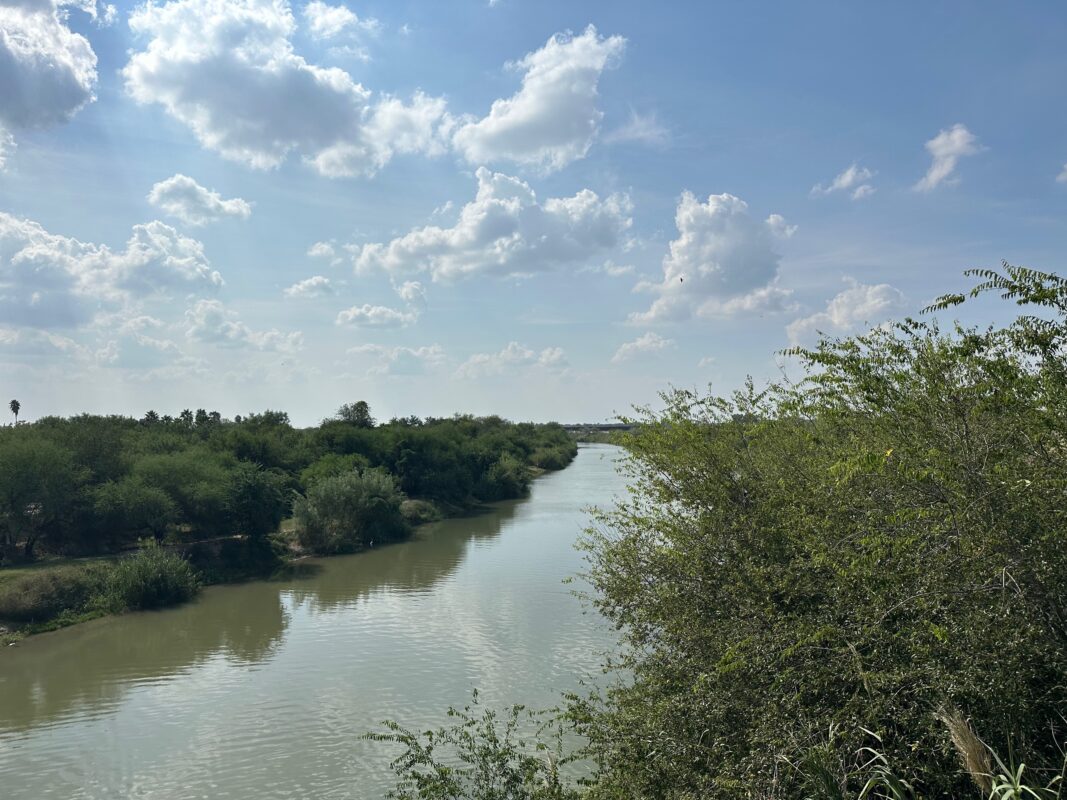
The Rio Grande Valley cannot grow without water.
On Wednesday, the four county judges of Cameron, Hidalgo, Starr, and Willacy counties launched a regional advisory committee aimed at confronting that reality — and mapping out how to secure long-term water supplies in one of Texas’ fastest-growing regions.
The RGV Water Management Study, which is supported by the North American Development Bank, will evaluate infrastructure needs and identify projects to strengthen drought resilience, conservation, and supply diversification.
“Water is the foundation of our region’s economy, public health, and quality of life,” Hidalgo County Judge Richard F. Cortez said in a statement. “This Advisory Committee will help us move beyond short-term fixes and toward long-term, sustainable solutions that protect the Rio Grande Valley’s future.”
Growth pressures meet supply limits
The launch comes as the Valley faces mounting water pressure driven by population growth, industrial expansion, agricultural demand, and recurring drought cycles.
Large-scale projects — from LNG facilities and industrial manufacturing to residential expansion — are reshaping the region’s shoreline and urban corridors. But water capacity remains a structural constraint.
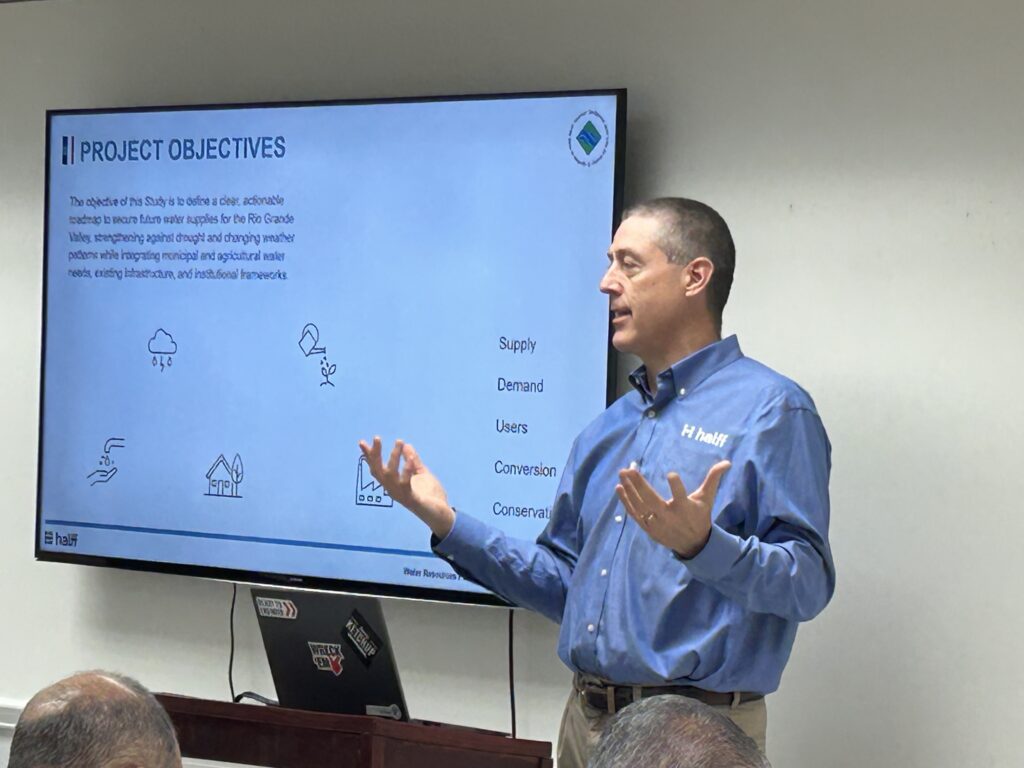
Courtesy of | North American Development Bank
Without coordinated planning, future development could face delays, higher costs, or regulatory bottlenecks tied to supply reliability.
The advisory committee will guide the study’s strategic planning, operational coordination, and stakeholder engagement.
Its charge: identify infrastructure projects that can stabilize long-term water availability across the four-county region.
“Securing the Rio Grande Valley’s water future requires all of us rowing in the same direction,” Cameron County Judge Eddie Treviño Jr. said in a statement. “This Advisory Committee brings together the expertise and regional cooperation needed to identify real, long-term solutions.”
From emergency response to long-term planning
Valley water conversations in recent years have often centered on short-term drought response and treaty tensions.
This study shifts the focus toward long-range infrastructure strategy.
Salvador Lopez, NADBank’s chief environmental officer, said the effort is designed to engage regional stakeholders in identifying projects that strengthen resilience while supporting future growth.
“This collaborative study between the four Rio Grande Valley County Judges and NADBank will ensure that all relevant voices in the region are engaged in identifying solutions to ensure water supplies for future growth and to increase the region’s ability to withstand droughts,” Lopez said.
NADBank is supporting the effort through grant resources from its Technical Assistance Program.
Regional coordination becomes economic policy
The advisory committee includes cities, irrigation districts, drainage districts, groundwater conservation districts, water supply corporations, and regional economic organizations.
That mix signals something larger than a technical study.
Water planning in the Valley is no longer just environmental policy. It is economic policy.
Industrial recruitment, agricultural production, housing development, and cross-border trade all depend on predictable supply.
The study’s governance framework — introduced during Wednesday’s meeting — is intended to strengthen coordination among jurisdictions that historically operated independently.
Whether that coordination translates into funded infrastructure projects will determine how well the Valley’s capital surge aligns with its natural resource constraints.

RGV Business Journal Staff
Staff
Most Read
- Is SpaceX quietly building a data center at Starbase? Job postings offer clues
- 25 Mexican businesses eye McAllen expansion after city pitches U.S. market entry program
- SpaceX’s futuristic city of Starbase finalizes massive 7,100-acre annexation. Here’s what we know.
- McAllen metro keeps selling more homes as Brownsville-Harlingen market sees 17% drop through August
- Rio Grande LNG moves closer to getting even bigger at Port of Brownsville
Get the latest business news delivered to your inbox every morning for free.
Try 30 Days Free!
Get full access to award-winning journalism covering business, real estate, health care, economic trends, and the people shaping the Rio Grande Valley.
30 Days Free!
$9.95/month
Limited time offer
Subscription renews after your 30 day free trial at $9.95/mo.
Included Benefits
- Unlimited access to all articles
- Daily business news and analysis
- Subscriber-only content and features
Stories That Matter
- Texas A&M seeks contractors for new health education and research building in McAllen
- Beach Water Park files plans for $750K go-kart track project on South Padre Island
- Hundreds are vying for jobs in Brownsville. Here’s what jobseekers are seeing in the market
- Mission’s first Small Business Expo puts $25K on the line for local entrepreneurs
- McCoy’s gives $10K, tools to launch Mid-Valley construction academy
- UT Health RGV performs new digestive procedure for first time in the Valley
- TSTC bets on advanced manufacturing to meet RGV’s industrial boom
- Pharr’s cross-border business push earns international recognition
- Brownsville eases drought restrictions after nearly three years as Rio Grande reservoir levels improve
- Texas A&M’s $53.5M McAllen research center will tackle water, food security and Valley health