A repeat of the region’s drought of record could cost South Texas $2.82 billion in lost income and 11,500 jobs in a single year if projected water needs go unmet, according to the 2026 Rio Grande Regional Water Plan.
The figures come from a Texas Water Development Board analysis included in the plan.

Region M Water Planning Area
The modeling examines what would happen if the eight-county Rio Grande planning region — which encompasses Cameron, Hidalgo, Starr, Willacy, Webb, Zapata, Maverick, and Jim Hogg counties — faced another severe drought and did not have enough reliable water to meet projected demand.
The state’s required water plan looks ahead 50 years, from 2030 to 2080, and measures impacts in 10-year benchmarks, beginning in 2030 as the first forward-looking test year.
The analysis warns that if water supplies fall short during a major drought, the regional economy will contract.
“Insufficient water supplies could not only have an immediate and real impact on the regional economy in the short term, but they could also adversely and chronically affect economic development in Texas,” the report said.
What the numbers mean
If there’s a severe drought and projected water needs go unmet, the region could lose $2.82 billion in one year. That’s income that would not flow through the economy, from paychecks to business sales.
The analysis also estimates 11,500 jobs could be at risk in that same drought-year scenario.
The financial effects would extend beyond employment.
The modeling estimates that a decline in production and imports could lead to $316 million in tax losses. And if that activity declines, so does the tax revenue it generates to help fund infrastructure, public safety, and schools.
The economic strain can also translate into population shifts.
The analysis estimates that in that scenario, 1,653 residents could leave the region and schools could lose 302 students.
Utility systems would also feel the strain.
The report projects $98 million in utility revenue losses in the first benchmark year. Those figures reflect lower water sales and slower economic activity tied to constrained supply.
When drought hits, agriculture feels it first
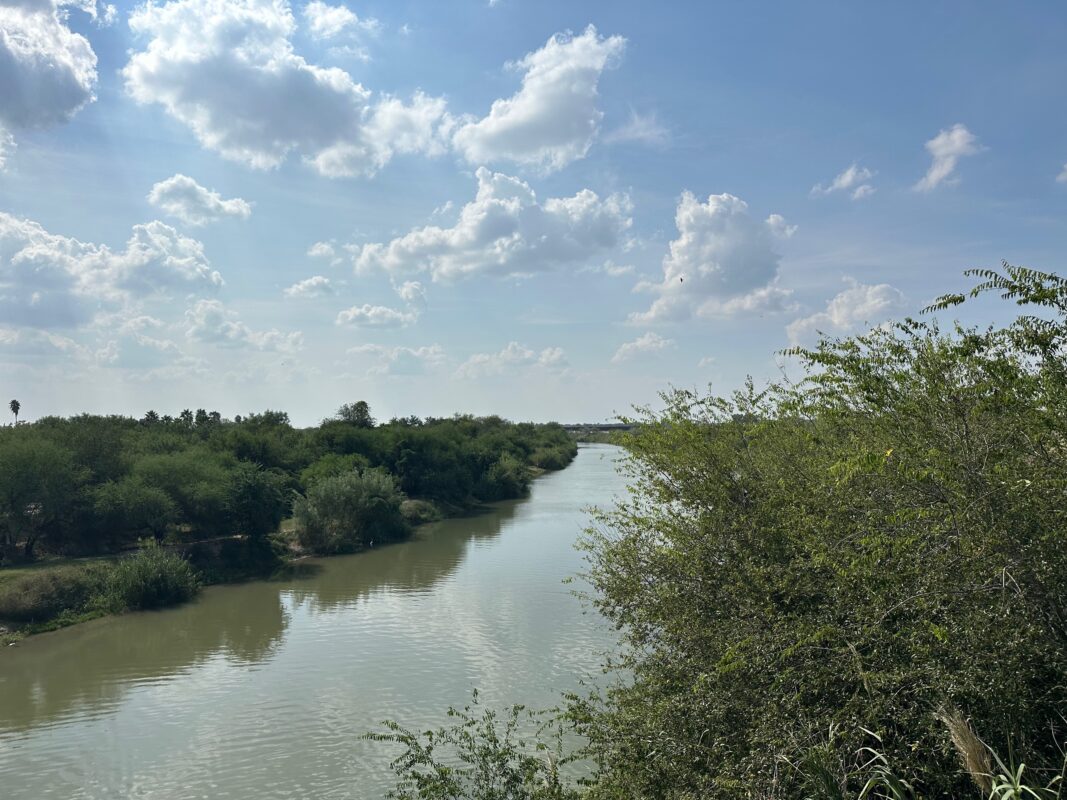
South Texas relies heavily on the Rio Grande and the Amistad-Falcon reservoir system as its primary water source.
During drought, water for domestic and municipal use is prioritized and irrigation users absorb deeper cuts.
That structure means agriculture is often the first sector to feel the impact when supplies tighten.

Courtesy of | Santa Rosa Sugar
The economic consequences are already visible.
The plan points to the 2024 closure of the Rio Grande Valley Sugar Growers Inc. mill in Santa Rosa — described as the only sugar mill in Texas.
The company cited a lack of reliable water supply, including reduced deliveries from Mexico when it shuttered.
The mill supported hundreds of workers and more than 100 sugar cane growers.
The report said its closure will have a significant impact on the regional economy, but there are plans underway to reopen the facility.
Irrigation districts sit at the center of this system.
They move more than 85% of the Rio Grande water used across the eight counties, supplying farms as well as municipal and industrial customers.
The plan said those systems can lose between 10% and 40% of diverted water through seepage, evaporation, and operational factors.
To reduce water loss and improve reliability, the report recommends lining canals, adding pipelines, and upgrading meters and equipment
At the same time, municipal demand across the eight counties is projected to increase about 12% over the 50-year planning horizon, from 303,225 acre-feet per year in 2030 to 340,085 acre-feet per year by 2080.

RGV Business Journal Staff
Staff
Most Read
- Is SpaceX quietly building a data center at Starbase? Job postings offer clues
- 25 Mexican businesses eye McAllen expansion after city pitches U.S. market entry program
- Rio Grande LNG moves closer to getting even bigger at Port of Brownsville
- Starbase EDC may issue $3 billion in tax-exempt bonds to support SpaceX, records show
- Edinburg ISD rejects nearly $6M offer for prime land near La Sienna despite $15M budget deficit
Get the latest business news delivered to your inbox every morning for free.
Try 30 Days Free!
Get full access to award-winning journalism covering business, real estate, health care, economic trends, and the people shaping the Rio Grande Valley.
30 Days Free!
$9.95/month
Limited time offer
Subscription renews after your 30 day free trial at $9.95/mo.
Included Benefits
- Unlimited access to all articles
- Daily business news and analysis
- Subscriber-only content and features
Stories That Matter
- Love’s plans $600K electric vehicle charging project in Edinburg
- Reynosa truckers protest highway robberies, extortion and rising costs
- 5×5 Brewing plots $2.5M comeback with new Edinburg brewpub near UTRGV
- S-Mart opens seventh Matamoros store with $12.6M investment, plans more
- Mission’s first Small Business Expo puts $25K on the line for local entrepreneurs
- McCoy’s gives $10K, tools to launch Mid-Valley construction academy
- UT Health RGV performs new digestive procedure for first time in the Valley
- TSTC bets on advanced manufacturing to meet RGV’s industrial boom
- Pharr’s cross-border business push earns international recognition
- Brownsville eases drought restrictions after nearly three years as Rio Grande reservoir levels improve