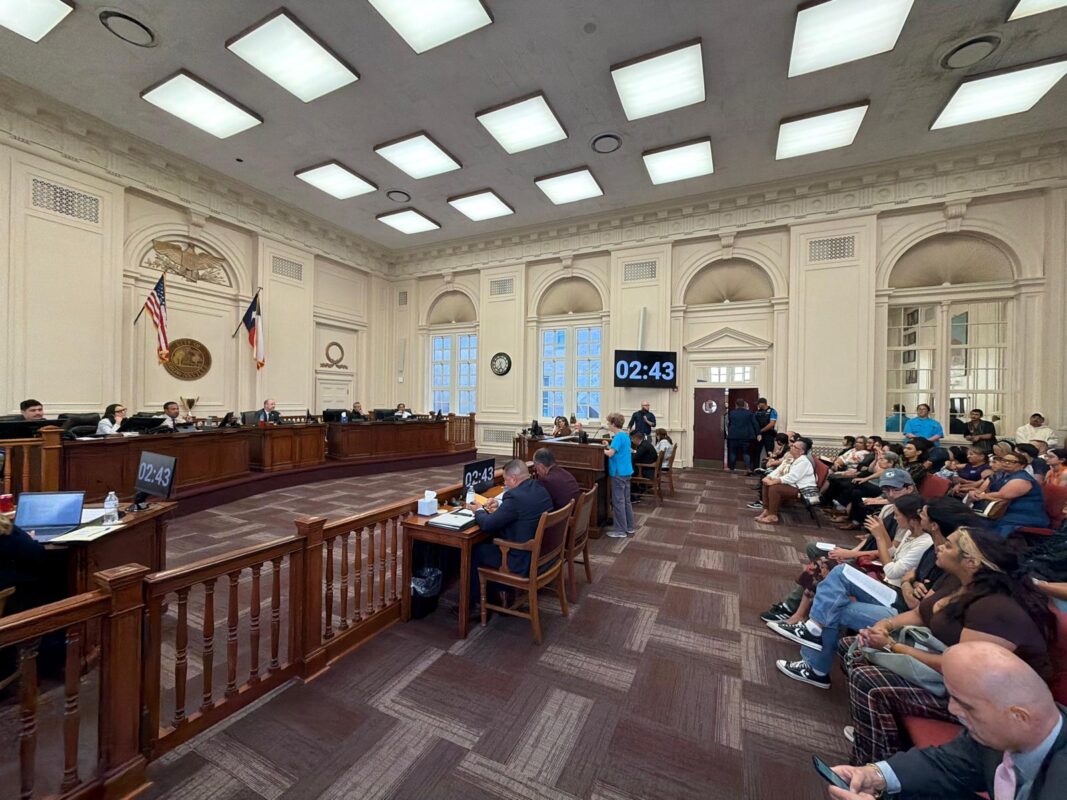
Harlingen Mayor Norma Sepulveda says she does not currently see a clear benefit to the city from a proposed multibillion-dollar data center planned just outside city limits, as questions mount over water use, electricity demand, and long-term infrastructure impacts.
Sepulveda took to social media on Thursday to say she met directly with representatives from Eneus Energy, the developer behind the proposed RGV Data Center.

“It was a brief meeting, but it was necessary,” she said, without disclosing the date.
Sepulveda said she went into the meeting with a long list of questions. Many came from residents. Others were based on what she learned while speaking with mayors across the country who already have data centers operating in their communities.
“I did not get all the answers I wanted,” she said about the meeting. “Because of that, we are in the process of setting up another meeting.”
The proposed campus would sit outside Harlingen city limits on roughly 1,780 acres east of Valley International Airport in Cameron County.
“However, boundary lines do not prevent impact,” Sepulveda said. “If something affects our regional water supply, our utilities, or surrounding infrastructure, it matters to Harlingen whether it sits just outside city limits or not.”
Sepulveda said she is working with the city attorney on a local ordinance and a potential moratorium to ensure guardrails are in place if a formal proposal comes before the Harlingen City Commission.
Scale of the proposal
The proposed RGV Data Center could represent more than $14 billion in capital investment and generate more than $9 billion in economic impact through 2045, according to the company’s filings with the Texas Public Utility Commission and promotional materials.
Eneus plans to build up to 16 data halls to support artificial intelligence, cloud computing, and data analytics.
At full buildout, the campus could require as much as 2 gigawatts of electricity. An initial 1-gigawatt phase — roughly enough to power about 250,000 homes — would be constructed in stages to align with available infrastructure capacity.
The company estimates the project could support about 1,000 jobs over time, including roughly 360 permanent operations positions.
To address water concerns, Eneus says it would use reclaimed wastewater rather than potable water for cooling.
In September, the company reached an agreement with Harlingen WaterWorks System to supply about 4.6 million gallons per day of treated effluent, a volume that could generate roughly $1.2 million annually for the utility.
Founded in 2013 as a green hydrogen developer, Eneus has since expanded into digital infrastructure. Its investors include The Carlyle Group and GIC, a Singapore-based sovereign wealth fund.
“The RGV data center is a next-generation digital infrastructure project designed to power Texas’s future while supporting local growth in Cameron County,” the company said in its PUC letter.
County: limited authority, ongoing review
Cameron County Judge Eddie Treviño Jr. addressed the broader issue in a Jan. 13 statement, saying the county is conducting its due diligence.
“As interest in the construction of a data center in Cameron County grows, it is important to acknowledge and respect the legitimate concerns raised by our community,” Treviño said, adding that the county is reviewing studies from other regions and evaluating potential impacts related to land, water, and energy consumption.
Treviño also emphasized that the county may not be able to stop the development.
“If a business complies with applicable state and federal regulations, as well as local permitting requirements outside the County’s jurisdiction, the County has limited ability to restrict that business’s operations,” Treviño wrote.
At the time of his statement, Treviño said the county had not been presented with a formal proposal or permitting application for construction of a data center.
What comes next
Sepulveda said she plans to visit other communities that already host data centers to better understand long-term impacts and what local governments require before approving similar projects.
“As of today, I do not see a clear benefit to the City,” she wrote. “That does not mean the conversation is over. It means the burden is on the developer to demonstrate value and protection.”

RGV Business Journal Staff
Staff
Most Read
- SpaceX’s futuristic city of Starbase finalizes massive 7,100-acre annexation. Here’s what we know.
- 25 Mexican businesses eye McAllen expansion after city pitches U.S. market entry program
- Australian company plans to build a $607M lithium refinery at the Port of Brownsville. It’s a big bet on America’s battery future
- Starbase cancels meeting to consider annexing 444 acres relinquished by Brownsville
- SpaceX reschedules Starship’s first flight around the Earth
Get the latest business news delivered to your inbox every morning for free.
Try 30 Days Free!
Get full access to award-winning journalism covering business, real estate, health care, economic trends, and the people shaping the Rio Grande Valley.
30 Days Free!
$9.95/month
Limited time offer
Subscription renews after your 30 day free trial at $9.95/mo.
Included Benefits
- Unlimited access to all articles
- Daily business news and analysis
- Subscriber-only content and features
Stories That Matter
- Dickey’s Barbecue Pit to open new McAllen location inside Cambria Hotel
- NADBank opens $300M financing pipeline for water, energy projects along the border
- Is SpaceX quietly building a data center at Starbase? Job postings offer clues
- Engineering firm Garver opens $5M Harlingen office, plans up to 50 new jobs
- Mission’s first Small Business Expo puts $25K on the line for local entrepreneurs
- McCoy’s gives $10K, tools to launch Mid-Valley construction academy
- UT Health RGV performs new digestive procedure for first time in the Valley
- TSTC bets on advanced manufacturing to meet RGV’s industrial boom
- Pharr’s cross-border business push earns international recognition
- Brownsville eases drought restrictions after nearly three years as Rio Grande reservoir levels improve