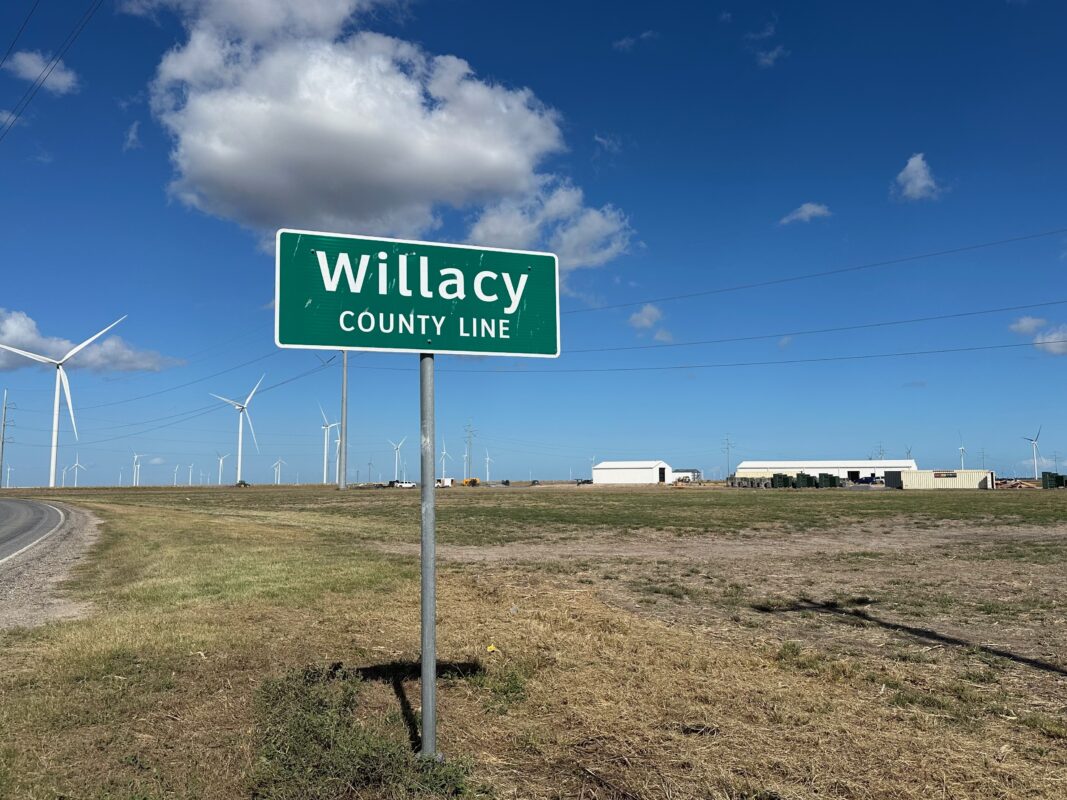
Tamaulipas is entering a new phase of energy development as federal officials move forward with $8.17 billion in electrical-transmission investments designed to support industrial growth along the Texas–Mexico border.
The funding comes from Mexico’s Federal Electricity Commission (CFE), the country’s state-owned electric utility that builds and operates the national power grid.
Its 2025–2030 investment plan intends to expand the nation’s electrical grid and ensure there’s enough electrical capacity to support new manufacturing tied to nearshoring.
Border cities driving industrial demand
Reynosa and Matamoros anchor Tamaulipas’ industrial belt along the border, serving as major manufacturing and logistics hubs across from McAllen and Brownsville.
Both cities host large clusters of automotive, electronics, medical device, and aerospace operations supported by multiple industrial parks and international bridge crossings. Their wind corridors, particularly near Reynosa and the Gulf-facing areas of Matamoros, have made them central to the state’s renewable-energy development.
Farther inland, the rural municipalities of San Fernando and Méndez sit in a low-density stretch of northern Tamaulipas where open terrain has attracted large-scale wind farms.
San Fernando is about an hour west of Matamoros, and Méndez lies even farther northwest in an area dominated by ranchland, giving both communities the wide, unobstructed landscape that defines the region’s strongest wind-generation zones.
Though neither is an industrial center, their wind output feeds the border manufacturing corridor through new transmission projects.
Major transmission projects underway
According to Constantino Castillo, president of the Tamaulipas–Texas International Energy Cluster, the federal investment directly addresses the transmission constraints that have slowed wind-energy expansion in the region.

“For years, wind energy development in northern Tamaulipas was limited by insufficient transmission capacity,” he said. “This investment solves that bottleneck.”
The most significant project tied to the plan is the Huasteca–Monterrey transmission line.
The 430-kilometer line carries a budget of $190 million and will move electricity produced by wind farms in Reynosa, Méndez, Matamoros, and San Fernando to major consumption centers across northeastern Mexico.
Castillo said the line is part of a broader package of 235 projects totaling 8,735 kilometers of new transmission infrastructure nationwide — an expansion he described as Mexico’s largest grid buildout in decades.
Wind megaprojects and natural gas expansion
Tamaulipas is already Mexico’s second-largest producer of wind energy, with 13 operating wind farms and 1,722 megawatts of installed capacity. State officials and private developers see further potential across the wind corridors that run from the Laguna Madre to the border.
Two large-scale wind projects stand out in the pipeline.
CFE is evaluating sites in Reynosa, Matamoros, and Nuevo Laredo for a 1,100-megawatt wind megapark that could become the largest in Latin America. The project is slated to be built through a public–private model.
A second project, the 800-megawatt Huizache Wind Farm in Villagrán, is being developed by SPIC–Zuma Energía — a partnership between State Power Investment Corporation of China, one of the world’s largest state-owned energy companies, and Mexico-based Zuma Energía, a major renewable-energy developer. The project’s connection to the Huasteca–Monterrey line is expected to lower transmission costs.
Beyond wind power, natural gas production in northern Tamaulipas is being reactivated to support combined-cycle power plants that provide electricity to industrial facilities.
Castillo said natural gas remains a necessary part of the state’s competitive position as manufacturing expands.

“Companies do not establish operations where energy supply is uncertain,” he said. “Today, Tamaulipas can guarantee electrical capacity for industrial growth.”
Cluster officials say the combination of new transmission lines, expanding wind generation, and renewed natural-gas availability strengthens the state’s position in automotive, aerospace, and advanced-manufacturing investment tied to the U.S. market under the United States–Mexico–Canada Agreement (USMCA).
They expect the infrastructure buildout to spur new supply chains and generate specialized employment across the region.

Anayancy Ulloa
Reporter
Most Read
- SpaceX is giving Brownsville $220M for water projects. In exchange, the city gave up zoning control of 444 acres near Starbase
- SpaceX seeks to take zoning control over nearly 450 acres from city of Brownsville as a ‘regional’ water deal takes shape
- Port of Brownsville could soon host Nodule City, a first-of-its-kind commercial deep-sea mining hub
- How much water does SpaceX need to operate near Brownsville? Nearly 20x its current use
- Cameron County is negotiating a $20M Fluidstack data center donation after Harlingen waffles on the same offer
Get the latest business news delivered to your inbox every morning for free.
Try 30 Days Free!
Get full access to award-winning journalism covering business, real estate, health care, economic trends, and the people shaping the Rio Grande Valley.
30 Days Free!
$9.95/month
Limited time offer
Subscription renews after your 30 day free trial at $9.95/mo.
Included Benefits
- Unlimited access to all articles
- Daily business news and analysis
- Subscriber-only content and features
Stories That Matter
- Rio Grande Valley receives more than $2M in state grants for veteran services
- Rio Bank is building a new $5.3M bank and office building in McAllen
- Australian company plans to build a $607M lithium refinery at the Port of Brownsville. It’s a big bet on America’s battery future
- Mission’s first Small Business Expo puts $25K on the line for local entrepreneurs
- Reynosa’s newest technical high school focuses on AI, semiconductors and bionics
- McCoy’s gives $10K, tools to launch Mid-Valley construction academy
- UT Health RGV performs new digestive procedure for first time in the Valley
- TSTC bets on advanced manufacturing to meet RGV’s industrial boom
- Pharr’s cross-border business push earns international recognition
- Brownsville eases drought restrictions after nearly three years as Rio Grande reservoir levels improve