By Matt Wilson and Anayancy Ulloa
President Donald Trump’s tariff threat on Monday pushed U.S.–Mexico water negotiations forward, raising hope on both sides of the border for a long-term solution to the binational water crisis.
In the shorter term, both Mexican and U.S. water advocates in South Texas — who agree on near-catastrophic water conditions — are less likely to find common ground on the issue.
Mexico has regularly failed to meet water delivery quotas stipulated in a 1944 Water Treaty that delineates how the water should be shared between both countries.
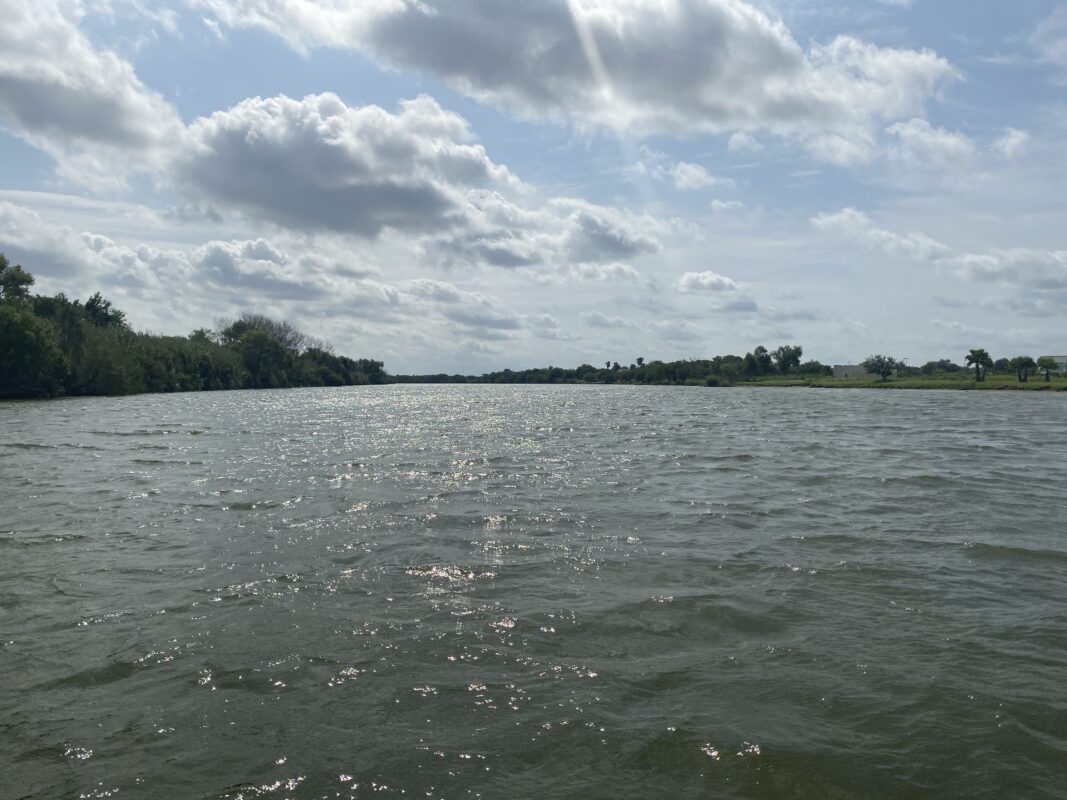
A growing drought has aggravated tensions on both sides of the Rio Grande over that issue.
On Monday, Trump said via social media that he was willing to impose a 5% tariff on Mexican imports if at least 200,000 acre-feet of water, or about 65.2 billion gallons, wasn’t released to the U.S. before Dec. 31. That amount of water is roughly equivalent to 100,000 Olympic-size swimming pools.
“The longer Mexico takes to release the water, the more our Farmers are hurt,” Trump wrote.
Mexican President Claudia Sheinbaum signaled a willingness to cooperate a day after Trump’s comments. On Tuesday, she said her country intended to send more water to the U.S., but not immediately.
Mexican and U.S. officials were slated to discuss the issue as soon as Tuesday.
“We’re very eager to see what happens,” said Sonny Hinojosa, a water advocate and retired irrigation manager in the Rio Grande Valley.
South Texas agriculture is in the crosshairs of the water shortage.
Many crops — citrus among them — are at risk of being eliminated by a lack of water, likely forever.
Hinojosa said a prompt release of water like the one suggested by Trump likely wouldn’t do anything to help Valley farmers until their fall crop next year, but even that would be a welcome aid.
“I mean the situation, it’s bleak,” he said.
Eutimio Palacios, owner of Granos Guadiana and a member of the Tamaulipas State Agricultural Council, looked at Trump’s comment far more critically. The accountant-turned-farmer in Río Bravo, Mexico, recently spoke to the Rio Grande Valley Business Journal for a three-part series on the sorghum crisis in Tamaulipas and the plight of farmers there.
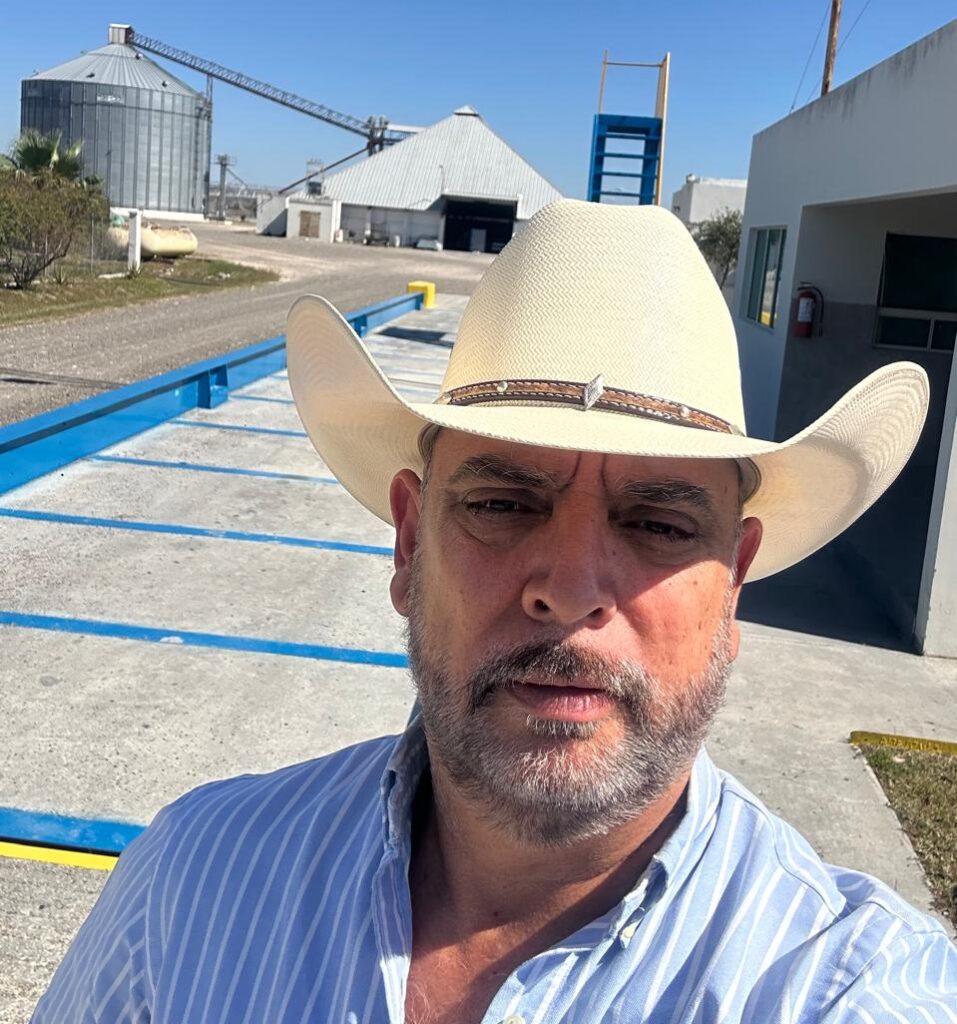
Courtesy of | Eutimio Palacios
Palacios said Trump’s remarks are out of context, given the current hydrological reality.
“I don’t know whether he is aware of the situation,” he said about Trump on Friday. “How are they supposed to pay if the international reservoirs, La Amistad and Falcon, are at critical levels?”
Palacios relies on water from the Rio Grande delivered through Irrigation District 025, known in Mexico as Distrito de Riego 025 Bajo Río Bravo.
The irrigation district is one of the country’s largest systems that serves agriculture in northern Tamaulipas, and it depends almost entirely on releases from the Amistad and Falcon international reservoirs, which are jointly managed under the treaty.
The farmer expressed concern over a potential violation of the treaty should Mexican authorities decide to cover the debt using water from Mexican basins that are not contemplated under the agreement.
“I’m afraid the treaty could be violated, and that payments could begin using water from another basin… that would amount to a double violation,” Palacios warned.
While Mexican and U.S. advocates may disagree in the short-term solutions, they share at least some broad sentiments on medium- and long-term goals.
Despite his adverse outlook, Palacios said the controversy surrounding the issue could lead to improved watershed management in the medium term.
“All of this helps bring about order,” he said. “Maybe not this year, but in the years ahead, if rainfall returns, the situation can be resolved.”
Hinojosa shares the same hope for a permanent resolution.
“What our farmers want is a source of water that’s reliable and consistent,” he said about South Texas growers.
He applauded the Trump administration’s efforts on water in South Texas.
Meanwhile, Palacios called on Mexican authorities to implement immediate and tangible measures in support of users in Irrigation District 025.
“Hopefully, as users of District 025, we will see concrete government actions that can truly help us overcome this emergency situation,” the Tamaulipas sorghum farmer said.
Elected officials on the U.S. side of the border agreed that more work and government attention are needed.
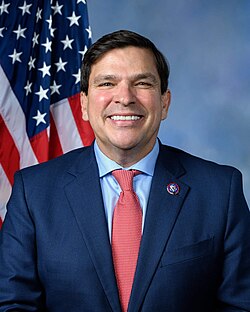
“I welcome ongoing discussions between the United States and Mexico to get South Texas the water it is rightfully owed,” U.S. Rep. Vicente Gonzalez, D-Brownsville, said in a statement. “At the same time, these water payments only go so far without the sustainable infrastructure in place to prevent evaporation and seepage. As we work to uphold Mexico’s end of the treaty, I continue to advocate for federal investments that will help increase our region’s water supply.”
U.S. Rep. Monica De La Cruz, R-Edinburg, said she’s closely communicating with the Trump administration as negotiations continue. She previously proposed that the treaty be tied to the United States-Mexico-Canada Agreement, which governs trade relations among the three countries.
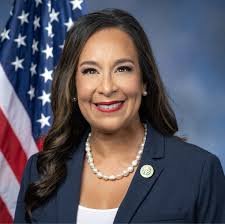
“For too long, the Mexican government has refused to comply with the obligation to make water deliveries under the 1944 Water Treaty,” De La Cruz said in a statement. “This has been my top priority since coming to Congress, and we have made progress to address water shortages, but work still needs to be done.”
Most Read
- Is SpaceX quietly building a data center at Starbase? Job postings offer clues
- 25 Mexican businesses eye McAllen expansion after city pitches U.S. market entry program
- SpaceX’s futuristic city of Starbase finalizes massive 7,100-acre annexation. Here’s what we know.
- McAllen metro keeps selling more homes as Brownsville-Harlingen market sees 17% drop through August
- Rio Grande LNG moves closer to getting even bigger at Port of Brownsville
Get the latest business news delivered to your inbox every morning for free.
Try 30 Days Free!
Get full access to award-winning journalism covering business, real estate, health care, economic trends, and the people shaping the Rio Grande Valley.
30 Days Free!
$9.95/month
Limited time offer
Subscription renews after your 30 day free trial at $9.95/mo.
Included Benefits
- Unlimited access to all articles
- Daily business news and analysis
- Subscriber-only content and features
Stories That Matter
- McAllen’s job market keeps climbing while Brownsville loses ground
- Mission EDC launches search for new CEO with salary up to $190K
- Texas transportation leaders to discuss Rio Grande Valley infrastructure at Mission summit
- Mission’s first Small Business Expo puts $25K on the line for local entrepreneurs
- McCoy’s gives $10K, tools to launch Mid-Valley construction academy
- UT Health RGV performs new digestive procedure for first time in the Valley
- South Texas College plans $4.7M makeover of cosmetology, security facilities in McAllen
- TSTC bets on advanced manufacturing to meet RGV’s industrial boom
- Pharr’s cross-border business push earns international recognition
- Brownsville eases drought restrictions after nearly three years as Rio Grande reservoir levels improve