There may be a new water conservation district in the Rio Grande Valley as more operators drill wells and rely less on surface water from the Rio Grande River, officials said during a recent discussion hosted by the McAllen Citizens League.
Most of the water cities across the Rio Grande Valley use is pumped from the Rio Grande River and then pushed via canals to treatment plants.
But that water source has become less reliable as a prolonged drought has lowered water levels, and a decades-long fight over a binational treaty with Mexico has left the U.S. short of its share, despite recent gains after the Trump administration threatened Mexico with new tariffs in late 2025.
Water preservation at the source
A water conservation district is meant to oversee groundwater levels and promote conservation efforts by enacting rules that may limit drilling — there are already nearly 100 such districts across Texas.
But the Rio Grande Valley only has three districts. All of them were created in the past 20 years.
The Kenedy County Groundwater Conservation District authority, which was created in 2004, includes slices of Willacy and Hidalgo counties. The Red Sands Groundwater Conservation District includes small sections of Hidalgo County near Linn.
Starr County established a groundwater conservation district in 2007, though it appeared to be inactive for several years due to a lack of funding. The district collects fees from groundwater well operators and charges a maintenance tax to cover ongoing costs.
There are no conservation districts in Cameron County, but there is an increase in groundwater drilling, so that may change.

“We’re all looking at these groundwater sources, and although there is a plentiful resource of groundwater in the Rio Grande Valley, it is a finite resource, just like the river is,” Brian Macmanus, general manager of East Rio Hondo Water Supply Corporation, said.
The water company, which sits about 20 miles northeast of Harlingen, supports 34,269 residents with more than 8,900 water connections.
Ideally, the conservation district would first determine how much groundwater there is, then impose rules on how much can be drilled depending on the water levels.
“We limit the amount of water that can be extracted with an entity like a groundwater conservation district and other regional-type entities that cooperate with the water utilities in the area,” Macmanus said. “I think those are the things we’re going to need to look at for the future long-term planning and sustaining our long-term water supply for the whole Rio Grande Valley.”
More groundwater wells in the works
Beneath the Rio Grande Valley lies the Gulf Coast aquifer, from which nearly all groundwater projects would draw.
There are already nine desalination plants across the Valley and one seawater desalination plant underway in Port Isabel.
The Military Highway Water Supply Corporation operates a one-million-gallon-per-day groundwater desalination plant in the city of Progreso. North Alamo Water Supply operates four desalination plants in Edinburg, San Juan, Donna, and Raymondville, serving between 1 million and 3 million gallons per day.
The largest existing desalination plant in the Valley is operated by the Southmost Regional Water Authority in Brownsville, which processes 6.3 million gallons of brackish water per day but has a capacity of 10 million gallons.
One big issue for Cameron County is that east of Interstate 69, the groundwater is considered too salty for brackish desalination projects.
East Rio Hondo Water Supply Corporation is expanding its brackish desalination plant in a three-phase project, which is projected to cost $60 million. Its North Cameron Reverse Osmosis Treatment Plant currently processes 2.3 million gallons per day.
The East Rio Hondo Water Supply Corporation borrowed money and received grants from the Texas Water Development Board totaling $32.9 million to expand its capacity from 5 million gallons to 7.5 million gallons, and eventually to 10 million gallons per day.
Only about two-thirds of the project is funded by loans and grants; the remaining amount is borne by the ratepayers, who will pay higher rates in 2026.
Another cost is to extend a pipeline from new wells on the east side of Cameron County to the west side, where more of the water company’s customers are located — that alone would be another $17 million project.
“What inspired us to move forward with this was the status of water quantities in the Rio Grande River,” Macmanus told the Rio Grande Valley Business Journal.
He noted record-low water levels in the Falcon and Amistad dam reservoirs.
“In 2023, less water came into the reservoir system than there’s water rights owned across the system. So we saw that the quantity had dipped below the ownership level, and we said, ‘Hey, that’s a red flag. Where are we going to be in 10, 20 years when our populations are increased significantly?” Macmanus said.
With such a big investment in groundwater, Macmanus wants to make sure that there won’t be another company looking for water and drilling wells in the same area anytime soon.
“The thing you need to be really careful of with groundwater conservation districts is that it can be used as a tool to drive the cost of water up, and we want to make sure that with the creation of the district that we’re going to be working with, that it doesn’t have that impact,” he said.
Water could become more expensive
But it’s unclear how popular a new regulatory entity for water in the Valley would be; there are already irrigation districts, municipal water authorities, and independent water supply corporations in the market.
McAllen is spending $180 million to protect its water supply by building a new desalination plant to treat brackish groundwater on the city’s north side. Once the plant reaches full capacity, it will also process 10 million gallons of water per day through reverse osmosis.
But Mark Vega, general manager of McAllen Public Utilities, is unsure whether a water conservation district is the best path forward.
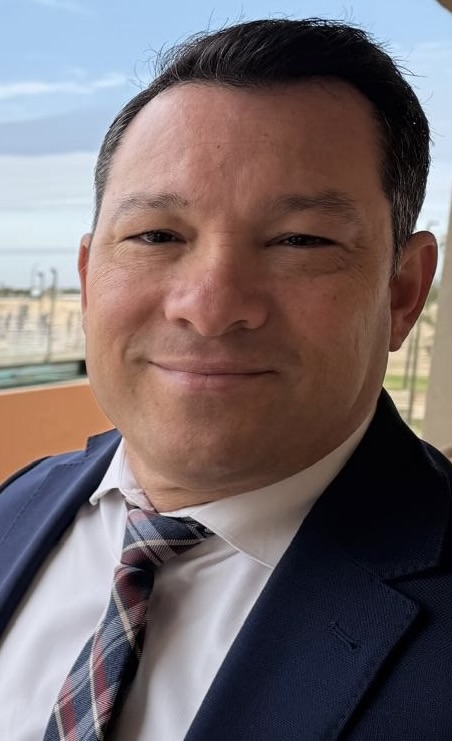
“We’re part of the discussions, but it’s really a double-edged sword,” Vega said. “I understand the concept and the benefit of it, but I’m apprehensive about that because of the power of the district.”
Instead, he prefers water diversification, improving water system infrastructure by preventing leaks and promoting water recycling.
“There are so many factors; a lot of people say we’ll just go to water restrictions, but that’s a small part of what you could save in the future by recycling water,” he said.

Kristen Mosbrucker-Garza
Reporter
Kristen Mosbrucker-Garza is a versatile multimedia news reporter who lives and works along the Texas-Mexico border in Hidalgo County. Mosbrucker-Garza is a news reporter for the Rio Grande Valley Business Journal. During her career she's worked for the McAllen Monitor, San Antonio Business Journal, The Advocate Newspaper in Louisiana, Phoenix New Times, and public media outlets in Baltimore and Philadelphia.
Most Read
- SpaceX is giving Brownsville $220M for water projects. In exchange, the city gave up zoning control of 444 acres near Starbase
- SpaceX seeks to take zoning control over nearly 450 acres from city of Brownsville as a ‘regional’ water deal takes shape
- Port of Brownsville could soon host Nodule City, a first-of-its-kind commercial deep-sea mining hub
- Cameron County is negotiating a $20M Fluidstack data center donation after Harlingen waffles on the same offer
- How much water does SpaceX need to operate near Brownsville? Nearly 20x its current use
Get the latest business news delivered to your inbox every morning for free.
Try 30 Days Free!
Get full access to award-winning journalism covering business, real estate, health care, economic trends, and the people shaping the Rio Grande Valley.
30 Days Free!
$9.95/month
Limited time offer
Subscription renews after your 30 day free trial at $9.95/mo.
Included Benefits
- Unlimited access to all articles
- Daily business news and analysis
- Subscriber-only content and features
Stories That Matter
- McAllen’s $204M water investment expects to seek construction bids in 2027
- Saronic lands Navy landing craft contract, first build at Brownsville’s Port Alpha
- The Rio Grande Valley’s tech industry is small but growing — meet some of the next-gen workforce
- Entrepreneurs enter Mission EDC’s ‘Shark Tank’ competition for $25K top prize
- Mission’s first Small Business Expo puts $25K on the line for local entrepreneurs
- Reynosa’s newest technical high school focuses on AI, semiconductors and bionics
- McCoy’s gives $10K, tools to launch Mid-Valley construction academy
- UT Health RGV performs new digestive procedure for first time in the Valley
- TSTC bets on advanced manufacturing to meet RGV’s industrial boom
- SpaceX reschedules Starship’s first flight around the Earth