Federal officials broke ground Friday on a $750 million sterile fly production facility in Edinburg, a project aimed at stopping the spread of the New World screwworm before it reaches Texas.
U.S. Secretary of Agriculture Brooke Rollins and Lt. Gen. William H. “Butch” Graham of the U.S. Army Corps of Engineers led the groundbreaking at Moore Air Base, where the facility will be built as part of a federal strategy to combat the parasite.

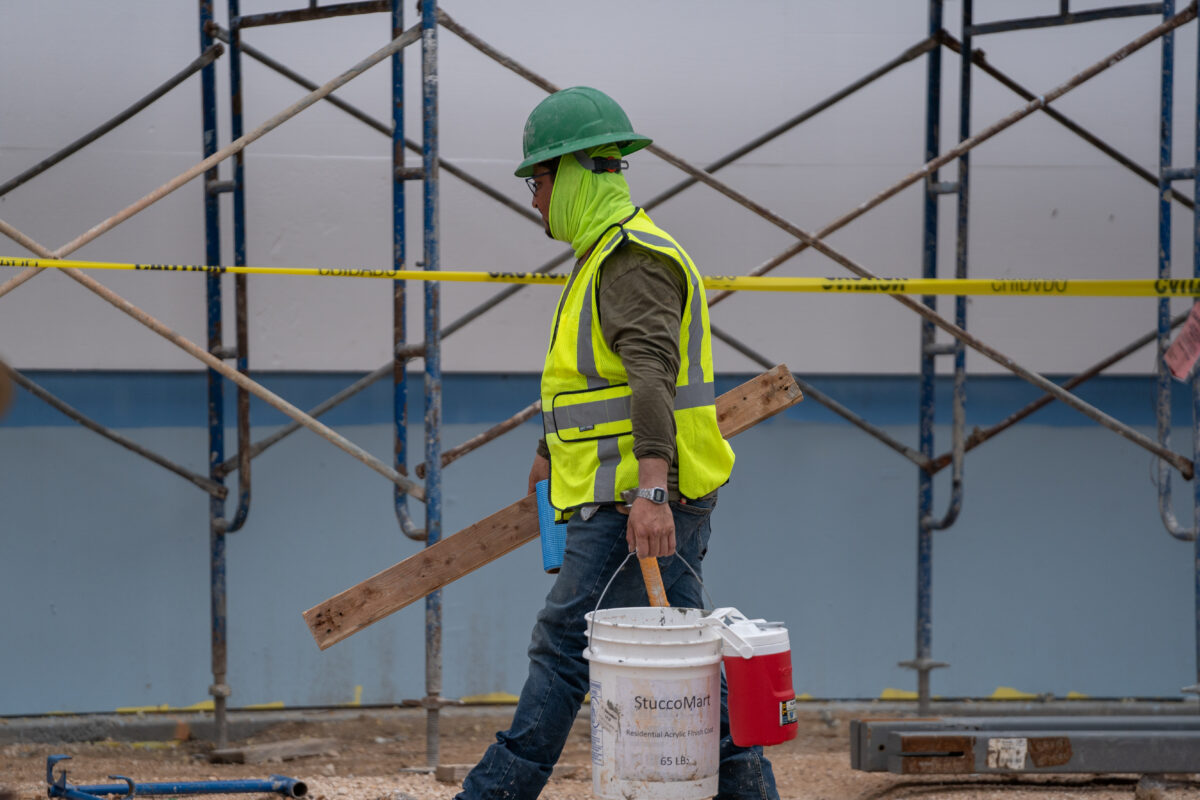
Courtesy of | Texas Farm Bureau
“Breaking ground on this facility marks a major investment in safeguarding America’s livestock and the producers who feed this nation,” Rollins said in a statement. “This puts NWS sterile fly production in American hands, so we do not have to rely on other countries for the best offensive measure to push screwworm away from our borders.”
The project is a central component of the U.S. Department of Agriculture’s plan to expand domestic capacity to respond to screwworm threats, which have been moving north through Mexico in recent years.
Texas Agriculture Commissioner Sid Miller has warned that an outbreak in the state is likely, as cases have been detected in northern Mexico within miles of the U.S. border.
Scaling response capacity
The Edinburg facility is expected to begin producing sterile flies by November 2027, with an initial output of 100 million flies per week.
Construction will continue after that phase to expand production capacity to 300 million flies per week, according to the USDA.
Sterile fly production is the cornerstone of screwworm eradication efforts. The insects are raised in controlled environments, sterilized through irradiation, and released into affected areas.
Because female screwworm flies mate only once, mating with sterile males prevents reproduction and causes populations to collapse over time.
USDA officials said the approach has been used successfully for decades to eliminate the pest from the United States and push it south into Central America.
Federal and regional stakes
Federal officials and lawmakers framed the project as critical to protecting the U.S. livestock industry and broader agricultural economy.
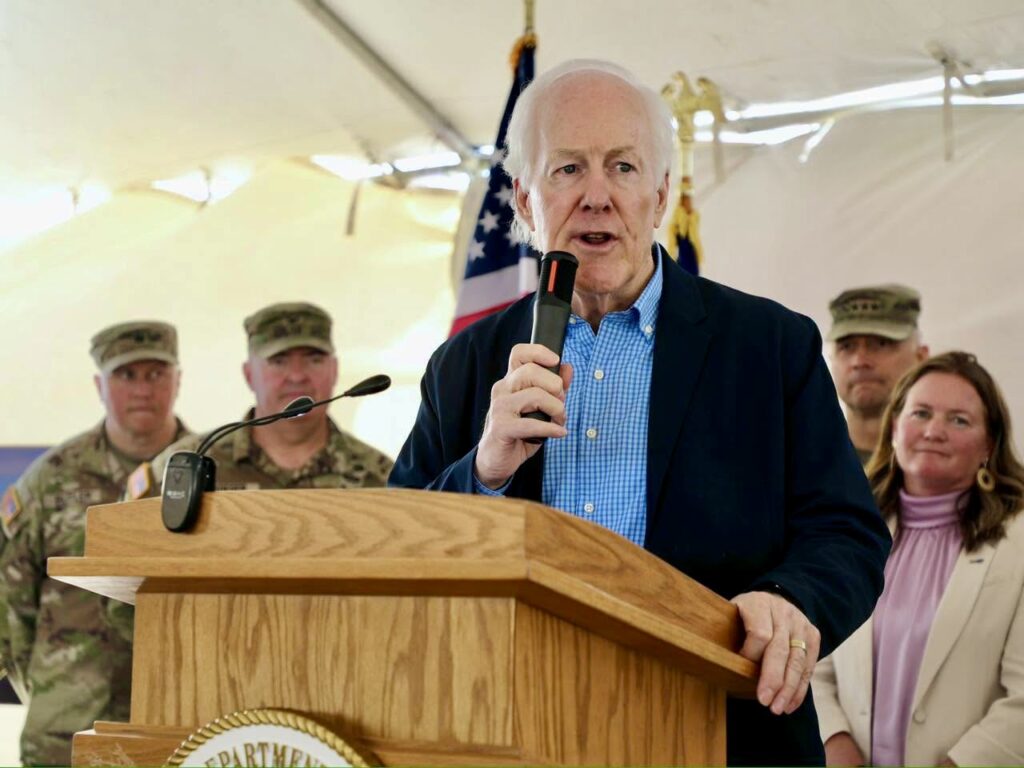
Courtesy of | Texas Farm Bureau
“The New World screwworm threatens the health of our herds, the stability of rural economies, and the resilience of our supply chain,” Rollins said.
U.S. Sen. John Cornyn, who attended the event, said the facility is intended to prevent the parasite from spreading across Texas, the nation’s leading cattle-producing state.
“I am glad to be in the Rio Grande Valley today for the groundbreaking of the sterile fly production facility, which will combat this parasite from spreading throughout the Lone Star State,” Cornyn said.
U.S. Rep. Monica De La Cruz described the project as a major investment for South Texas.
“Today’s groundbreaking is a historic moment for South Texas, and I am thrilled to see this $750 million investment officially begin to take shape for our farmers and ranchers,” De La Cruz said.
Part of a broader network
The Edinburg facility will expand a network of sterile fly production sites across North America.
The USDA currently produces about 100 million sterile flies per week at a facility in Panama operated through a binational partnership.
The agency has also invested $21 million to modernize a facility in Metapa, Mexico, which is expected to begin operations in 2026.
Once the Texas facility is fully operational, officials said the combined network will provide the scale needed to respond quickly to outbreaks and prevent the parasite from establishing itself in the United States.
“Our mission at USACE is to deliver engineering solutions… to secure our Nation, strengthen our economy, and reduce disaster risk,” Graham said. “This new, modern facility is the critical infrastructure we need to secure a defensive line against the New World screwworm for generations to come.”
Timeline and next steps
The project is being fast-tracked through an accelerated federal process, with the U.S. Army Corps of Engineers overseeing design, construction, and contract management.
USDA officials said the timeline reflects urgency as screwworm cases move closer to Texas.
Once complete, the facility is expected to provide a domestic, scalable response capability aimed at protecting livestock, wildlife, and public health from the parasite.

RGV Business Journal Staff
Staff
Most Read
- Is SpaceX quietly building a data center at Starbase? Job postings offer clues
- 25 Mexican businesses eye McAllen expansion after city pitches U.S. market entry program
- McAllen metro keeps selling more homes as Brownsville-Harlingen market sees 17% drop through August
- Rio Grande LNG moves closer to getting even bigger at Port of Brownsville
- Starbase EDC may issue $3 billion in tax-exempt bonds to support SpaceX, records show
Get the latest business news delivered to your inbox every morning for free.
Try 30 Days Free!
Get full access to award-winning journalism covering business, real estate, health care, economic trends, and the people shaping the Rio Grande Valley.
30 Days Free!
$9.95/month
Limited time offer
Subscription renews after your 30 day free trial at $9.95/mo.
Included Benefits
- Unlimited access to all articles
- Daily business news and analysis
- Subscriber-only content and features
Stories That Matter
- Texas A&M seeks contractors for new health education and research building in McAllen
- Beach Water Park files plans for $750K go-kart track project on South Padre Island
- Hundreds are vying for jobs in Brownsville. Here’s what jobseekers are seeing in the market
- Mission’s first Small Business Expo puts $25K on the line for local entrepreneurs
- McCoy’s gives $10K, tools to launch Mid-Valley construction academy
- UT Health RGV performs new digestive procedure for first time in the Valley
- TSTC bets on advanced manufacturing to meet RGV’s industrial boom
- Pharr’s cross-border business push earns international recognition
- Brownsville eases drought restrictions after nearly three years as Rio Grande reservoir levels improve
- Texas A&M’s $53.5M McAllen research center will tackle water, food security and Valley health