Rio Grande Valley leaders are pressing state lawmakers and transportation officials to prioritize funding for key connector highways they say could unlock more economic growth.
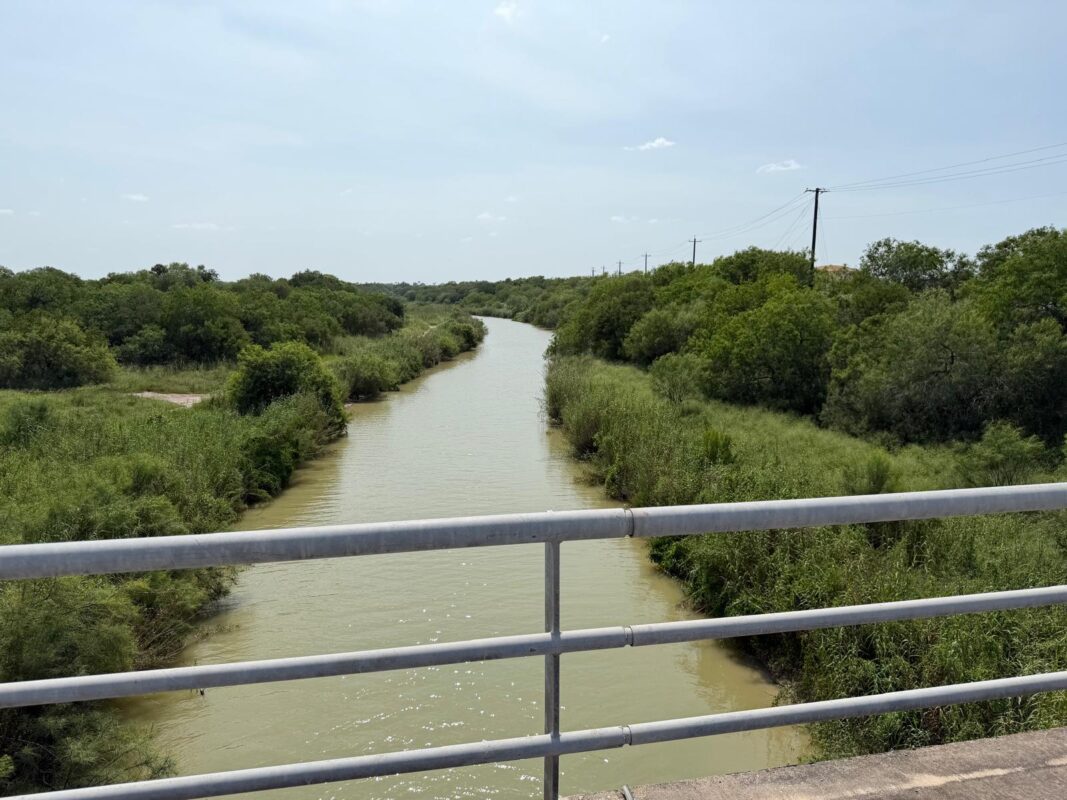
In Hidalgo County, one of those projects is the International Bridge Trade Corridor. The toll-free, 13-mile highway would connect the Pharr-Reynosa International Bridge and the Donna-Rio Bravo International Bridge to U.S. Highway 281, which turns into Interstate 69 and moves traffic north.
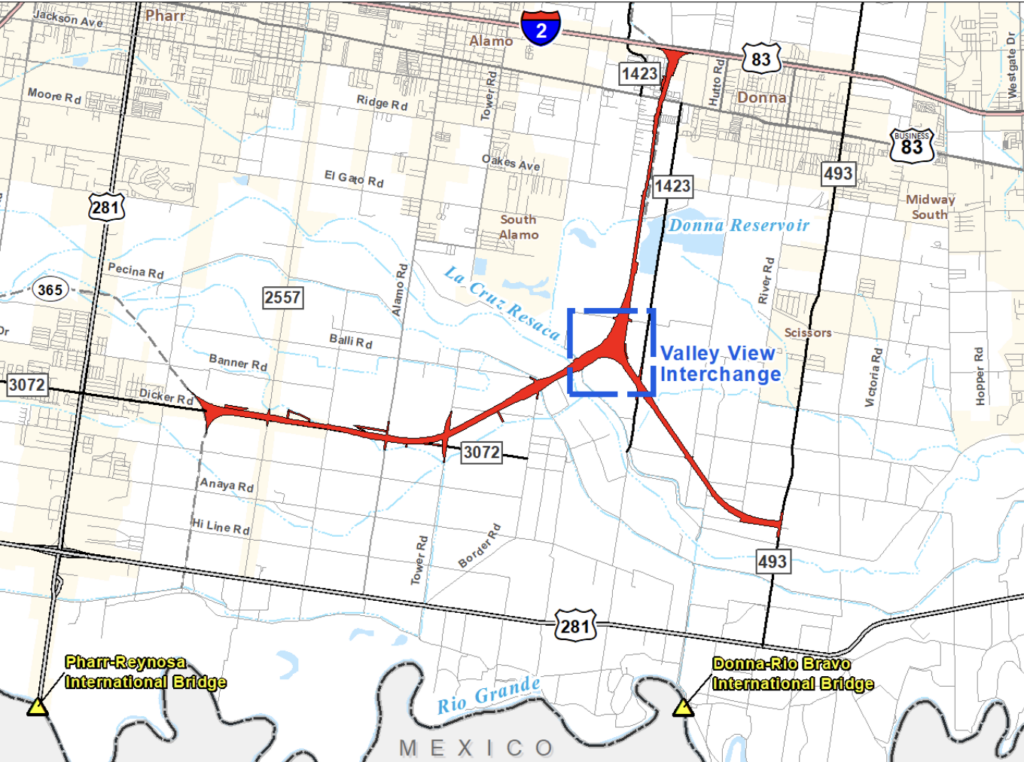
Courtesy of | TxDOT
The corridor would divert commercial truck traffic from smaller roadways in the cities of Donna, Alamo, San Juan, and Pharr, and connect to a planned section of the 365 Tollway project — a 12-mile heavyweight loop being built around Hidalgo County cities. Truck traffic would then connect to I-69 and head north to other major hubs in Texas.
In 2023, Gov. Greg Abbott called on the Texas Department of Transportation (TxDOT) to allocate $150 million to support the construction of the International Bridge Trade Corridor. Construction was initially projected to begin in 2026. It’s unclear whether that project is a priority for TxDOT.
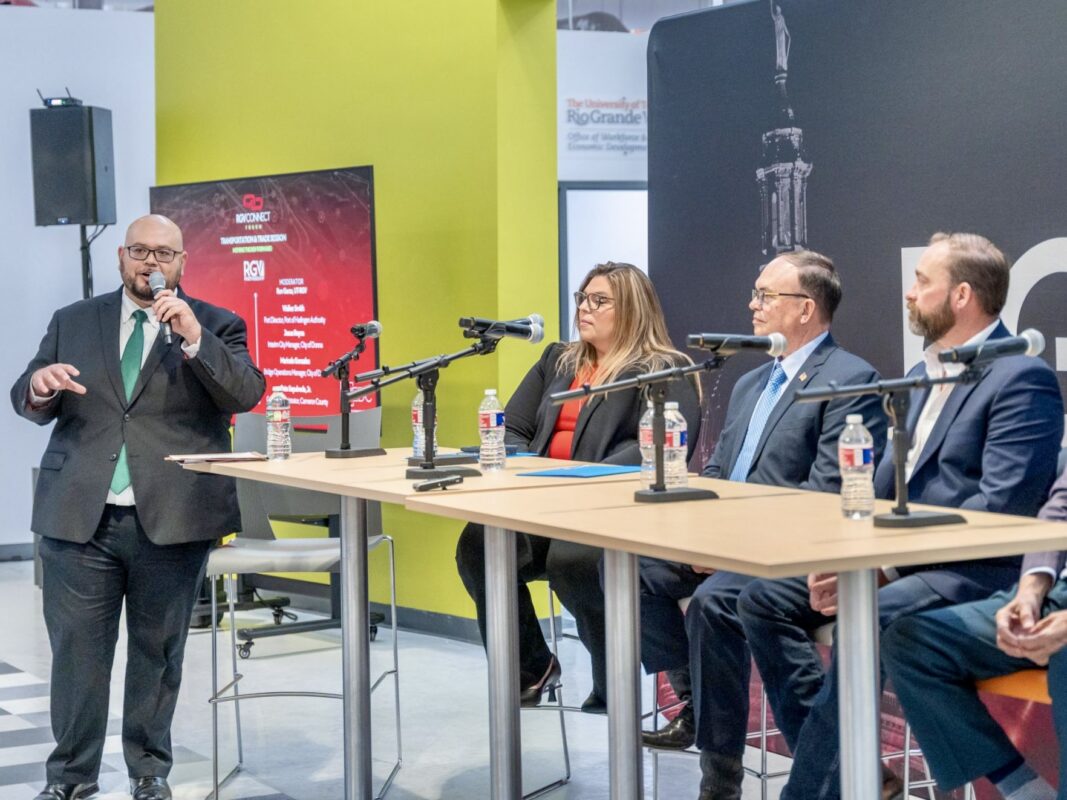
“If we don’t work together, especially on those issues, like we’re doing right now and right here, we’re not going to advance and really strengthen our economy down here,” Paco Sanchez, the new president and CEO of the Rio Grande Valley Partnership, said Wednesday during the organization’s first RGV Connect panel discussion on trade and transportation.
Hidalgo County expansion projects
The Pharr International Bridge already sees thousands of tractor-trailers cross from Mexico and head northbound each day.
In Mission, the Anzalduas International Bridge, which currently only allows empty southbound trucks to cross into Mexico, is preparing to welcome its first wave of northbound trucks.
The project, however, has been delayed for over a year.

Courtesy of | RGV Partnership
The U.S. portion of the bridge has already completed its northbound truck processing facilities and is now waiting for its counterparts in Mexico to build a commercial traffic inspection facility there.
A $62 million project at the Donna International Bridge promises to bypass those types of issues.
The bridge is being described as the port of the future because both Mexico and U.S. officials would have a single commercial inspection facility to speed up traffic through six dedicated lanes.
Construction of those lanes is expected to begin as early as April and be completed before the end of 2028. Once complete, the bridge is projected to cross up to 100 tractor-trailers per hour. But without a heavyweight corridor, that much truck traffic could congest local roadways that are not designed to handle that many trucks even further.
The construction of the International Bridge Trade Corridor would be a big improvement in Donna, interim city manager Jesus Reyna said.
“This project would benefit the entire region,” Reyna said, but funding is on hold. “We’ve kind of run into a snag, and that’s really important because just getting to this point takes a lot of work. We ran into some issues, but it’s still in play, and the funds have to be redirected.”
Priorities along the coast
Interconnectivity is also a priority for the Port of Harlingen, which wants to expand its tenant leases but needs to catch up on infrastructure improvements.
“The type of cargo we handle is heavy industrial cargo, and at times, even hazardous cargo,” Port of Harlingen Director Walker Smith said. “So having those routes that remove that traffic while still providing access to the market, but removing it from everyday pedestrian traffic, is important.”
Smith said he’s advocated for a heavyweight corridor connecting the Port of Harlingen to the Los Indios International Bridge in Brownsville.
“We have three overweight corridors in the Rio Grande Valley, and they only serve particular entities: the Port of Harlingen, Port of Brownsville, and Hidalgo County RMA [Regional Mobility Authority]. Those three corridors are not connected in any way whatsoever,” Smith said.
TxDOT has already dedicated funding for one major project: the second causeway between Cameron County and South Padre Island.
But the extension, which would add a second expressway between Hidalgo and Cameron Counties known as the I-69 connector project, is on hold for future funding, according to Pete Sepulveda Jr., county administrator for Cameron County and executive director of the Cameron County Regional Mobility Authority.
“That is not a good thing at all,” Sepulveda said “Because just like Cameron County, Donna, Port of Harlingen, City of McAllen, City of Mission, and every other entity in Hidalgo County, Willacy and Starr County are working on their infrastructure projects with that in mind — that we’ll have connectivity on the north end.”
But instead of waiting for TxDOT to allocate funding for that connector roadway, Sepulveda Jr. advocated for the four-county region to develop alternative funding strategies.
For example, he mentioned that there’s a $10 vehicle registration fee that both Cameron and Hidalgo counties collect for their respective transportation road and bridge funds. In Cameron County alone, over a 40-year period, that fee is expected to generate $800 million, Sepulveda said.
“We’re working on a $2 billion system of projects in Cameron County, that gives me 40% of the cost, utilizing those legislative tools,” he said. “It’s extremely easy for me to go to the TxDOT and say, I’ve got 40% of the cost. Can you provide the other 60%?”

Kristen Mosbrucker-Garza
Reporter
Kristen Mosbrucker-Garza is a versatile multimedia news reporter who lives and works along the Texas-Mexico border in Hidalgo County. Mosbrucker-Garza is a news reporter for the Rio Grande Valley Business Journal. During her career she's worked for the McAllen Monitor, San Antonio Business Journal, The Advocate Newspaper in Louisiana, Phoenix New Times, and public media outlets in Baltimore and Philadelphia.
Most Read
- How much water does SpaceX need to operate near Brownsville? Nearly 20x its current use
- Could apartment-to-condo conversion help make $100K homeownership in the McAllen metro more affordable? One investor says yes.
- SpaceX’s futuristic city of Starbase finalizes massive 7,100-acre annexation. Here’s what we know.
- Cameron County is negotiating a $20M Fluidstack data center donation after Harlingen waffles on the same offer
- Fluidstack breaks ground on $4 billion Cameron County AI data center
Get the latest business news delivered to your inbox every morning for free.
Try 30 Days Free!
Get full access to award-winning journalism covering business, real estate, health care, economic trends, and the people shaping the Rio Grande Valley.
30 Days Free!
$9.95/month
Limited time offer
Subscription renews after your 30 day free trial at $9.95/mo.
Included Benefits
- Unlimited access to all articles
- Daily business news and analysis
- Subscriber-only content and features
Stories That Matter
- These four projects are driving more than $41B in Cameron County investment
- Mission’s first Small Business Expo puts $25K on the line for local entrepreneurs
- Reynosa’s newest technical high school focuses on AI, semiconductors and bionics
- McCoy’s gives $10K, tools to launch Mid-Valley construction academy
- UT Health RGV performs new digestive procedure for first time in the Valley
- TSTC bets on advanced manufacturing to meet RGV’s industrial boom
- Pharr’s cross-border business push earns international recognition
- Brownsville eases drought restrictions after nearly three years as Rio Grande reservoir levels improve
- Texas A&M’s $53.5M McAllen research center will tackle water, food security and Valley health
- STC puts AI to work across 55 courses — from construction sites to car repair