Mexico’s national trucking chamber is warning that highway unrest following the death of cartel leader Nemesio Rubén Oseguera Cervantes could disrupt cargo movement critical to international commerce.
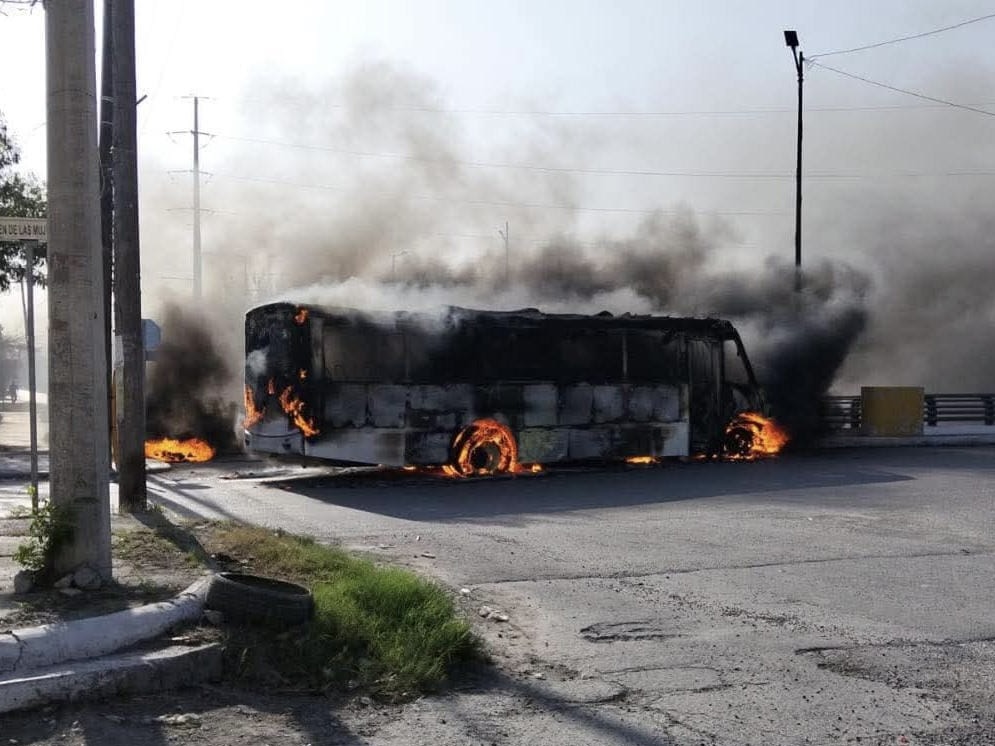
In a Sunday news release, the Cámara Nacional del Autotransporte de Carga, known as CANACAR, urged freight operators to prioritize safety amid widespread reports of road blockades, vehicle burnings and shutdowns in multiple states, including Tamaulipas.
“It is important to emphasize that highways constitute the operational backbone of cargo transportation, a strategic activity that guarantees the continuous supply of food, medicines, fuel, industrial inputs, and essential goods throughout the national territory,” the organization said in its release.
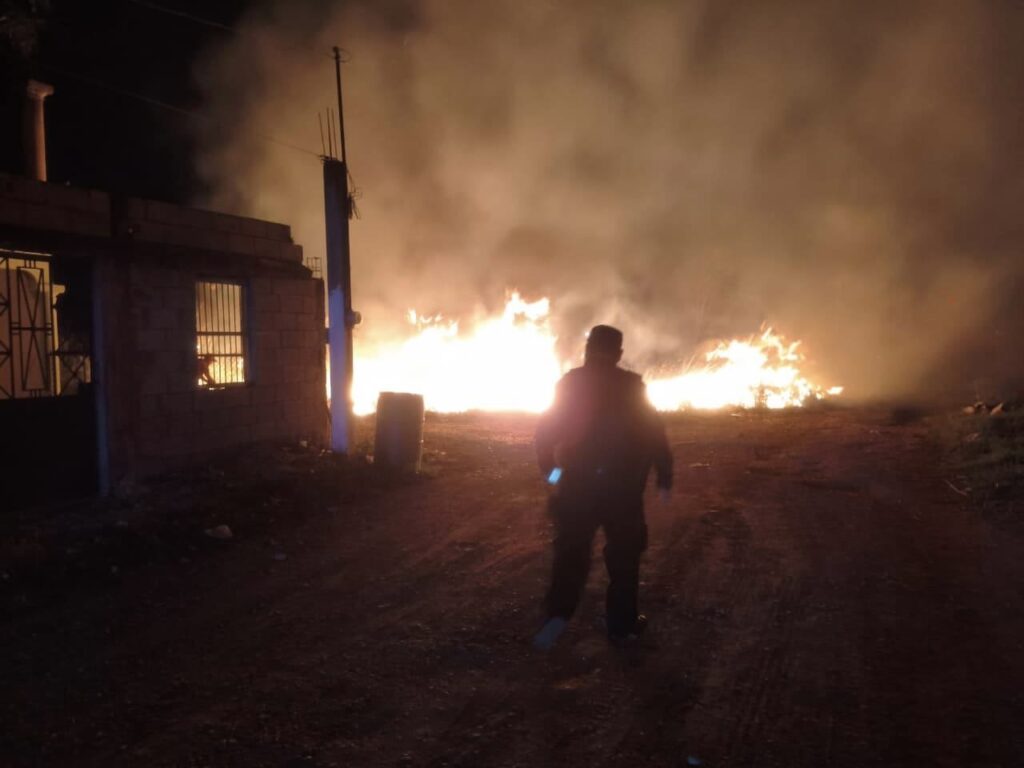
Courtesy of | Vocería de Seguridad Tamaulipas
The advisory follows reports of blockades and fires in Reynosa, where businesses have shut down and schools have announced temporary closures.
For the trucking industry, the highway network connecting central and northern Mexico to border crossings is essential to sustaining cross-border trade with the U.S.
Major freight corridors feed ports of entry in Reynosa, Nuevo Laredo and Matamoros — gateways that handle significant volumes of commercial traffic tied to manufacturing, agriculture and energy supply chains.
“Any prolonged interruption directly impacts the national economy and the daily lives of millions of Mexicans,” CANACAR said.
The chamber acknowledged ongoing federal security operations but stressed the need for safe transit conditions.
“We recognize the efforts of the federal government in its actions against organized crime; however, it is essential that the rule of law prevail on the country’s highways and that real security conditions be guaranteed for the transit of freight transport,” the organization stated.
It remains unclear what the unrest will mean for traffic at ports of entry in South Texas or elsewhere along the border.
As of publication, there were no confirmed reports of widespread shutdowns at Rio Grande Valley crossings. However, sustained blockades or security concerns along key Mexican freight corridors would likely disrupt cargo flows into the U.S., affecting tightly integrated supply chains that depend on consistent cross-border movement.
For logistics operators, manufacturers and distributors on both sides of the border, the situation underscores how closely regional commerce is tied to highway stability in Mexico.

RGV Business Journal Staff
Staff
Most Read
- SpaceX is giving Brownsville $220M for water projects. In exchange, the city gave up zoning control of 444 acres near Starbase
- SpaceX seeks to take zoning control over nearly 450 acres from city of Brownsville as a ‘regional’ water deal takes shape
- Port of Brownsville could soon host Nodule City, a first-of-its-kind commercial deep-sea mining hub
- How much water does SpaceX need to operate near Brownsville? Nearly 20x its current use
- Cameron County is negotiating a $20M Fluidstack data center donation after Harlingen waffles on the same offer
Get the latest business news delivered to your inbox every morning for free.
Try 30 Days Free!
Get full access to award-winning journalism covering business, real estate, health care, economic trends, and the people shaping the Rio Grande Valley.
30 Days Free!
$9.95/month
Limited time offer
Subscription renews after your 30 day free trial at $9.95/mo.
Included Benefits
- Unlimited access to all articles
- Daily business news and analysis
- Subscriber-only content and features
Stories That Matter
- 5 things to know about manufacturing along the South Texas-Mexico border
- Mission’s first Small Business Expo puts $25K on the line for local entrepreneurs
- Reynosa’s newest technical high school focuses on AI, semiconductors and bionics
- McCoy’s gives $10K, tools to launch Mid-Valley construction academy
- UT Health RGV performs new digestive procedure for first time in the Valley
- TSTC bets on advanced manufacturing to meet RGV’s industrial boom
- Pharr’s cross-border business push earns international recognition
- Brownsville eases drought restrictions after nearly three years as Rio Grande reservoir levels improve
- Texas A&M’s $53.5M McAllen research center will tackle water, food security and Valley health
- McAllen’s $204M water investment expects to seek construction bids in 2027