Freight demand along Mexico’s northern border is rising as nearshoring accelerates, but a broken labor pipeline, rising costs, and persistent security risks are limiting how much the system can actually move.
Mexico had more than 1.4 million freight trucks and cargo vehicles licensed to move goods on federal roads in 2024, up 7.8% from the year before, according to data from Mexico’s Ministry of Infrastructure, Communications and Transportation.

Industry leaders say that number likely kept growing in 2025 as more companies moved production closer to Mexico and needed more trucking and logistics support.
But along key border corridors such as Reynosa, those gains are running into operational constraints.
“Transportation moves the country. Without transportation, there is no economy,” said Armandina Alemán, general director of Centro de Capacitación SCT CC232, a driver training school in Reynosa.
The most visible constraint is a persistent driver shortage.
Mexico currently faces a gap of between 60,000 and 80,000 operators, with projections that could exceed 108,000 in the coming years.
“It’s not that there are no jobs — it’s that there are not enough drivers,” Alemán said.
That shortage is leaving trucks idle and limiting throughput at a time when cross-border trade is expanding.
Training pipeline falls short of industry needs
Industry leaders say the problem is not simply a lack of training capacity, but a disconnect between training and hiring.

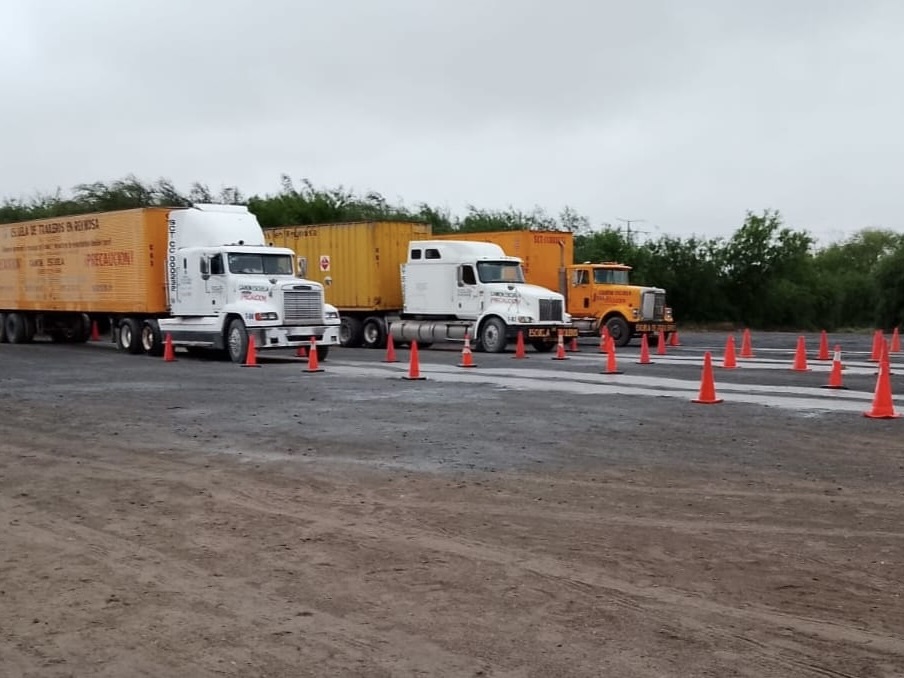
Photo Credit | Anayancy Ulloa
Mexico has roughly 200 authorized driver training centers. Alemán said the system produces new drivers, but companies often require experience and do not consistently invest in developing entry-level operators.
“No one graduates 100% ready. Everyone needs that field experience,” she said.
The result is a bottleneck: newly trained drivers struggle to enter the workforce, while companies continue to report vacancies.
Training itself is incremental and dependent on real-world exposure, according to Enrique Javier Isla Huaca, an instructor at the same training center.
“Training is short, but real learning starts in the field,” Isla said.
New drivers often begin as “shadows,” accompanying experienced operators before taking on full responsibility, a process that slows workforce integration.
Costs and security pressures reshape operations
At the same time, operating costs are rising.
A new semi-truck can cost about 4 million pesos, or roughly $235,000. Additional equipment can add more than 300,000 pesos, about $17,600.
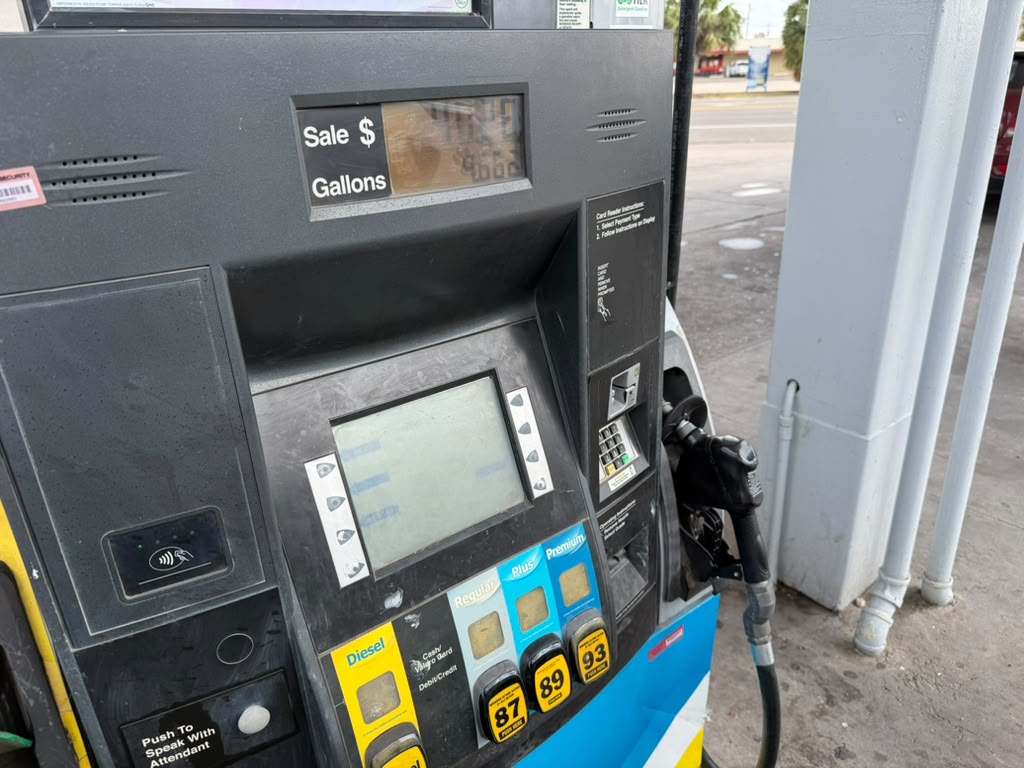
Diesel averaged about 28 pesos per liter in Mexico in 2026 — roughly $1.65 a liter, or about $6.23 a gallon.
In border cities such as Reynosa, prices ranged from 27 to 29 pesos per liter, or about $1.59 to $1.70 a liter. That works out to roughly 102 to 110 pesos per gallon, or about $6.00 to $6.45.
Those costs are compounding existing pressures tied to security.
Highway insecurity continues to affect freight routes and logistics planning, Alemán said, forcing companies to adjust operations, increase safeguards, and absorb additional expenses.
“It is an issue that affects the entire chain,” she said.
Cross-border requirements add another layer of complexity
Freight transportation in border cities operates within a dual regulatory environment, where drivers must comply with both Mexican and U.S. standards.
“Everything is controlled, everything is recorded; language, documentation, and regulatory compliance determine who can cross,” Alemán said.
Those requirements limit the pool of drivers eligible for cross-border routes and add another barrier to scaling capacity.
Workforce profile begins to shift
Despite these challenges, the sector is attracting a broader range of workers.
Instructors report an increase in career-switchers entering training programs, including former maquiladora workers and professionals seeking new opportunities.
“I’ve seen it all,” Isla said. “Maquiladora workers, professionals, even people who had stable jobs and decided to change careers.”
Individual cases reflect that shift.

Lorena Piña, 37, from Monterrey, entered training after years of exposure to the industry through family and work experience.
Piña said she entered the field with a clear understanding of the risks and demands tied to freight transportation, including security concerns and the long hours the job can require.
Even so, she described her decision as deliberate, saying she sees room for growth in an industry that remains male-dominated but is gradually opening more opportunities for women.
“I know what I’m getting into,” Piña said.
Rafael Reséndiz, 57, from Reynosa, turned to freight transportation following a career in manufacturing.
Reséndiz said the training has required him to adapt to the technical demands of operating heavy-duty trucks, but he said he has felt at ease with the process.

For him, the program represents not just a path to a job, but a chance to reinvent himself at a different stage of his professional life.
“It’s a process, but I felt comfortable from the start,” Reséndiz said.
Both described the transition as demanding but viable, highlighting the sector’s role as an alternative employment path.
Female participation remains limited. About 6,000 women work as drivers, representing roughly 0.1% of the total workforce.
“It’s not about capability — it’s about context,” Alemán said, citing safety conditions, schedules, and family responsibilities as key barriers.
Growth outpaces system capacity
As nearshoring continues to drive industrial expansion along Mexico’s northern border, freight transportation remains a critical link in the supply chain.
But the sector’s underlying constraints — from workforce integration gaps to rising costs and security concerns — are limiting its ability to scale alongside demand.
Alemán said the disconnect between planning and real-world operations remains a central issue.
“Numbers are cold, but they reflect reality,” she said.
Until those structural gaps are addressed, the region’s logistics capacity will continue to fall short of the pace of growth reshaping the border economy.

Anayancy Ulloa
Reporter
Anayancy Ulloa Luna is a contributor to the Rio Grande Valley Business Journal who hails from Reynosa in the Mexican state of Tamaulipas. Ulloa has a long history as a U.S.-Mexico region business expert in marketing, formerly the editorial director of Mexico Industry.
Most Read
- Is SpaceX quietly building a data center at Starbase? Job postings offer clues
- 25 Mexican businesses eye McAllen expansion after city pitches U.S. market entry program
- SpaceX’s futuristic city of Starbase finalizes massive 7,100-acre annexation. Here’s what we know.
- McAllen metro keeps selling more homes as Brownsville-Harlingen market sees 17% drop through August
- Rio Grande LNG moves closer to getting even bigger at Port of Brownsville
Get the latest business news delivered to your inbox every morning for free.
Try 30 Days Free!
Get full access to award-winning journalism covering business, real estate, health care, economic trends, and the people shaping the Rio Grande Valley.
30 Days Free!
$9.95/month
Limited time offer
Subscription renews after your 30 day free trial at $9.95/mo.
Included Benefits
- Unlimited access to all articles
- Daily business news and analysis
- Subscriber-only content and features
Stories That Matter
- Texas A&M seeks contractors for new health education and research building in McAllen
- Beach Water Park files plans for $750K go-kart track project on South Padre Island
- Hundreds are vying for jobs in Brownsville. Here’s what jobseekers are seeing in the market
- Mission’s first Small Business Expo puts $25K on the line for local entrepreneurs
- McCoy’s gives $10K, tools to launch Mid-Valley construction academy
- UT Health RGV performs new digestive procedure for first time in the Valley
- TSTC bets on advanced manufacturing to meet RGV’s industrial boom
- Pharr’s cross-border business push earns international recognition
- Brownsville eases drought restrictions after nearly three years as Rio Grande reservoir levels improve
- Texas A&M’s $53.5M McAllen research center will tackle water, food security and Valley health