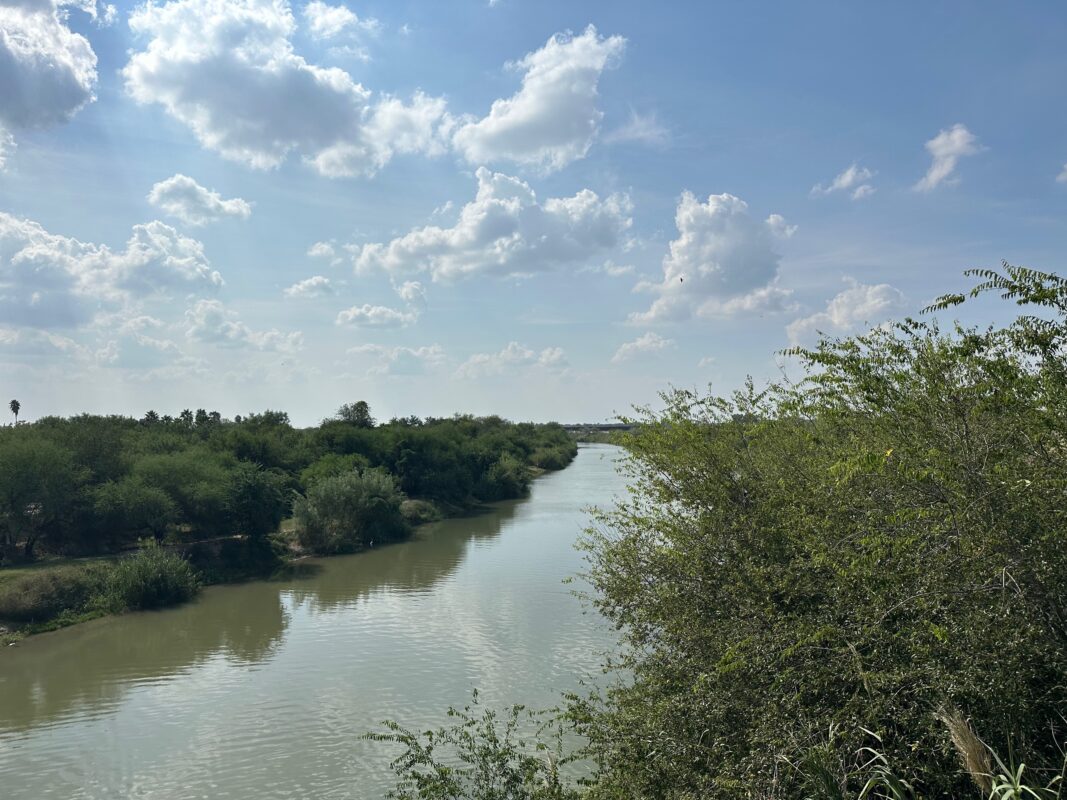
Recent July rains have delivered a much-needed boost to the Rio Grande, but the two reservoirs that store much of the river’s water remain less than half full.
Amistad and Falcon reservoirs, which supply water to communities, farms, and businesses throughout the Rio Grande Valley and along the U.S.-Mexico border, gained more than 232,000 acre-feet of water over the past week.
That’s enough water to fill about 115,000 Olympic-sized swimming pools.
Even with those gains, Amistad Reservoir is about 42% full and Falcon Reservoir is about 37% full, underscoring how much water the region still needs after years of drought.
The increase began after runoff from heavy rains over West Texas started flowing into Amistad Reservoir on July 14. Those flows reached Falcon Reservoir on July 18, causing water levels at both reservoirs to rise quickly.
Amistad recorded the larger increase.
Between July 13 and July 22, the reservoir rose 7.44 feet and gained nearly 149,000 acre-feet of water after accounting for releases downstream. The largest one-day increase came July 19, when nearly 48,000 acre-feet flowed into the reservoir.
As of July 22, Amistad held about 758,600 acre-feet of water.
Falcon Reservoir also benefited from the inflows.
Between July 18 and July 22, the reservoir rose 2.88 feet and gained more than 83,000 acre-feet of water after accounting for upstream releases. That figure does not include any water released from Falcon itself. The reservoir’s biggest one-day increase came July 21, when storage increased by nearly 50,000 acre-feet.
As of July 22, Falcon held about 580,400 acre-feet of water.
Under the 1944 Water Treaty, the International Boundary and Water Commission divides water stored in the reservoirs between the United States and Mexico based on where the rainfall originated. The United States receives all flows from seven measured Texas tributaries, one-third of the flows from six measured Mexican tributaries and half of the flows from unmeasured tributaries.
Editor’s note: The reservoir data was compiled by Sonny Hinojosa using the International Boundary and Water Commission’s Near Real-Time Streamflow Data system.

RGV Business Journal Staff
Staff
Most Read
- Is SpaceX quietly building a data center at Starbase? Job postings offer clues
- 25 Mexican businesses eye McAllen expansion after city pitches U.S. market entry program
- SpaceX’s futuristic city of Starbase finalizes massive 7,100-acre annexation. Here’s what we know.
- McAllen metro keeps selling more homes as Brownsville-Harlingen market sees 17% drop through August
- Rio Grande LNG moves closer to getting even bigger at Port of Brownsville
Get the latest business news delivered to your inbox every morning for free.
Try 30 Days Free!
Get full access to award-winning journalism covering business, real estate, health care, economic trends, and the people shaping the Rio Grande Valley.
30 Days Free!
$9.95/month
Limited time offer
Subscription renews after your 30 day free trial at $9.95/mo.
Included Benefits
- Unlimited access to all articles
- Daily business news and analysis
- Subscriber-only content and features
Stories That Matter
- Mission’s first Small Business Expo puts $25K on the line for local entrepreneurs
- McCoy’s gives $10K, tools to launch Mid-Valley construction academy
- UT Health RGV performs new digestive procedure for first time in the Valley
- Home sales down in McAllen metro, flat in Brownsville metro — see data
- TSTC bets on advanced manufacturing to meet RGV’s industrial boom
- Pharr’s cross-border business push earns international recognition
- Brownsville eases drought restrictions after nearly three years as Rio Grande reservoir levels improve
- Texas A&M’s $53.5M McAllen research center will tackle water, food security and Valley health
- Valley has a seat at the table in Austin, but TxDOT says leaders must get their act together
- STC puts AI to work across 55 courses — from construction sites to car repair