The difference between life and death for breast cancer patients along the U.S.-Mexico border often comes down to one factor: when the disease is detected.

“It’s not that we have a different disease, it’s that we are finding it at different moments,” Dr. Marco Antonio Corona, a radiation oncologist in Reynosa, told the Rio Grande Valley Business Journal.
In South Texas, most breast cancer cases are diagnosed early, when survival rates can reach up to 98%.
Across the Rio Grande River in Tamaulipas — particularly in Reynosa — nearly 70% of cases are detected at advanced stages, according to specialists at Hospital Santander.
That gap is shaping outcomes for thousands of women in a region that otherwise shares risk factors, lifestyle patterns, and an increasingly interconnected patient population.
A diagnosis gap with measurable consequences
In Mexico, breast cancer remains the leading cause of death among malignant tumors in women.
In 2024, 8,451 women died from the disease, accounting for 9% of cancer-related deaths and 1% of all deaths nationwide, according to preliminary data from the Instituto Nacional de Estadística y Geografía (INEGI), or the National Institute of Statistics and Geography.

The national mortality rate reached 18.7 deaths per 100,000 women aged 20 and older, up from 15.7 in 2015.
In Tamaulipas, it rises to 21 deaths per 100,000 women — above the national average.
“The problem is not that we are not detecting it, but that we are still detecting it too late,” Dr. Juan Manuel Pérez Amaru, a Reynosa epidemiologist, said.
The stage at diagnosis determines prognosis.
“In early stages, survival can reach up to 98%,” Corona said. “In advanced stages, we are no longer talking about cure, but about control.”
Treatment becomes more complex — and more costly
Late detection also changes how patients are treated.
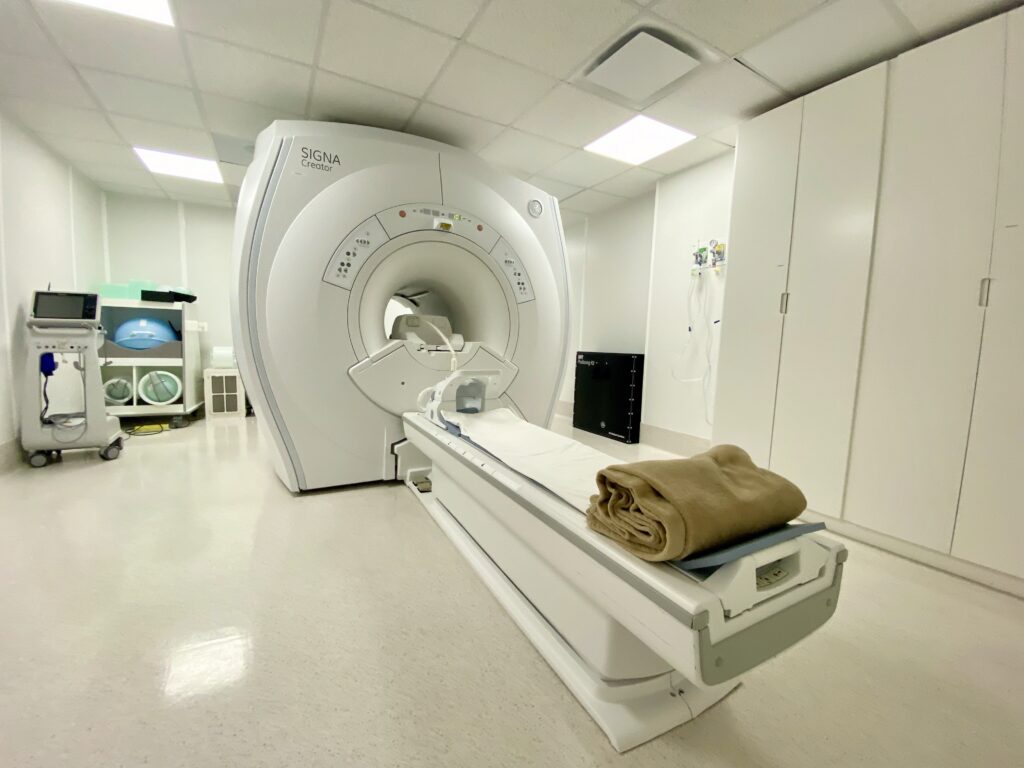
Photo Credit | Anayancy Ulloa
Cases identified early can often be managed with conservative surgery and shorter radiotherapy regimens. Advanced cases require more aggressive interventions, including chemotherapy and extensive surgery.
“We have patients who complete treatment in just a few weeks and return to normal life — but that only happens when we arrive on time,” Corona said.
Even after diagnosis, delays can worsen outcomes.
“Some patients take months to begin treatment, and during that time the disease can progress significantly,” he said.
National data underscores those gaps: 38% of women diagnosed with breast cancer did not receive treatment in the previous two years.
Access, technology, and preventive culture
Internal data from Hospital Santander shows uneven use of diagnostic tools in Reynosa.
About 83.6% of cases are initially evaluated using ultrasound, while only 12.9% combine mammography and ultrasound — the standard approach for more accurate detection. Use of advanced imaging remains limited.

“The technology exists, but it is not always used in all cases where it could make a difference,” Dr. Sergio Medina, a radiologist, said.
New tools are beginning to change that.
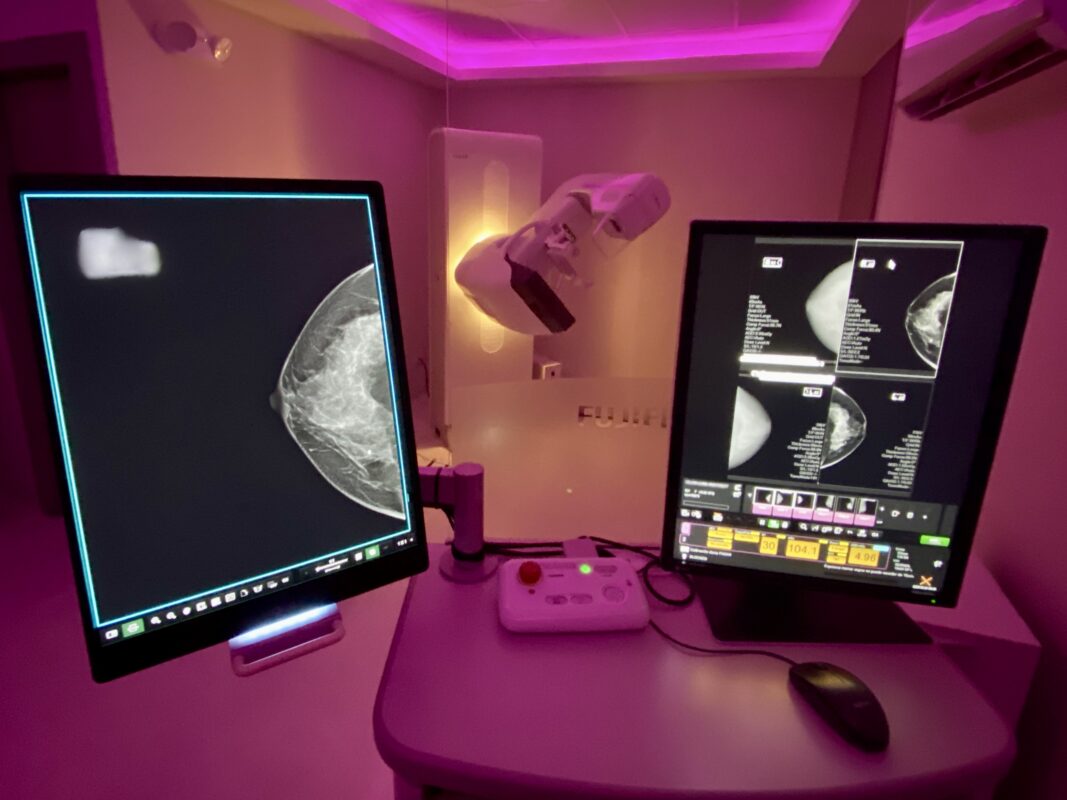
Tomosynthesis, a 3D imaging technique, can detect millimetric lesions that may go unnoticed in conventional studies, particularly in patients with dense breast tissue.
“We can detect lesions even before they become palpable, which gives us a significant advantage in treatment,” Medina said.
Hospital Santander is also working to incorporate breast MRI, a more sensitive diagnostic tool used in high-specialty oncology centers. The service could become available in the coming weeks, potentially improving early detection rates.
A shared region, uneven outcomes
Despite the diagnostic gap, the border functions as a single healthcare ecosystem.
At Hospital Santander, approximately 36% of patients come from the U.S., drawn by lower costs, shorter wait times, or service availability.
The disparity, physicians say, is not about medical capability.
It comes down to timing — and whether patients enter the system early enough.
Risk factors remain high on both sides
Specialists point to a set of shared regional challenges driving breast cancer risk, including high rates of obesity and diabetes, sedentary lifestyles, high-calorie diets, a limited culture of preventive screening, and persistent barriers to accessing healthcare.
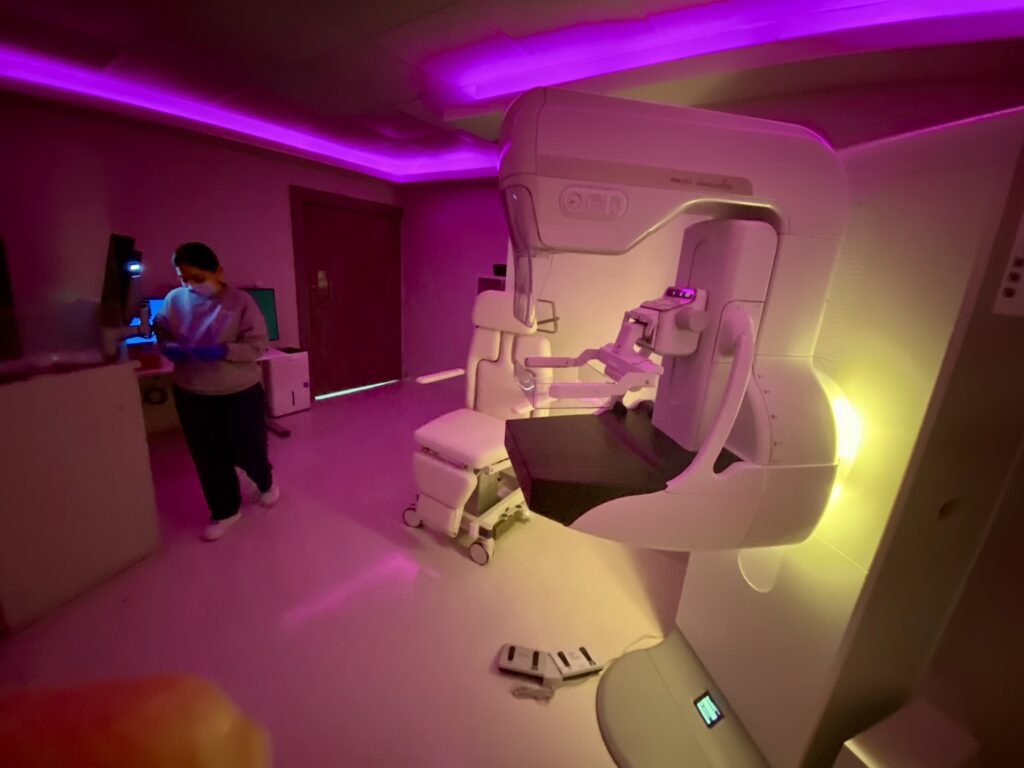
Photo Credit | Anayancy Ulloa
Physicians are also seeing a shift in patient profiles.
While the highest incidence remains among women ages 40 to 69, cases are increasingly being identified in younger women.
For clinicians, the message is consistent: breast cancer is not necessarily fatal — if it is detected early.
The divide between South Texas and Tamaulipas is not defined by the disease itself, but by when it is found.
“The challenge is not only to treat cancer, but to detect it earlier. That’s where we can truly change the outcome,” Pérez Amaru said.

Anayancy Ulloa
Reporter
Anayancy Ulloa Luna is a contributor to the Rio Grande Valley Business Journal who hails from Reynosa in the Mexican state of Tamaulipas. Ulloa has a long history as a U.S.-Mexico region business expert in marketing, formerly the editorial director of Mexico Industry.
Most Read
- Is SpaceX quietly building a data center at Starbase? Job postings offer clues
- 25 Mexican businesses eye McAllen expansion after city pitches U.S. market entry program
- SpaceX’s futuristic city of Starbase finalizes massive 7,100-acre annexation. Here’s what we know.
- McAllen metro keeps selling more homes as Brownsville-Harlingen market sees 17% drop through August
- Rio Grande LNG moves closer to getting even bigger at Port of Brownsville
Get the latest business news delivered to your inbox every morning for free.
Try 30 Days Free!
Get full access to award-winning journalism covering business, real estate, health care, economic trends, and the people shaping the Rio Grande Valley.
30 Days Free!
$9.95/month
Limited time offer
Subscription renews after your 30 day free trial at $9.95/mo.
Included Benefits
- Unlimited access to all articles
- Daily business news and analysis
- Subscriber-only content and features
Stories That Matter
- McAllen’s job market keeps climbing while Brownsville loses ground
- Mission EDC launches search for new CEO with salary up to $190K
- Texas transportation leaders to discuss Rio Grande Valley infrastructure at Mission summit
- Mission’s first Small Business Expo puts $25K on the line for local entrepreneurs
- McCoy’s gives $10K, tools to launch Mid-Valley construction academy
- UT Health RGV performs new digestive procedure for first time in the Valley
- South Texas College plans $4.7M makeover of cosmetology, security facilities in McAllen
- TSTC bets on advanced manufacturing to meet RGV’s industrial boom
- Pharr’s cross-border business push earns international recognition
- Brownsville eases drought restrictions after nearly three years as Rio Grande reservoir levels improve