Mexico’s Ministry of Defense — not customs officials — ordered the empty-trailer restrictions that triggered this week’s blockade on the Mexican side of the Progreso International Bridge, a Reynosa freight transportation representative said Wednesday.
Edgar Zamorano, the Reynosa delegate for Mexico’s National Chamber of Freight Transportation, known as CANACAR, said that while the directive was communicated through Mexico’s National Customs Agency, known as ANAM, the decision came from the Ministry of Defense as part of a broader security effort targeting fuel smuggling, commonly known in Mexico as huachicol.

The new information provides the first public explanation for a disruption that left truckers, customs brokers, and local officials searching for answers earlier this week.
“It is the Ministry of Defense that issued the order prohibiting empty crossings from north to south through the bridges, not only this one, but also Los Indios and Progreso,” Zamorano said.
As a result, truckers blocked cargo from crossing into the U.S. through the Progreso International Bridge.
Drivers told the Rio Grande Business Journal on Tuesday that they were unable to return empty trailers from Texas into Mexico through the crossing since May 21. The restrictions increased operating costs, disrupted agricultural trade, and created uncertainty about how long the measures would remain in place.
On Tuesday, customs brokers said they understood the restrictions had been communicated through ANAM, but they were still waiting for additional guidance from federal authorities.
On Wednesday, Zamorano said the restrictions are part of a broader federal operation.
“This operation has been underway for some time across the entire border region because of issues related to huachicol activities,” he said.
Cargo continued moving
While the restrictions triggered the blockade, Zamorano said commercial cargo operations themselves were never suspended.
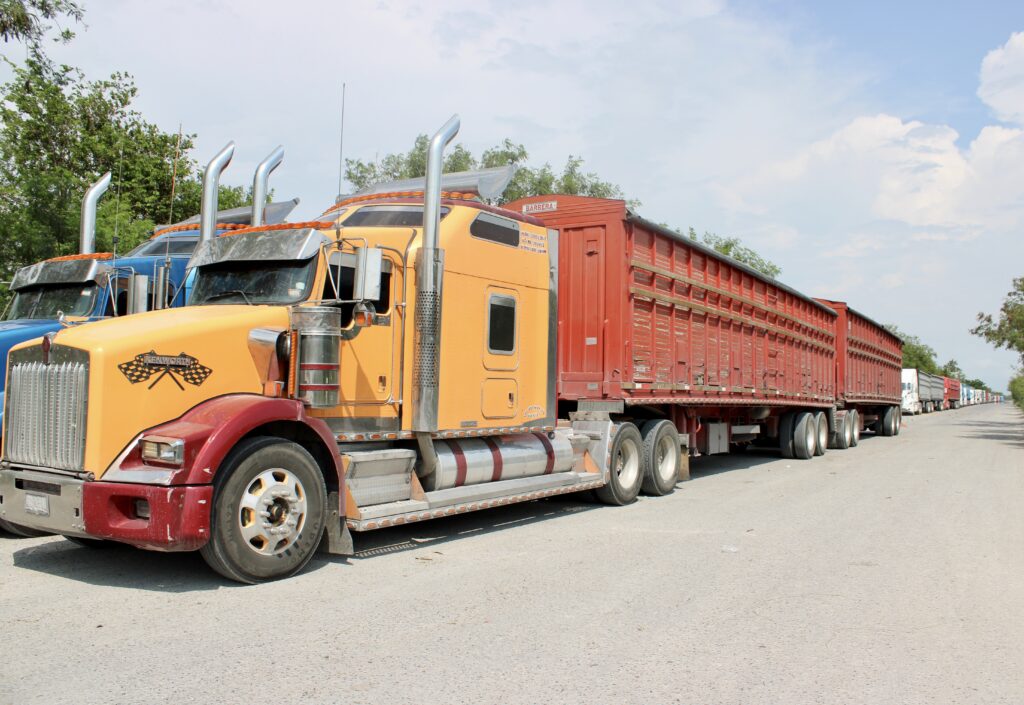
Photo Credit | Anayancy Ulloa
“They were not prevented from crossing. Operations are continuing,” he said. “They decided to block the bridge because, for now, they are not being allowed to return empty for security reasons.”
According to Zamorano, the restrictions primarily affect double-trailer trucks commonly used to transport grain, construction materials, and perishable products between Texas and Mexico.
“The problem is that this generates higher costs for them because they have to return empty all the way to Reynosa,” he said.
Truckers interviewed Tuesday said some carriers had begun rerouting through other crossings, increasing fuel costs and travel times.
Several operators also reported concerns about delays affecting shipments of corn, sorghum, onions, and watermelon moving between Texas and Mexican states, including Tamaulipas and Jalisco.
One driver estimated that mandatory insurance costs alone could result in losses of nearly 2,000 pesos, or about $105, if a truck was unable to cross.
No timeline for reopening
Zamorano said federal authorities continue making operational adjustments and that the restrictions may not be permanent.
However, he said there is no indication of when empty-trailer crossings will fully resume.
“This is a national security matter, and only they know when they will reopen it,” he said.
As of Wednesday, federal authorities had not publicly issued additional details outlining the scope, duration, or operational guidelines governing the restrictions.

Anayancy Ulloa
Reporter
Anayancy Ulloa Luna is a contributor to the Rio Grande Valley Business Journal who hails from Reynosa in the Mexican state of Tamaulipas. Ulloa has a long history as a U.S.-Mexico region business expert in marketing, formerly the editorial director of Mexico Industry.
Most Read
- Is SpaceX quietly building a data center at Starbase? Job postings offer clues
- 25 Mexican businesses eye McAllen expansion after city pitches U.S. market entry program
- Rio Grande LNG moves closer to getting even bigger at Port of Brownsville
- Starbase EDC may issue $3 billion in tax-exempt bonds to support SpaceX, records show
- Edinburg ISD rejects nearly $6M offer for prime land near La Sienna despite $15M budget deficit
Get the latest business news delivered to your inbox every morning for free.
Try 30 Days Free!
Get full access to award-winning journalism covering business, real estate, health care, economic trends, and the people shaping the Rio Grande Valley.
30 Days Free!
$9.95/month
Limited time offer
Subscription renews after your 30 day free trial at $9.95/mo.
Included Benefits
- Unlimited access to all articles
- Daily business news and analysis
- Subscriber-only content and features
Stories That Matter
- S-Mart opens seventh Matamoros store with $12.6M investment, plans more
- Starr County’s next solar farm moves forward as contractor ramps up hiring
- Valley manufacturers face workforce shortage as industry eyes expansion
- Mission’s first Small Business Expo puts $25K on the line for local entrepreneurs
- McCoy’s gives $10K, tools to launch Mid-Valley construction academy
- UT Health RGV performs new digestive procedure for first time in the Valley
- TSTC bets on advanced manufacturing to meet RGV’s industrial boom
- Pharr’s cross-border business push earns international recognition
- Brownsville eases drought restrictions after nearly three years as Rio Grande reservoir levels improve
- Texas A&M’s $53.5M McAllen research center will tackle water, food security and Valley health