Rising beef prices continue to reshape consumer spending habits in Mexico while placing additional pressure on businesses across Reynosa.
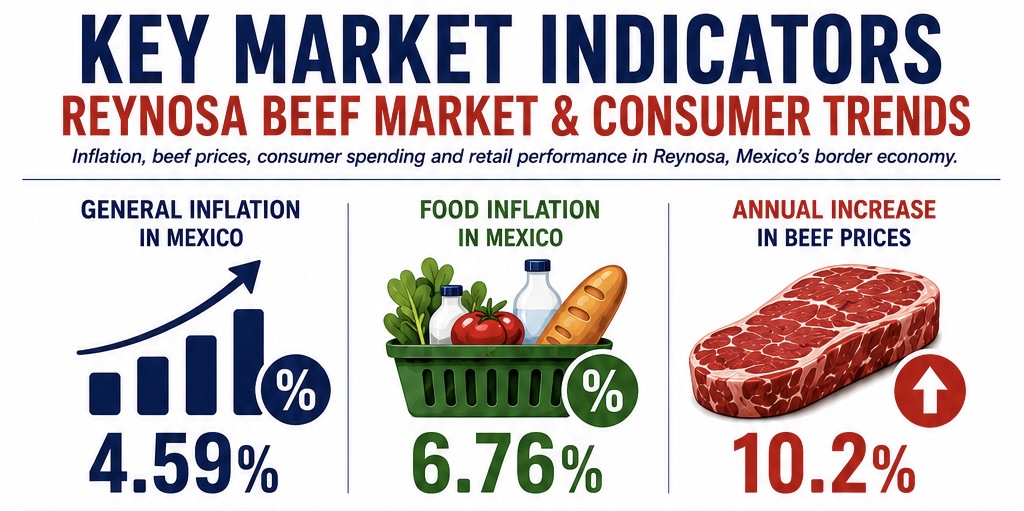
Beef prices in Mexico rose 10.2% year over year — more than double the country’s overall inflation rate of 4.59% and well above food inflation of 6.76% — according to data from Mexico’s National Institute of Statistics and Geography analyzed by México, ¿Cómo Vamos?, a nonprofit economic research organization.
The increase comes amid higher costs across the livestock production chain, including animal feed, transportation, fuel and labor.
In border cities such as Reynosa, business owners say those pressures are being compounded by another factor: changing cross-border shopping patterns.
Visitors from the Rio Grande Valley remain an important component of Reynosa’s economy.

Roberto Cruz Hernández, director of the Reynosa chapter of the National Chamber of Commerce, Services and Tourism, known as Canaco Servytur, said shopping trips, family visits and medical tourism continue to account for a significant share of the economic activity generated by visitors to the city.
Cruz said the arrival of U.S. shoppers is often affected by situations that influence Reynosa’s image among people who regularly cross the border.
“There’s no denying that it happens,” Cruz said.
Still, some sectors have shown signs of gradual recovery in recent months, he said.
“Visits from Valley residents have been normalizing, and we’ve noticed it through the events we’re holding in the main plaza,” Cruz said. “It’s very noticeable when people come from the other side because the dollars start flowing.”
Canaco Reynosa remains optimistic about the second half of the year, citing traditionally strong retail periods tied to graduation celebrations, Mexico National Team matches during the World Cup and the back-to-school shopping season.
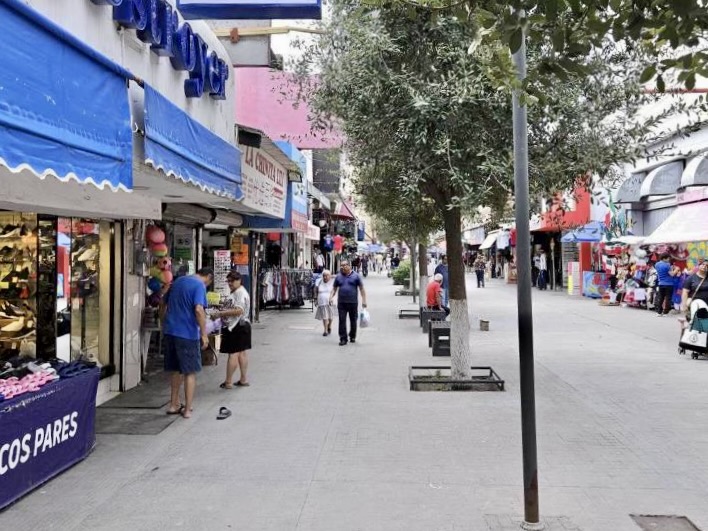
Photo Credit | Anayancy Ulloa
For many businesses, however, rising costs continue to create challenges.
Among those directly affected is Carnicería La Sultana, a family-owned butcher shop that has operated in Reynosa for more than 50 years.
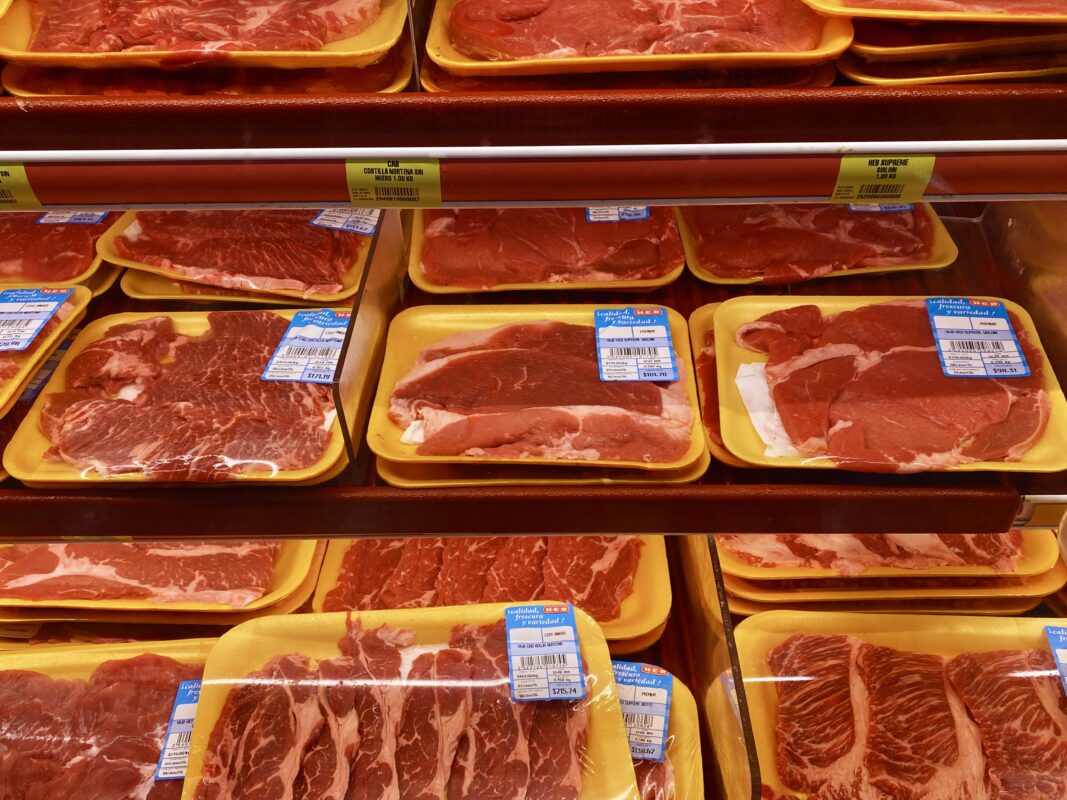
The owner said popular grilling cuts such as ribeye, T-bone, sirloin, fajita and beef ribs have increased by roughly 20%.
According to the business owner, one of the primary drivers behind higher meat prices has been the rising cost of livestock feed.
He said commodities such as sorghum, corn, soybeans and forage used in feedlots have become significantly more expensive in recent years, with those increases eventually making their way to consumers.
Those cost pressures are occurring at a time when sales remain well below historical levels.
The owner said the business once generated approximately 80,000 pesos per day, or about $4,545, in revenue. Daily sales now average about 20,000 pesos, or roughly $1,136, representing an estimated 75% decline.
“We’re operating at about 20% of what we used to do,” he said.
He also identified the decline in shoppers from the United States as a factor affecting business performance.
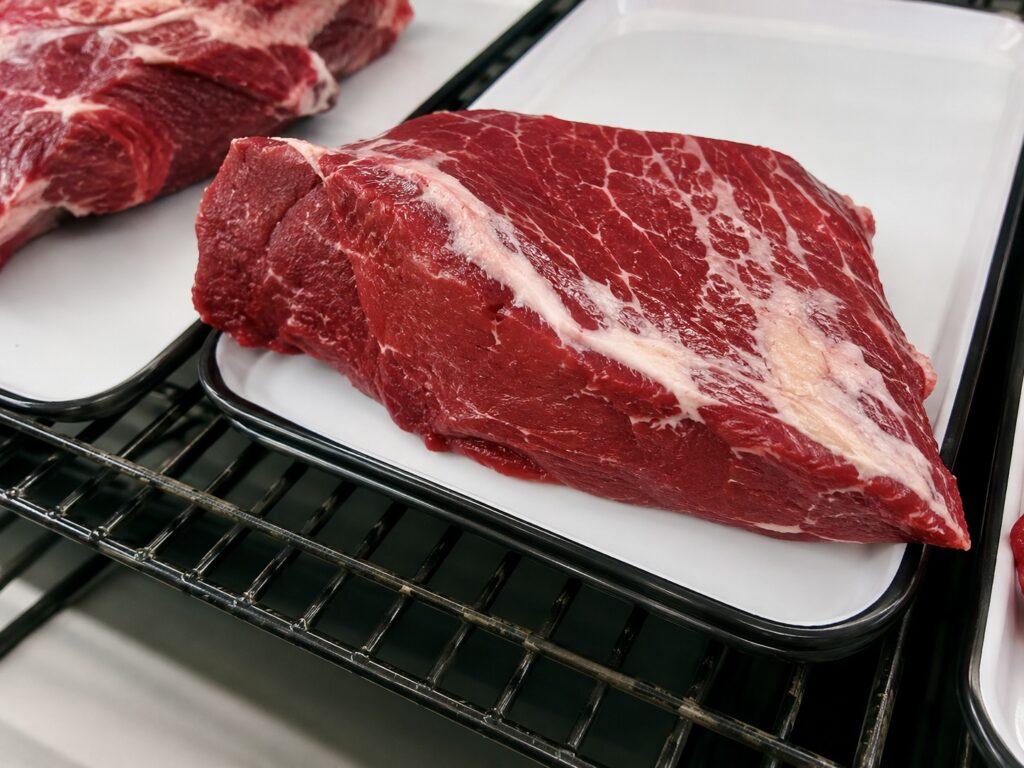
Photo Credit | Anayancy Ulloa
“People from the United States used to be our main customers, and they’re just not coming anymore.”
The situation is also being felt by other food retailers.
A local merchant who sells fruits, vegetables and meat products said rising costs have limited the ability of small businesses to offer more competitive prices.
He explained that part of the merchandise he sells comes from suppliers in Texas, in addition to Mexican distributors, meaning price increases on both sides of the border eventually affect consumers in Reynosa.
“My customers are the ones who suffer the most,” he said. “I’d like to sell everything at lower prices, but I simply can’t.”
The merchant said widespread price increases have forced many consumers to look for ways to adjust their spending.
For consumers, price has become one of the most important factors when making purchasing decisions.
One shopper interviewed said he routinely compares prices between stores and often waits for promotions before purchasing certain products.
“When prices get too high, I wait for them to come down,” he said.
Although business owners and trade organizations see opportunities during the second half of the year, they agree that future consumption trends will continue to depend on food prices, household purchasing power and the overall economic dynamics of the border region.
“We’re basically just surviving and hoping for better times ahead,” the owner of Carnicería La Sultana said.

Anayancy Ulloa
Reporter
Anayancy Ulloa Luna is a contributor to the Rio Grande Valley Business Journal who hails from Reynosa in the Mexican state of Tamaulipas. Ulloa has a long history as a U.S.-Mexico region business expert in marketing, formerly the editorial director of Mexico Industry.
Most Read
- Is SpaceX quietly building a data center at Starbase? Job postings offer clues
- 25 Mexican businesses eye McAllen expansion after city pitches U.S. market entry program
- Rio Grande LNG moves closer to getting even bigger at Port of Brownsville
- Starbase EDC may issue $3 billion in tax-exempt bonds to support SpaceX, records show
- Edinburg ISD rejects nearly $6M offer for prime land near La Sienna despite $15M budget deficit
Get the latest business news delivered to your inbox every morning for free.
Try 30 Days Free!
Get full access to award-winning journalism covering business, real estate, health care, economic trends, and the people shaping the Rio Grande Valley.
30 Days Free!
$9.95/month
Limited time offer
Subscription renews after your 30 day free trial at $9.95/mo.
Included Benefits
- Unlimited access to all articles
- Daily business news and analysis
- Subscriber-only content and features
Stories That Matter
- Love’s plans $600K electric vehicle charging project in Edinburg
- 5×5 Brewing plots $2.5M comeback with new Edinburg brewpub near UTRGV
- Reynosa truckers protest highway robberies, extortion and rising costs
- S-Mart opens seventh Matamoros store with $12.6M investment, plans more
- Mission’s first Small Business Expo puts $25K on the line for local entrepreneurs
- McCoy’s gives $10K, tools to launch Mid-Valley construction academy
- UT Health RGV performs new digestive procedure for first time in the Valley
- TSTC bets on advanced manufacturing to meet RGV’s industrial boom
- Pharr’s cross-border business push earns international recognition
- Valley manufacturers face workforce shortage as industry eyes expansion