The city of McAllen is investing to diversify its drinking water sources with plans to invest $180 million to build its first desalination plant. The new facility would treat groundwater from nearby wells, with the first phase of the project operational in the next three years.
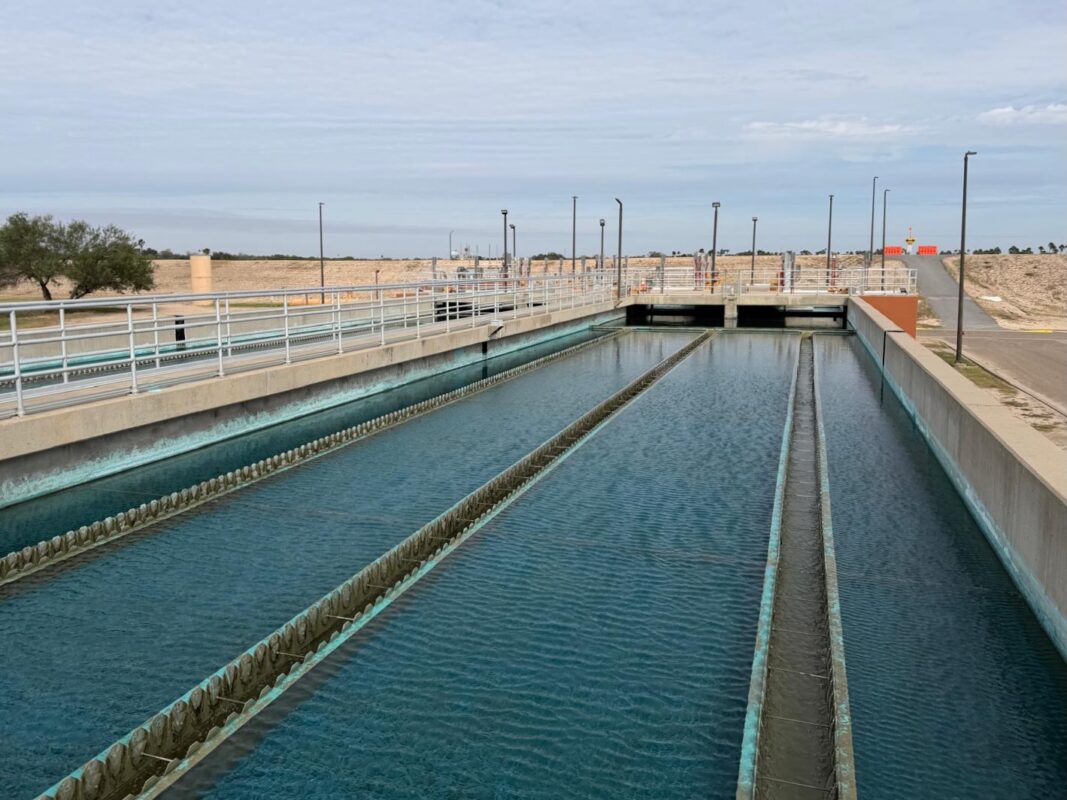
When running at full capacity, it would process 10 million gallons each day using reverse osmosis, which removes salt from brackish groundwater. The facility would share a 60-acre property with the city’s Northwest water treatment facility and reservoir near North Bentsen Road and Auburn Avenue.
McAllen already had contractors drill four test wells this year and is moving forward with the project.
“Now with that groundwater information, the engineers can now begin to design the permanent production wells and then the treatment system for that groundwater quality,” said Mark Vega, general manager of McAllen Public Utilities.
The plan includes six wells: two deep, between 1,200 and 1,400 feet, and four shallow, between 400 and 600 feet. The city expects to tap into the Gulf Coast Aquifer. The initial capacity of the desalination plant will be 6 million gallons per day, with expansion to 10 million gallons. The project also includes 8,500 feet of water transmission lines, ground storage, and electrical control systems.
McAllen expects to solicit bids from companies soon to design those wells starting in March 2026.
Pressure on the Rio Grande supply
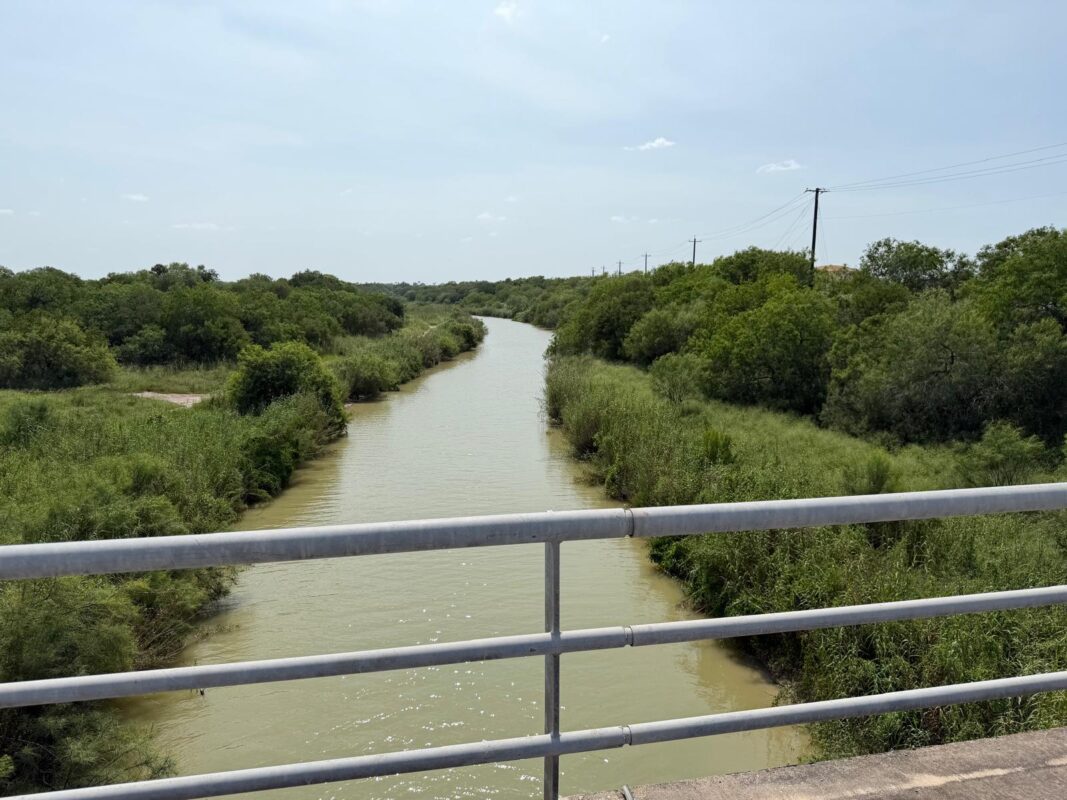
Most of the water for cities across the Rio Grande Valley is pumped from the Rio Grande River and then flows through canals to treatment plants.
But that water source is less reliable as a prolonged drought has lowered water levels, and a decades-long fight over a binational treaty with Mexico has meant the U.S. has not received its share of the resource.
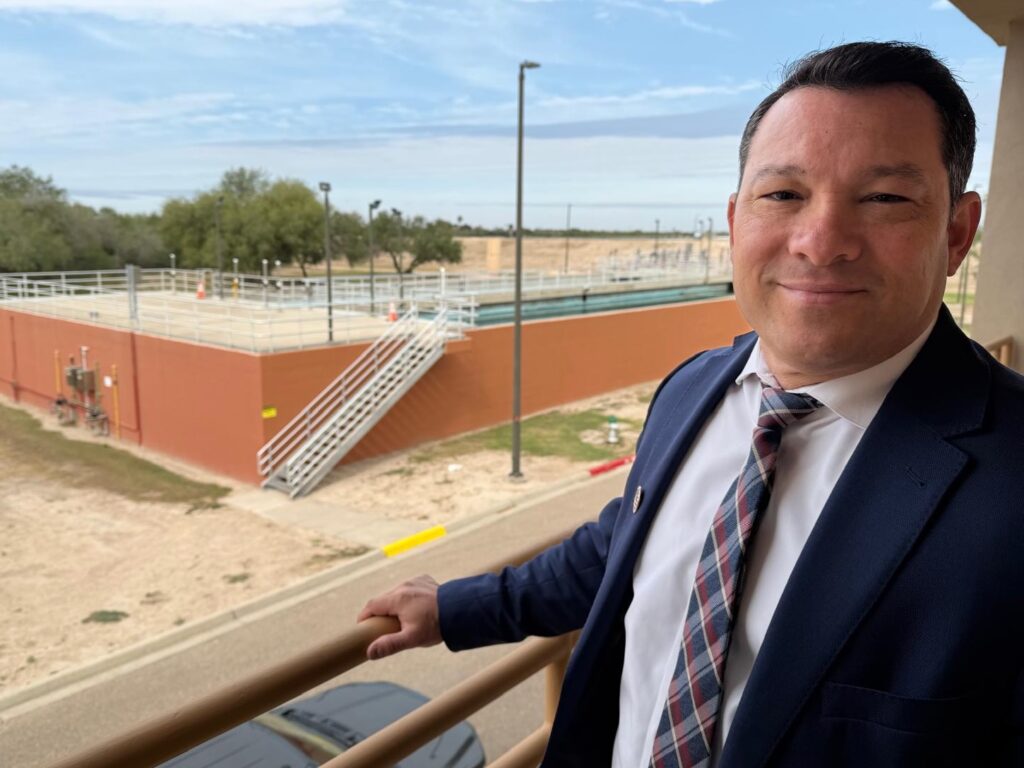
Photo Credit | Kristen Mosbrucker-Garza
“It’s no secret that Mexico is not living up to their obligation to deliver a certain amount of water from the Rio Grande to the U.S.; there’s a drought. There’s issues of possible contamination in the river. So groundwater is the low-hanging fruit,” Vega said. “The river is not as reliable as it used to be.”
There are already nine desalination plants across the Rio Grande Valley. But most of the existing desalination plants are much smaller than McAllen’s plans. For example, the Military Highway Water Supply Corporation operates a one-million-gallon-per-day groundwater desalination plant in the city of Progreso. North Alamo Water Supply operates four desalination plants in Edinburg, San Juan, Donna, and Raymondville, serving between 1 million and 3 million gallons per day.
The largest existing desalination plant in the Valley is operated by Southmost Regional Water Authority in Brownsville, which processes 6.3 million gallons of brackish water each day but has a capacity for 10 million gallons per day.
While some are pitching a desalination plant that could extract potable water from the ocean, then routed in a pipeline across the Rio Grande Valley, others say that’s prohibitively expensive. Instead, groundwater is less salty than seawater, so it requires less electricity to process.
In McAllen, the city already has the capacity to treat 63.7 million gallons of water each day between two water treatment plants. But on an average day, water demand is 23 million gallons per day – closer to 19 million gallons per day in the winter and 35 million gallons per day in the summer.
McAllen is expected to have a water supply shortfall by 2035 if it doesn’t develop new sources of water, according to a report by the Rio Grande Valley’s regional water plan. By 2070, the city would be short by 10,000-acre-feet per year without additional water sources.
“It gives us redundancy in our system. If something, God forbid, were to happen to the North plant, the South plant can supply water to the city. If it’s reversed and something happens to the South plant, we don’t have the luxury of this [North] plant supplying all the water McAllen needs,” Vega said.
How the city is funding the project
McAllen borrowed $198.4 million from the Texas Water Development Board for the project, and the city approved its first $30 million in bonds this fall. The city was also awarded $9.6 million from the U.S. Department of the Interior Bureau of Reclamation WaterSMART for the first phase of the McAllen Brackish Groundwater Treatment Facility. A second federal grant of up to $20 million could be available for engineering design, environmental assessment, and installation of the permanent wells.
McAllen also decided to raise water and sewer rates on customers starting in October to help pay for the improvement – a residential household using the average amount of water of 9,000 gallons, will pay $14 more a month.
“Even with the increase to commercial rates, we are well below the average of the Valley. And with the residential rate increase, we’re still below the Valley average utility rate,” Vega said.
The goal is to continue drilling groundwater wells in other parts of the city and, potentially, tap into the binational North American Development Bank’s Water Resiliency Fund for the Rio Grande Valley to pay for new well exploration. McAllen already sells water to nearby cities, from 1 million gallons each day to the city of Hidalgo, and wholesale contracts with Mission and Edinburg, in addition to an emergency contract with Pharr.
“There’s plenty of groundwater, but it’s salty, so you have to treat that, and that’s a more expensive process than surface water treatment,” Vega said. “It’s a major step in the right direction, gaining independence off of the Rio Grande River.”

Kristen Mosbrucker-Garza
Reporter
Kristen Mosbrucker-Garza is a versatile multimedia news reporter who lives and works along the Texas-Mexico border in Hidalgo County. Mosbrucker-Garza is a news reporter for the Rio Grande Valley Business Journal. During her career she's worked for the McAllen Monitor, San Antonio Business Journal, The Advocate Newspaper in Louisiana, Phoenix New Times, and public media outlets in Baltimore and Philadelphia.
Most Read
- SpaceX is giving Brownsville $220M for water projects. In exchange, the city gave up zoning control of 444 acres near Starbase
- SpaceX seeks to take zoning control over nearly 450 acres from city of Brownsville as a ‘regional’ water deal takes shape
- Port of Brownsville could soon host Nodule City, a first-of-its-kind commercial deep-sea mining hub
- How much water does SpaceX need to operate near Brownsville? Nearly 20x its current use
- Cameron County is negotiating a $20M Fluidstack data center donation after Harlingen waffles on the same offer
Get the latest business news delivered to your inbox every morning for free.
Try 30 Days Free!
Get full access to award-winning journalism covering business, real estate, health care, economic trends, and the people shaping the Rio Grande Valley.
30 Days Free!
$9.95/month
Limited time offer
Subscription renews after your 30 day free trial at $9.95/mo.
Included Benefits
- Unlimited access to all articles
- Daily business news and analysis
- Subscriber-only content and features
Stories That Matter
- 5 things to know about manufacturing along the South Texas-Mexico border
- Mission’s first Small Business Expo puts $25K on the line for local entrepreneurs
- Reynosa’s newest technical high school focuses on AI, semiconductors and bionics
- McCoy’s gives $10K, tools to launch Mid-Valley construction academy
- UT Health RGV performs new digestive procedure for first time in the Valley
- TSTC bets on advanced manufacturing to meet RGV’s industrial boom
- Pharr’s cross-border business push earns international recognition
- Brownsville eases drought restrictions after nearly three years as Rio Grande reservoir levels improve
- Texas A&M’s $53.5M McAllen research center will tackle water, food security and Valley health
- McAllen’s $204M water investment expects to seek construction bids in 2027