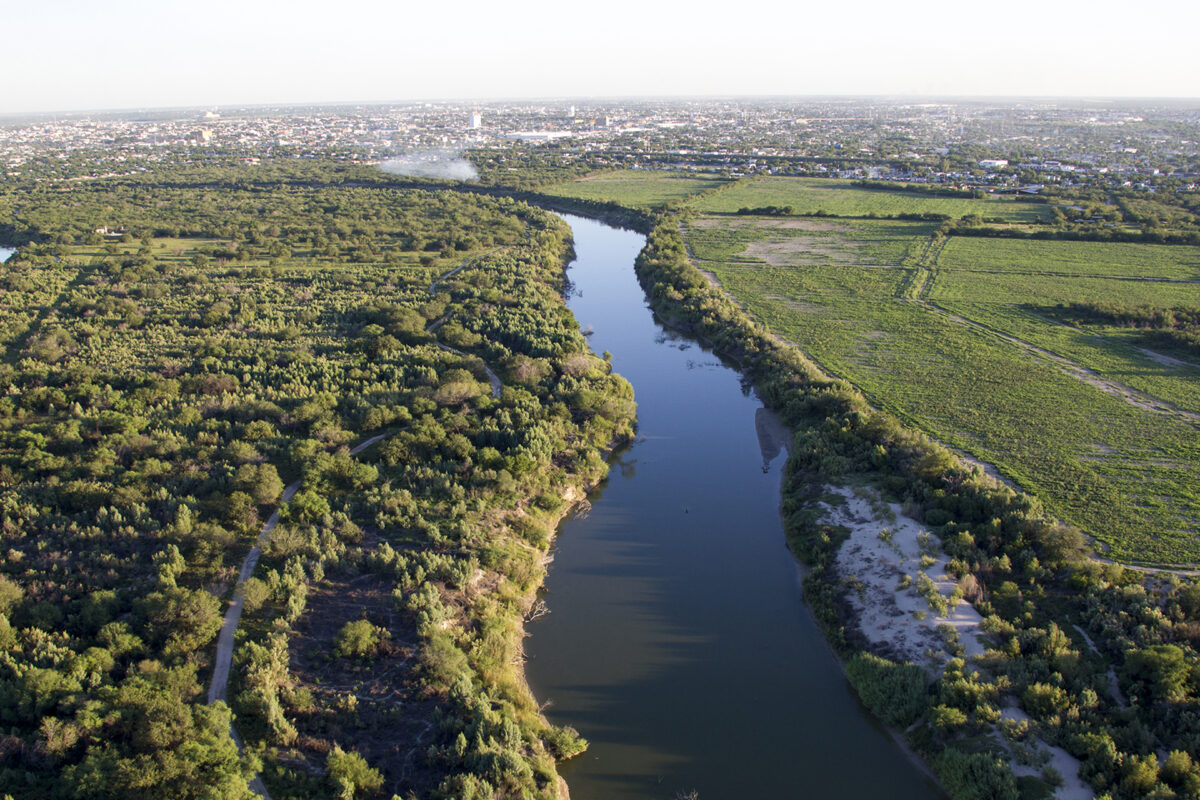
The Rio Grande Valley’s growth runs on river water — a source that’s becoming increasingly unpredictable.
A new Texas A&M study shows that McAllen, Brownsville, and other South Texas metros depend more on the Rio Grande and its reservoir system than any other region in Texas.
That makes the Valley especially vulnerable to drought, cross-border disputes, and the realities of a strained binational supply.
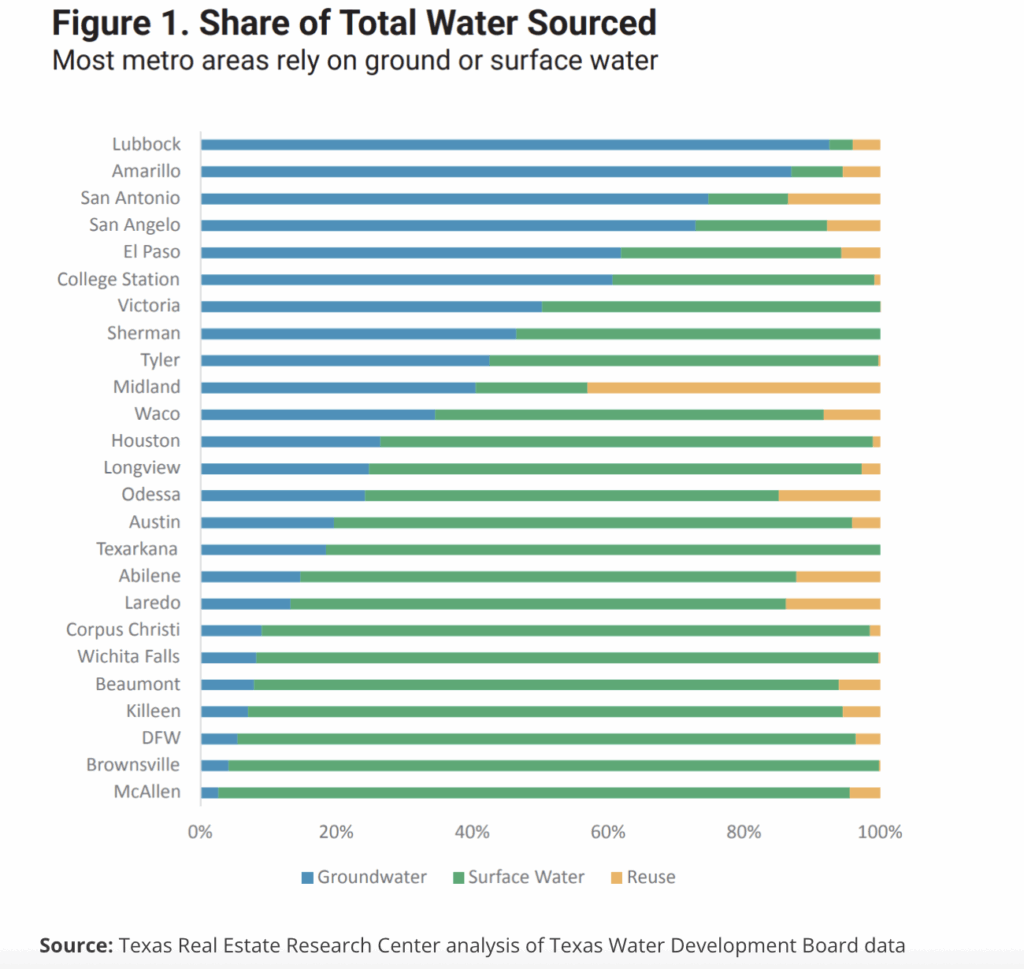
The report, “Mapping Metro Water Use: Sources, Industries and Consumption,” by the Texas Real Estate Research Center, found that while groundwater provides about half of Texas’ total water use, roughly 90% of South Texas’ supply comes from surface water — nearly all of it drawn from the Rio Grande.
And much of that water doesn’t go to people.
Agriculture’s footprint
Agriculture consumes the largest share of water across South Texas, placing McAllen and Brownsville among just five Texas metros where most of the total supply goes to irrigation.
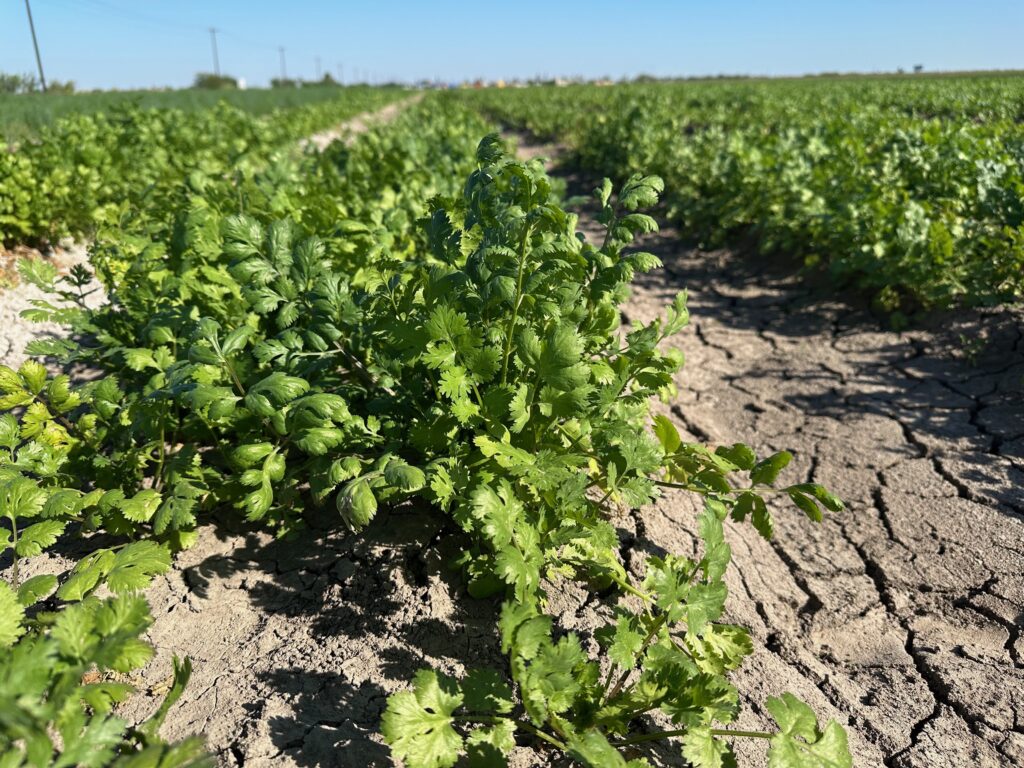
Photo Credit | Kristen Mosbrucker-Garza
It’s a reflection of how farming, more than population, still drives the region’s overall demand for water.
When agricultural irrigation is included, total water use in McAllen and Brownsville reaches about 700 to 800 gallons per person per day.
Of that, only about 150 gallons — roughly 20% — are used by homes and businesses. The remaining 80% goes to farming and related industries.
That puts the region among the highest-usage areas in the state.
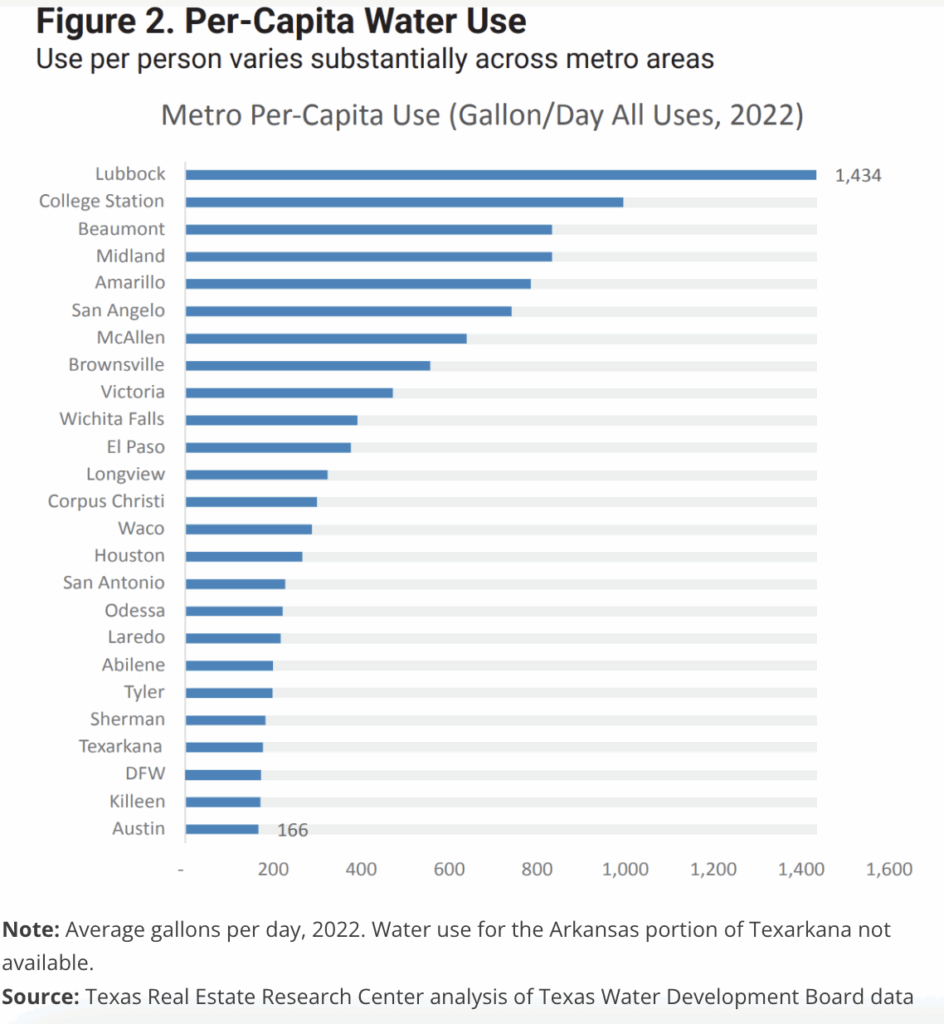
In 2022, Austin residents averaged about 166 gallons a day, while Lubbock residents used more than 1,400. The differences are driven more by industry than by household habits.
Treaty tensions
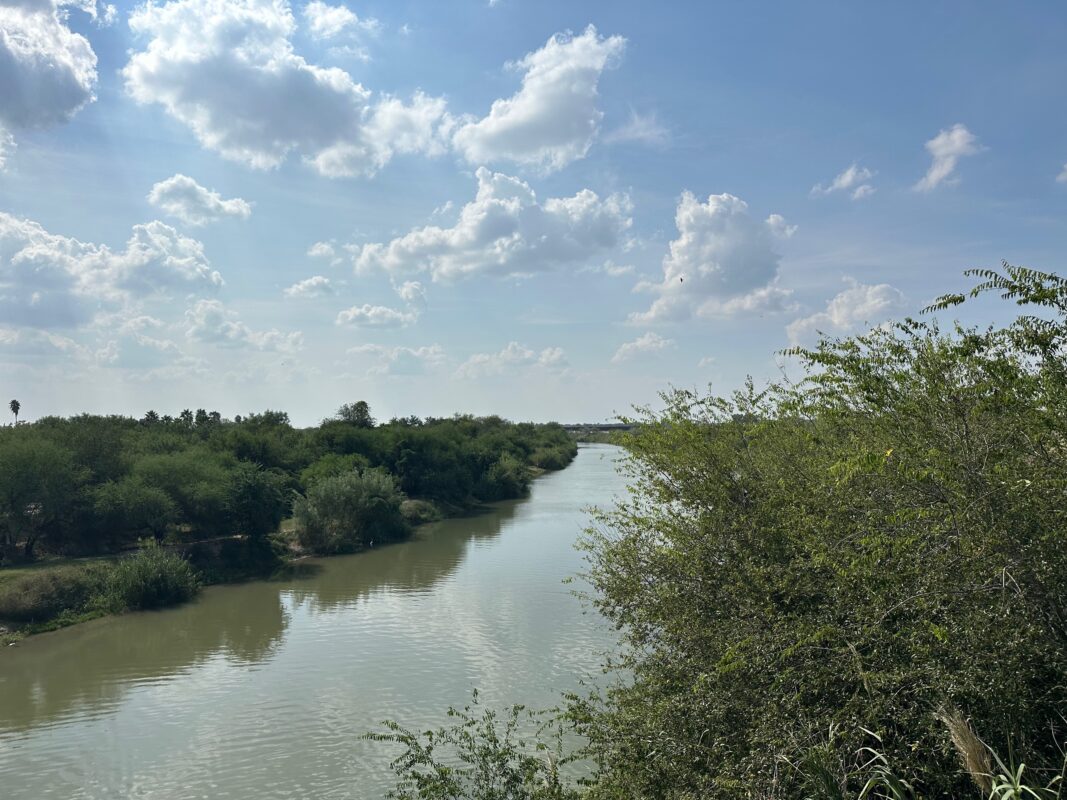
The Valley’s water supply depends not only on local rainfall, but also on deliveries from Mexico under the 1944 Water Treaty.
This fall, Mexico missed its October deadline to send water from six tributaries into the Rio Grande basin — the latest in a string of treaty shortfalls.
The lapse left Valley farmers facing another dry season and renewed calls for reform.
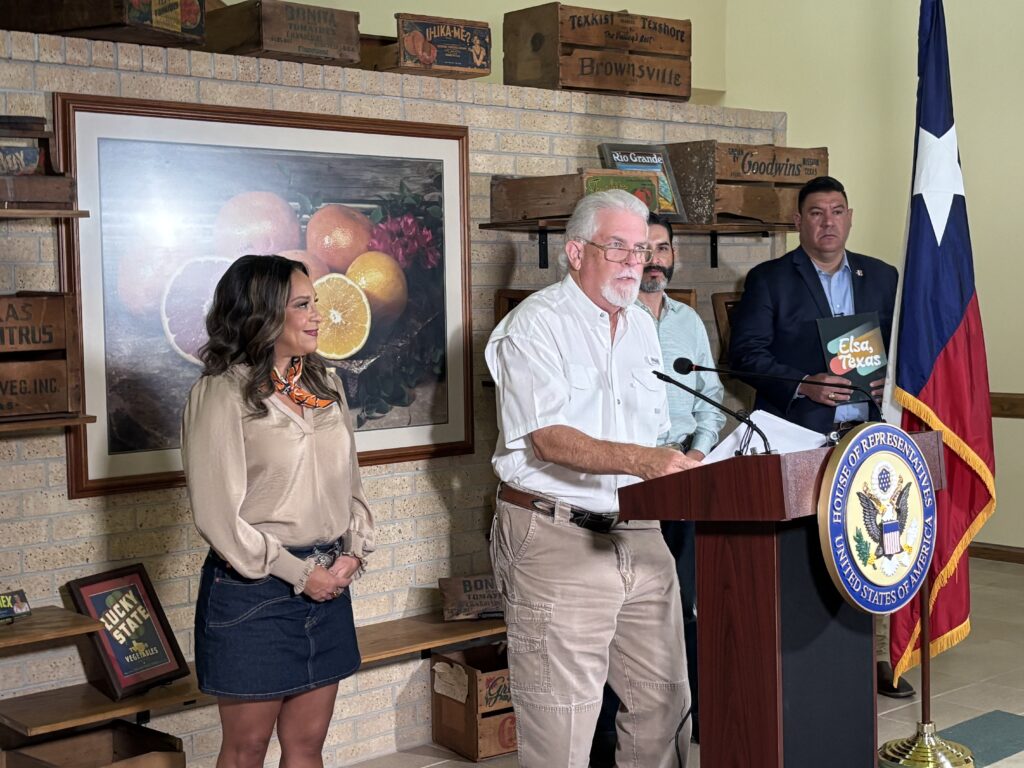
Photo Credit | Matt Wilson
U.S. Rep. Monica De La Cruz, R-McAllen, and local agricultural leaders recently urged federal officials to tie Mexico’s compliance with its water debt to future trade talks when the U.S.–Mexico–Canada Agreement (USMCA) is reviewed next year. Their focus is on protecting irrigation supplies that sustain farms and agribusiness across South Texas.
Across the border, priorities look different — at least for now.
Manufacturing executives in Reynosa want both governments to use the USMCA review to safeguard binational production and trade stability.
The maquiladora sector — which depends on steady water access for industrial operations and cooling — has emphasized long-term coordination to prevent supply disruptions and keep factories running on both sides of the river.
Addressing the strain
The findings come as the Valley faces another year of drought and growing pressure on the river — but also as new efforts take shape to strengthen water resilience across the region.
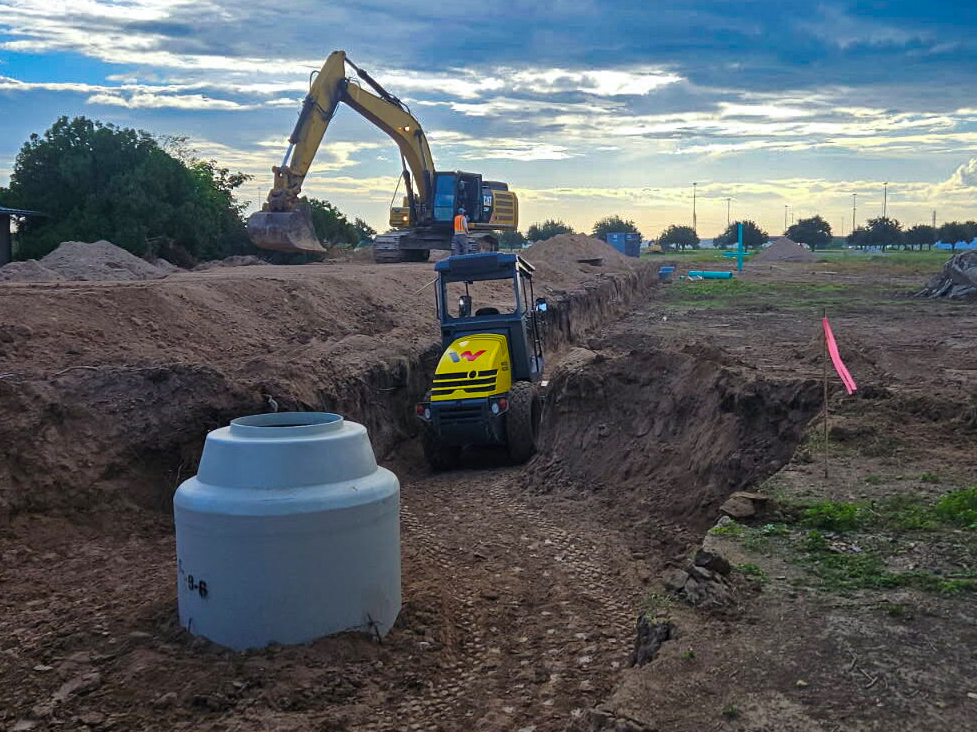
Local governments and regional utilities are exploring ways to diversify water sources and modernize infrastructure, and there are funding opportunities to support those projects.
Strategies under review by cities, counties, and public utility boards include water reuse, conservation technologies, and potential desalination systems that could supplement surface supplies during drought.
Agriculture, which uses the vast majority of the Valley’s water, faces its own opportunity to improve efficiency.
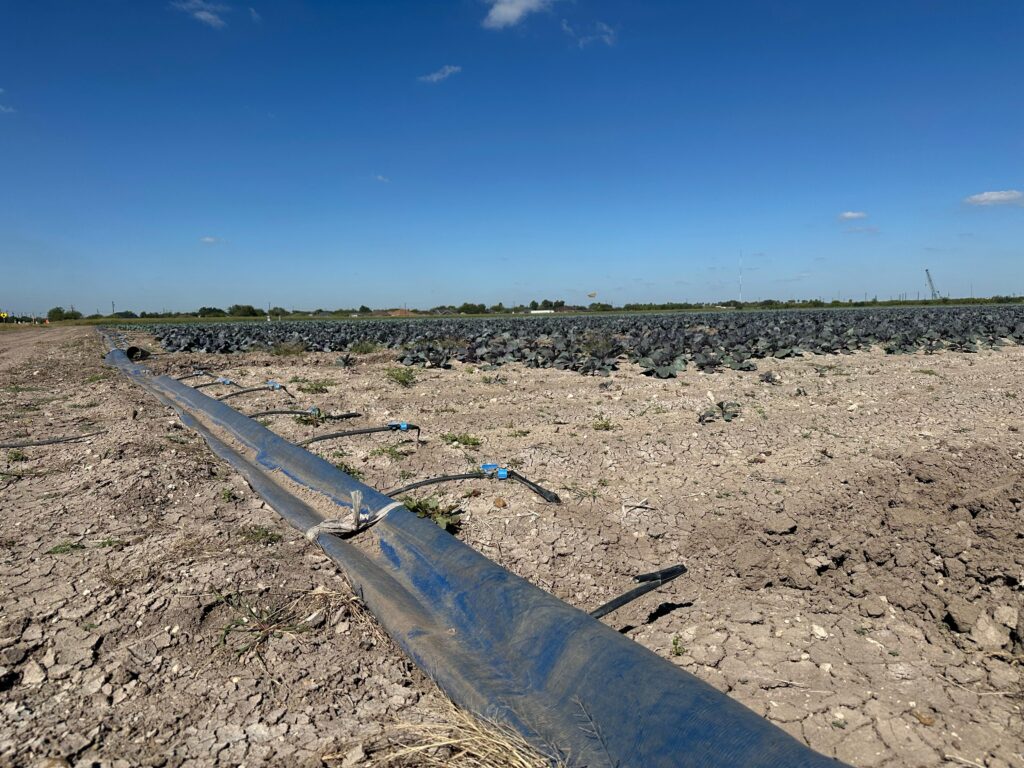
Photo Credit | Kristen Mosbrucker-Garza
Irrigation districts can reduce losses through canal lining, upgraded delivery systems, and precision irrigation — steps that could stretch limited supplies without cutting production.
Municipal, county, and regional projects — along with irrigation districts — may soon benefit from new regional funding.
In August, the North American Development Bank approved a $400 million Water Resiliency Fund for communities along the U.S.–Mexico border.
The fund provides grants and low-interest loans to drought-prone cities and irrigation districts to help modernize treatment plants, expand reuse systems, and finance conservation upgrades across South Texas and northern Mexico.
New state funding
At the state level, voters this month approved Proposition 4, dedicating up to $1 billion per year in future sales-tax revenue to the Texas Water Fund, managed by the Texas Water Development Board.
The fund will finance water-supply, wastewater, reuse, and flood-control projects across Texas — particularly in drought-prone and rural areas — and prohibits the use of state funds to export fresh groundwater.
The allocation begins in 2027 and will remain in effect for 20 years, unless renewed.
“Surface-water-reliant metros must treat water as a strategic asset, not an afterthought,” the Texas A&M report warned. “Planning for variability is essential to long-term economic development.”
Looking ahead
The Valley’s economy — from trade logistics to land development — depends on steady access to the Rio Grande.
As South Texas expands, that single river will continue to define the pace and limits of development.
Researchers say planning, investment, and binational coordination will be essential as population and industry drive demand.
How effectively local, state, and cross-border partners manage this shared resource will shape the Valley’s future.

Naxi Lopez-Puente
Reporter
Naxiely López, managing editor of the Rio Grande Valley Business Journal, is a veteran Valley journalist who reported and served as metro editor at The Monitor. She later led programs and partnerships at Mission EDC, giving her on-the-ground insight into regional growth. A Valley native raised in South Texas, she brings a deep working knowledge of how the RGV does business.
Most Read
- SpaceX is giving Brownsville $220M for water projects. In exchange, the city gave up zoning control of 444 acres near Starbase
- SpaceX seeks to take zoning control over nearly 450 acres from city of Brownsville as a ‘regional’ water deal takes shape
- Port of Brownsville could soon host Nodule City, a first-of-its-kind commercial deep-sea mining hub
- Cameron County is negotiating a $20M Fluidstack data center donation after Harlingen waffles on the same offer
- How much water does SpaceX need to operate near Brownsville? Nearly 20x its current use
Get the latest business news delivered to your inbox every morning for free.
Try 30 Days Free!
Get full access to award-winning journalism covering business, real estate, health care, economic trends, and the people shaping the Rio Grande Valley.
30 Days Free!
$9.95/month
Limited time offer
Subscription renews after your 30 day free trial at $9.95/mo.
Included Benefits
- Unlimited access to all articles
- Daily business news and analysis
- Subscriber-only content and features
Stories That Matter
- McAllen’s $204M water investment expects to seek construction bids in 2027
- Saronic lands Navy landing craft contract, first build at Brownsville’s Port Alpha
- The Rio Grande Valley’s tech industry is small but growing — meet some of the next-gen workforce
- Entrepreneurs enter Mission EDC’s ‘Shark Tank’ competition for $25K top prize
- Mission’s first Small Business Expo puts $25K on the line for local entrepreneurs
- Reynosa’s newest technical high school focuses on AI, semiconductors and bionics
- McCoy’s gives $10K, tools to launch Mid-Valley construction academy
- UT Health RGV performs new digestive procedure for first time in the Valley
- TSTC bets on advanced manufacturing to meet RGV’s industrial boom
- SpaceX reschedules Starship’s first flight around the Earth