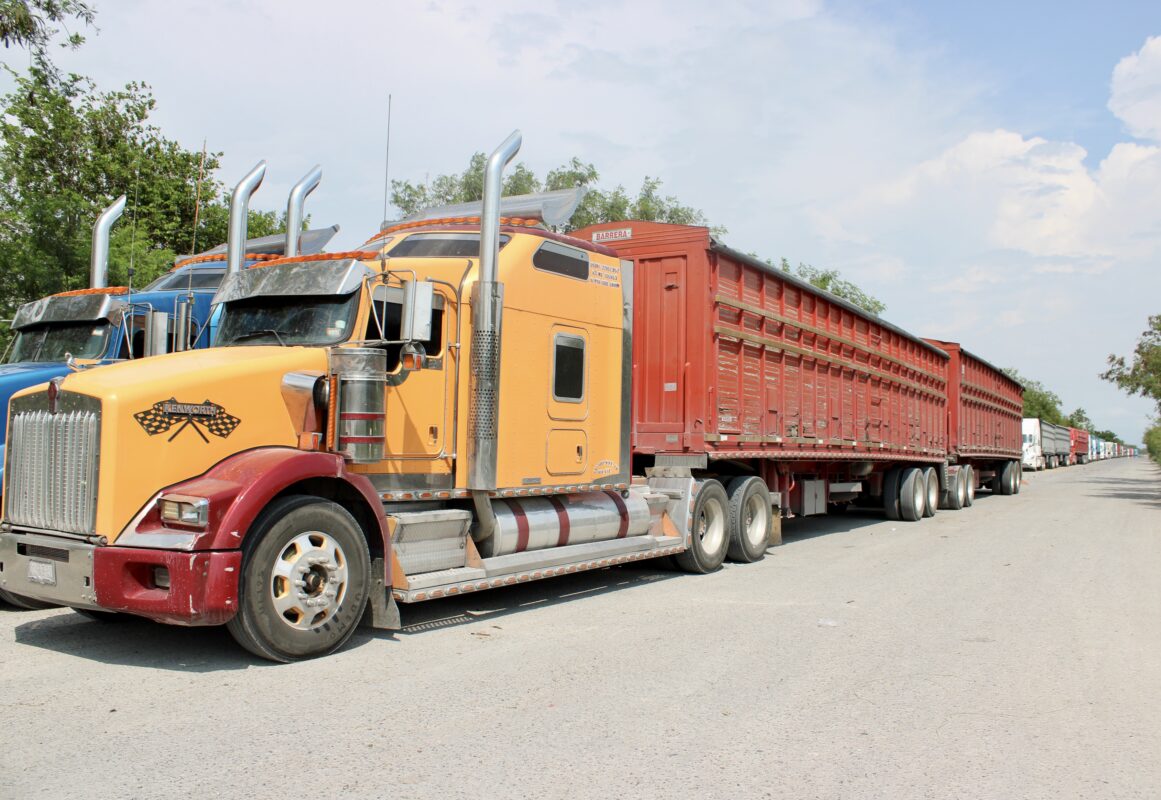
The freight transportation sector in Reynosa is no longer growing. Companies are now focused on staying profitable as demand softens and costs rise.

Edgar Zamorano, regional delegate of Mexico’s national trucking chamber (CANACAR), said the industry has moved out of a growth cycle and into a period of adjustment centered on cost control and efficiency.
“Freight demand has decreased at both the national and international levels, while rates have dropped considerably,” he said.
To stay competitive, companies are lowering prices even as their operating costs continue to increase. That combination is squeezing margins, forcing some routes to operate at little to no profit.
Costs rise as margins tighten
Diesel is the largest expense for trucking companies, accounting for about 30% of operating costs.
Fuel prices have increased by about 4 pesos per liter. In Mexico, companies generally cannot pass those increases on to customers, leaving them to absorb the impact.
“We are subsidizing rates with our own operating cash flow,” Zamorano said.
Cost pressures extend beyond fuel and are building across the entire operation.
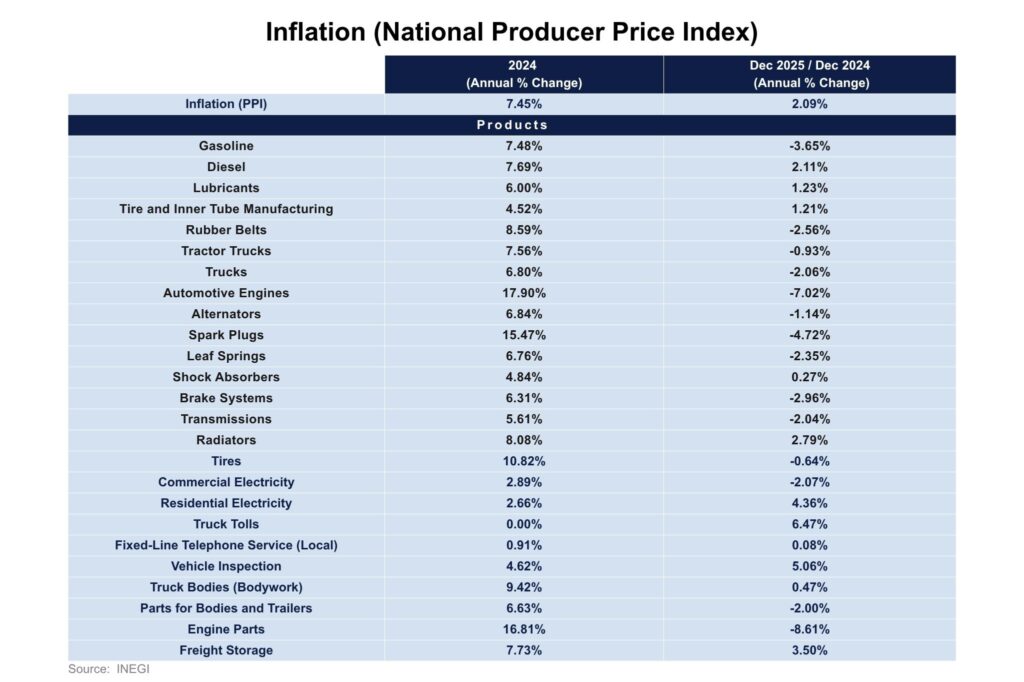
Industry data shows annual increases of 7.69% in diesel, 7.48% in gasoline, 17.90% in automotive engines and 16.81% in engine parts. Producer prices in the sector are up 7.45%.
These increases affect everything from daily fuel use to long-term maintenance and equipment replacement.
At the same time, revenue per trip is falling as rates decline. The result is a widening gap between what companies spend to move goods and what they earn for doing it.
Demand slows as U.S. downturn spreads
Freight volumes are declining at both the national and international levels, reflecting a broader slowdown in trade.
The slowdown comes after a period of strong demand tied to nearshoring, marking a shift in the freight cycle rather than a full collapse in activity.
The shift is tied to the U.S. freight market, which has been in a downturn for the past two years.
“The United States has been in a freight crisis for two years, and Mexico is just now starting to feel it more strongly this year,” Zamorano said.
Because cross-border freight is closely tied to U.S. consumption, changes in that market quickly ripple into border cities like Reynosa.
As demand weakens, competition for available loads increases, pushing rates even lower and further tightening margins.
Companies pull back to stay afloat
In response, carriers are scaling back.
Fleet expansion has slowed, equipment purchases are being delayed, and some companies are reducing capacity to control costs and limit exposure.
“There is no real growth in the sector; companies are reducing or stabilizing their fleets,” Zamorano said.
Instead of expanding, companies are focusing on protecting cash flow, cutting unnecessary expenses and taking on more selective contracts.
This marks a shift from growth to survival, where maintaining operations becomes the priority.
Driver shortage remains a structural constraint
The industry continues to face a shortage of drivers, which adds pressure even as demand softens.
Training a driver takes between seven and 12 months. High turnover remains a challenge, and fewer people are entering the field.
“Fewer people want to become drivers, and turnover remains very high,” Zamorano said.
Proximity to the United States continues to draw experienced drivers away in search of better pay, further tightening the labor pool.
Even in a slower market, the lack of drivers limits flexibility and adds to operational strain.
Operations continue, but risks remain
Despite calls for blockades in other parts of Mexico in early April, freight operations in Reynosa have continued without disruption, particularly at key international crossings.
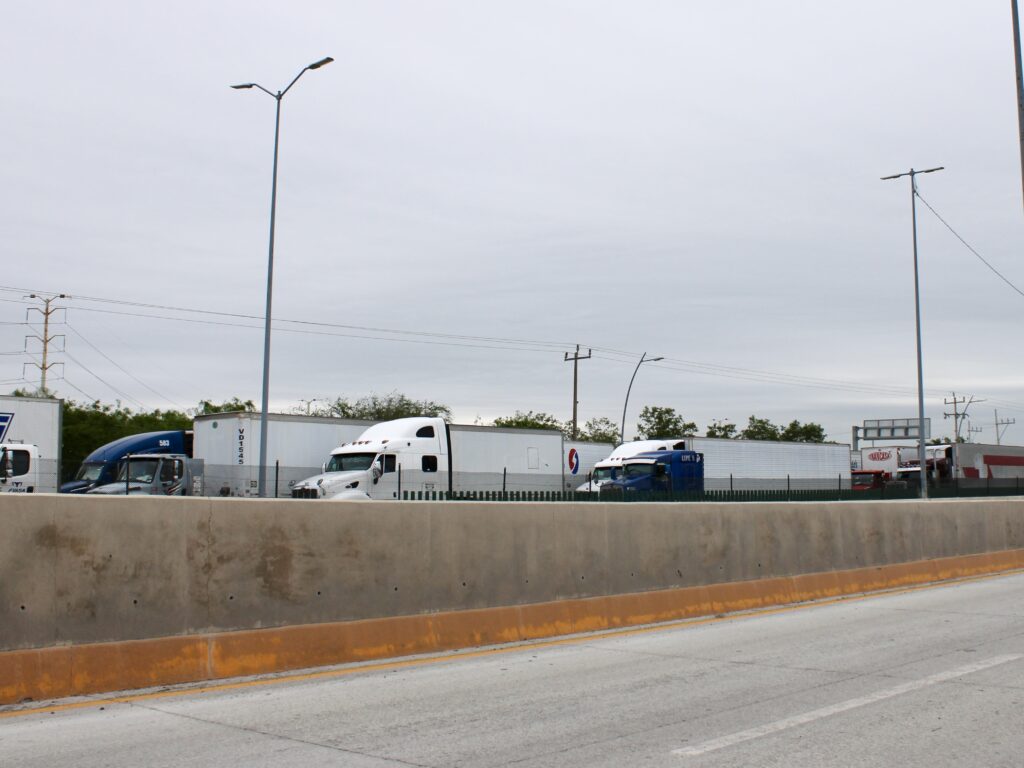
Photo Credit | Anayancy Ulloa
“There are no blockades in Reynosa or at international bridges,” Zamorano said.
Still, companies are monitoring the situation closely as disruptions elsewhere could affect supply chains.
Zamorano said the mobilizations are not being led by freight operators.
“Transport operators in Tamaulipas are not participating; these are primarily farmer groups,” he said.
Beyond market conditions, structural challenges — including highway insecurity, rising operating costs, regulatory constraints and limited pricing flexibility — continue to weigh on the industry.
Many companies are operating with minimal or even negative margins, raising concerns about long-term sustainability.
“Freight is still moving,” Zamorano said. “But the business is changing.”

Anayancy Ulloa
Reporter
Most Read
- SpaceX is giving Brownsville $220M for water projects. In exchange, the city gave up zoning control of 444 acres near Starbase
- What you need to know about Texas A&M’s newest manufacturing hub near the Port of Brownsville
- Port of Brownsville could soon host Nodule City, a first-of-its-kind commercial deep-sea mining hub
- Fluidstack breaks ground on $4 billion Cameron County AI data center
- Cameron County is negotiating a $20M Fluidstack data center donation after Harlingen waffles on the same offer
Get the latest business news delivered to your inbox every morning for free.
Try 30 Days Free!
Get full access to award-winning journalism covering business, real estate, health care, economic trends, and the people shaping the Rio Grande Valley.
30 Days Free!
$9.95/month
Limited time offer
Subscription renews after your 30 day free trial at $9.95/mo.
Included Benefits
- Unlimited access to all articles
- Daily business news and analysis
- Subscriber-only content and features
Stories That Matter
- Mexico car sales are growing, but its factories are making fewer vehicles
- Edinburg’s Texas Cook’Em generated nearly $7 for every $1 invested
- Momole gains ground in McAllen as Reynosa-born brand plots U.S. expansion
- Harlingen earns state tourism certification aimed at boosting local economic development
- Mission’s first Small Business Expo puts $25K on the line for local entrepreneurs
- Reynosa’s newest technical high school focuses on AI, semiconductors and bionics
- McCoy’s gives $10K, tools to launch Mid-Valley construction academy
- UT Health RGV performs new digestive procedure for first time in the Valley
- TSTC bets on advanced manufacturing to meet RGV’s industrial boom
- Pharr’s cross-border business push earns international recognition