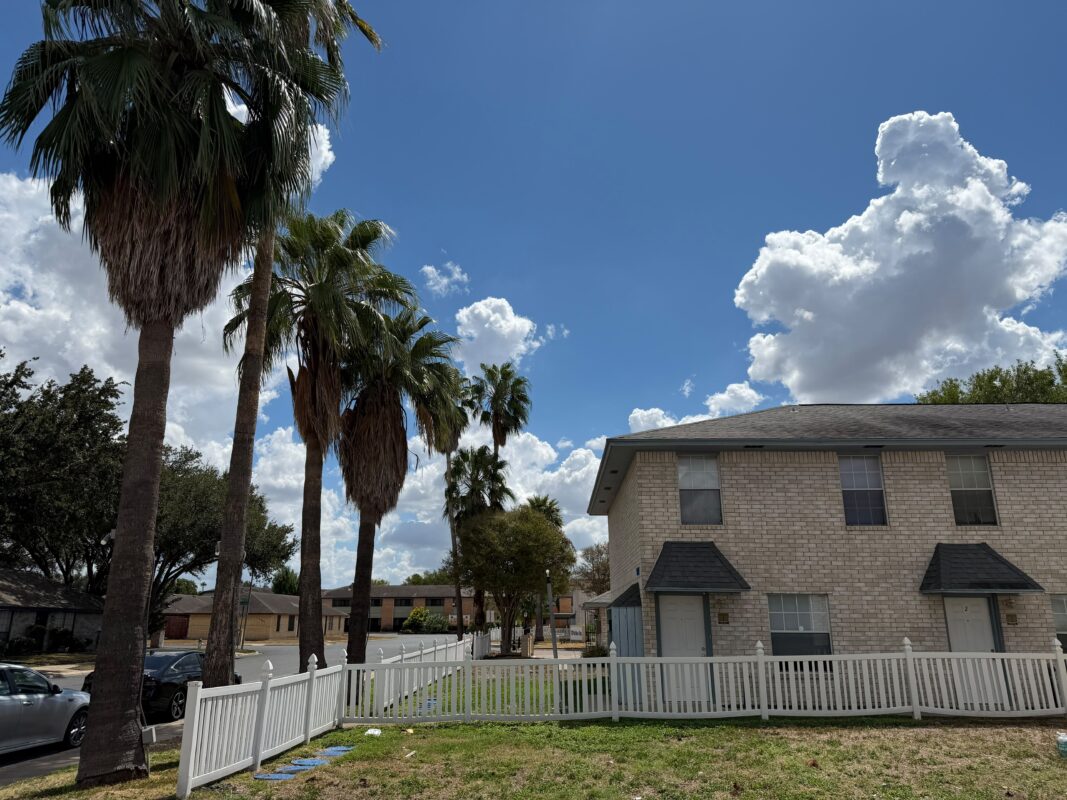
In Reynosa, some students are literally learning without sight.
“Many times when teachers are writing on the board, I can’t take notes, but my classmates support me,” Francisco Tadeo Guzmán Nava, a visually impaired student at Centro de Estudios Tecnológicos No. 71, a technical high school in Reynosa, said. “They send me photos via WhatsApp, and on my computer, since I use a screen reader, I can interpret them.”

Photo Credit | Anayancy Ulloa
Guzmán, who was previously diagnosed with retinopathy of prematurity, a condition that affects premature infants and can cause vision loss, was one of more than 6,000 high school students who attended the Expo Educación Superior, a regional job fair, in Reynosa last week.
The event allowed students from across Tamaulipas — including Reynosa, Río Bravo, Díaz Ordaz, Miguel Alemán, and Valle Hermoso — to explore certificates and degrees offered by 18 universities across northern Mexico.
What emerged from conversations with jobseekers there is not a collection of isolated experiences, but a broader shift.
In Tamaulipas, the market is setting the pace.
Students are getting ready for jobs even before college. Schools are changing what they teach on the fly. And the region’s success depends on whether workers can keep up with what companies need.
Limitations in Mexico’s education system
Jonathan Roberto Yáñez Avalos, who is also visually impaired, said the current system has limitations.
“Sometimes they ask for graphic assignments like maps or infographics, and there really isn’t an application with enough accessibility for people with visual disabilities,” he said.
Inclusion depends largely on students themselves, he said.
“We have to adapt,” he said about students with disabilities. “We’re still trying to build a more accessible world.”
Despite the barriers, Yáñez said, he will continue to develop his skills.
“I’m going to study Information Technologies and Digital Innovation,” he told the Rio Grande Valley Business Journal last week.
Learning by doing
At Universidad Tecnológica de Tamaulipas Norte (UTTN), training increasingly extends beyond the classroom into real industrial scenarios.
Joana Atziri Hernández Virgen, a student in Petroleum Maintenance Engineering, said her training focuses on keeping energy equipment running — fixing problems, preventing breakdowns, and monitoring machines to catch issues early.
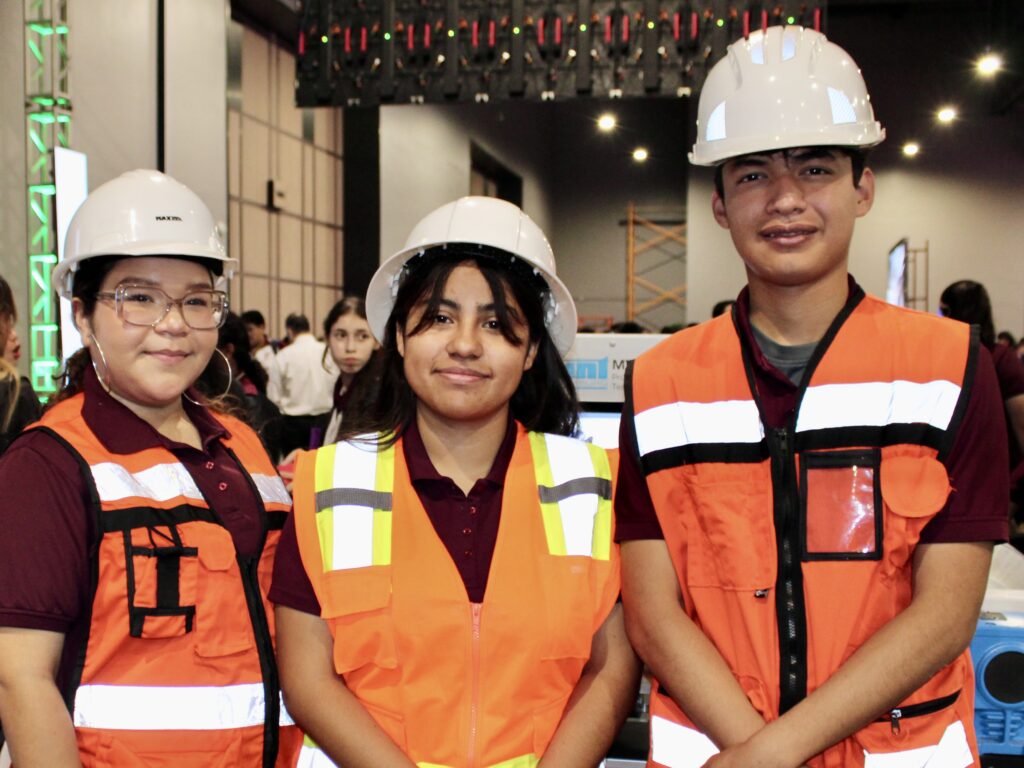
Photo Credit | Anayancy Ulloa
Her cohort is currently working to rehabilitate a drilling rig that was installed on campus years ago. It became inoperative due to a lack of maintenance.
“Our integrative project next semester is to restore the drilling rig and bring it back into full operation,” Hernández said.
The work is not simulated — it is directly tied to industry needs.
Even so, job prospects remain uncertain.
“I wouldn’t say it’s in the red… but it’s in the yellow,” Hernández said. “There is work, but not enough for those of us graduating.”
Still, her classmate Enel Gael Mar Moreno is a clear example of the demand driving job opportunities.
“I already have a position,” Mar said. “I just need to start working.”
Both say they’re not waiting for opportunities — they’re training to step straight into technical roles.
A higher bar for workforce readiness
For universities, the pressure is structural.

Adrián Ramos Barrón, vice rector of Universidad México Americana del Norte (UMAN), said the traditional education model is changing.
“A bachelor’s degree is no longer enough,” Ramos said. “Today, students compete with those who have master’s degrees, specializations, or certifications.”
UMAN graduates between 1,000 and 1,100 students each year in fields such as engineering, healthcare, energy, and business.
“We need researchers,” Ramos said. “There are problems related to water, manufacturing, electronics… and we need scientific production.”
Ramos said preparing talent is no longer just about employability — it is about responding to structural challenges in the region.
Universities align with industry
That pressure is also reshaping how institutions connect with the private sector.
At Universidad Autónoma de Tamaulipas (UAT), officials say aligning with industry is now central to their strategy.
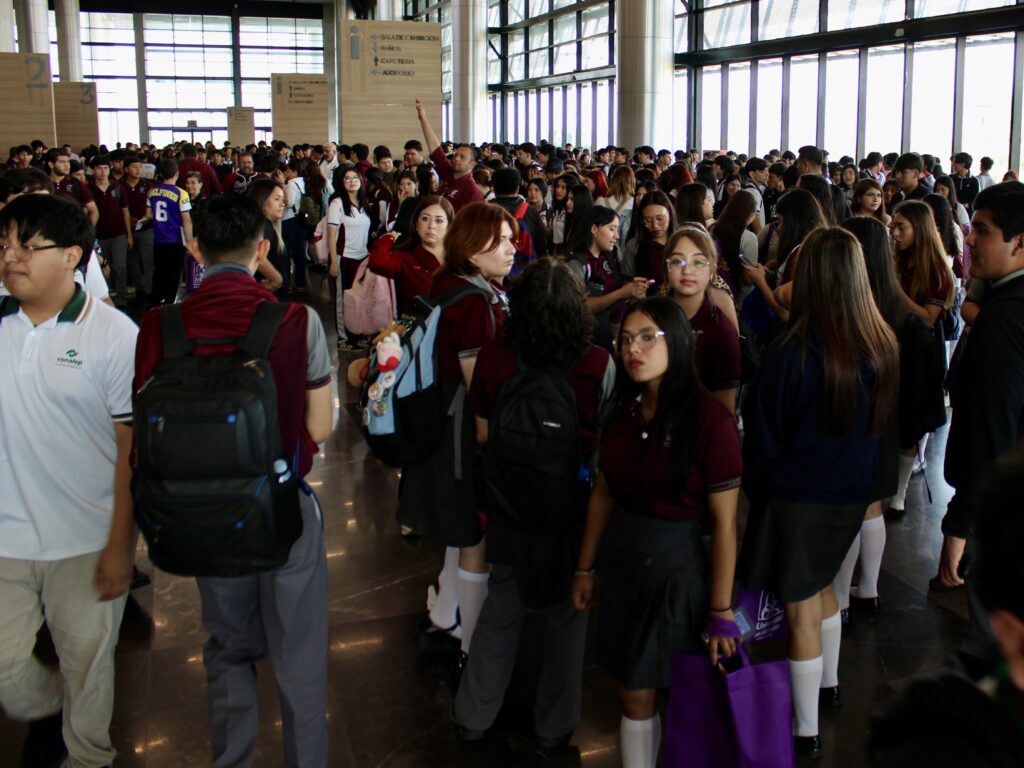
Photo Credit | Anayancy Ulloa
Jorge Antonio Espíndola Álvarez, coordinator of industry relations at UAT, said the university recently formalized a collaboration agreement with Stanley Black & Decker as part of broader efforts to integrate into evolving market demands.
The global toolmaking company, which has a major manufacturing presence in Reynosa, recently announced a $4 million investment to expand operations at its manufacturing plant in Mission.
UAT has more than 2,000 active students and graduates around 500 annually. Its programs are increasingly focused on fields tied to industrial transformation, including computer systems, electronics, renewable energy, semiconductors, and electric mobility.
All programs are accredited by national and international bodies, Álvarez said, but the challenge goes beyond quality.
Universities must now compete with emerging trends that attract students — while still promoting technically rigorous careers critical to regional development.
Technology reshapes the classroom
Other institutions are accelerating changes to how students are trained.
At Instituto Internacional de Estudios Superiores (IIES), programs are increasingly built around emerging technologies, engineering student Glendi Ríos said.
“The university is integrating dynamics with artificial intelligence and promoting new programs in systems, cybereducation, robotics, and automation,” Ríos said.
The goal is to close the gap between education and the technologies already shaping industry.
“More than an isolated innovation, it represents a shift in approach,” she said.

Anayancy Ulloa
Reporter
Anayancy Ulloa Luna is a contributor to the Rio Grande Valley Business Journal who hails from Reynosa in the Mexican state of Tamaulipas. Ulloa has a long history as a U.S.-Mexico region business expert in marketing, formerly the editorial director of Mexico Industry.
Most Read
- Is SpaceX quietly building a data center at Starbase? Job postings offer clues
- 25 Mexican businesses eye McAllen expansion after city pitches U.S. market entry program
- SpaceX’s futuristic city of Starbase finalizes massive 7,100-acre annexation. Here’s what we know.
- McAllen metro keeps selling more homes as Brownsville-Harlingen market sees 17% drop through August
- Rio Grande LNG moves closer to getting even bigger at Port of Brownsville
Get the latest business news delivered to your inbox every morning for free.
Try 30 Days Free!
Get full access to award-winning journalism covering business, real estate, health care, economic trends, and the people shaping the Rio Grande Valley.
30 Days Free!
$9.95/month
Limited time offer
Subscription renews after your 30 day free trial at $9.95/mo.
Included Benefits
- Unlimited access to all articles
- Daily business news and analysis
- Subscriber-only content and features
Stories That Matter
- McAllen’s job market keeps climbing while Brownsville loses ground
- Mission EDC launches search for new CEO with salary up to $190K
- Texas transportation leaders to discuss Rio Grande Valley infrastructure at Mission summit
- Mission’s first Small Business Expo puts $25K on the line for local entrepreneurs
- McCoy’s gives $10K, tools to launch Mid-Valley construction academy
- UT Health RGV performs new digestive procedure for first time in the Valley
- South Texas College plans $4.7M makeover of cosmetology, security facilities in McAllen
- TSTC bets on advanced manufacturing to meet RGV’s industrial boom
- Pharr’s cross-border business push earns international recognition
- Brownsville eases drought restrictions after nearly three years as Rio Grande reservoir levels improve