Developers are proposing to build a large seawater desalination plant along the Gulf Coast, hoping to put a dent in the projected water shortage across the Rio Grande Valley in the coming years.
The $1 billion seawater desalination plant is in the early development stage, but tentative plans are to build on South Padre Island near the second causeway, send the water along a pipeline attached to the new bridge, and transfer it to customers Valley-wide through a water grid network. The excess brine and salt from the plant would be released back into the ocean, developers told the Rio Grande Valley Business Journal.

Courtesy | RGV-Desal LLC
The company behind the project is Delaware-incorporated RGV-Desal LLC, which was formed in April 2025, according to state records. The business is a partnership between Houston-based U.S. Desalination and IDE Technologies, an Israeli water desalination and water treatment business.
IDE Technologies has built hundreds of desal plants worldwide and designed the seawater desalination plant in San Diego County, which opened in 2015. That plant provides about 15% of the drinking water for the San Diego County Water Authority.
“I think the ultimate goal we look for is to help the Valley be one of the few places in the state that has a truly diversified water supply, groundwater, both fresh and brackish, certainly surface water from the river, and now we’ll have seawater desal,” said Mark Ellison, regional sales director for IDE Technologies. “One thing about a seawater desal plant is that because of the size of it you can get economies of scale, and so having a large plant that everybody can draw from that helps make water more affordable.”
The company has already reached out to many municipalities and water districts, including the Laguna Madre Water District, the Brownsville Public Utilities Board, and McAllen Public Utilities, among others. The seawater desalination plant could also support industrial customers such as the proposed oil refinery at the Port of Brownsville or water-intensive data centers. It would not likely be used in agriculture.
The goal right now is to gather enough information from potential customers to gauge how large the initial plant should be, said Albert Escobedo, US Desal and RGV Desal South Texas government affairs director. Escobedo also serves as the Los Fresnos Place 1 commissioner.
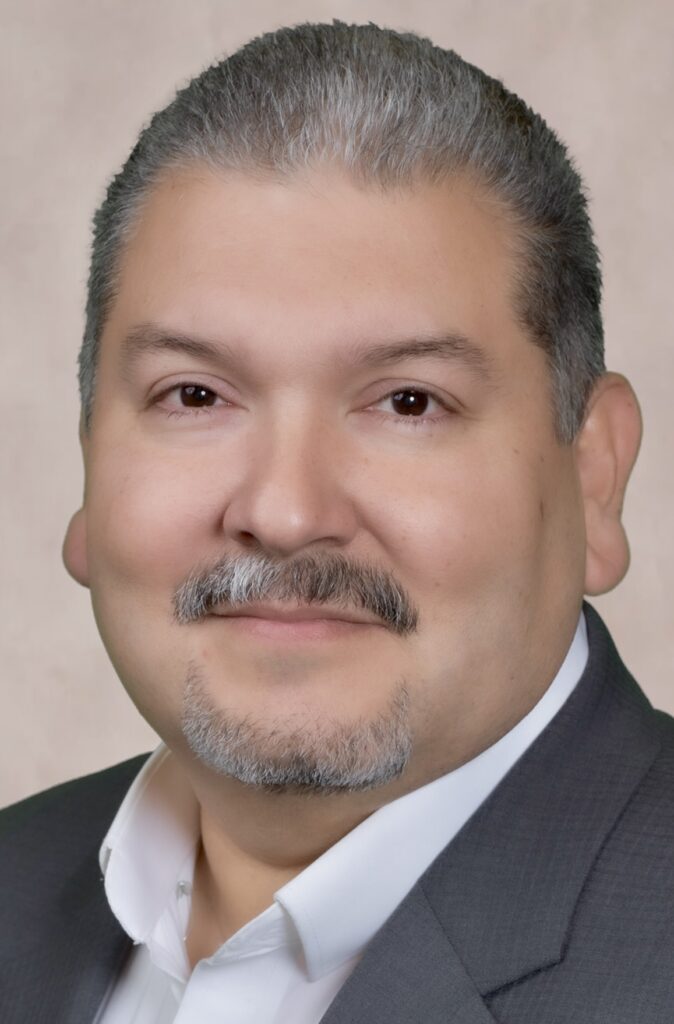
“We’re not your 100% solution, but we want to be part of the solution [for water],” Escobedo said. “It’s more expensive, but it’s for sure water that you have that’s never going to run out. Groundwater can only last for so long.”
That means the initial plant could be much smaller, even with a capacity of 50 million gallons per day, since it’s modular and intended to expand. But the environmental permit would be up to 100 million gallons. The plant would employ about 50 workers with high-paying jobs, the executives said.
There are several notable hurdles such a project would have to navigate: there are no seawater desalination plants in Texas — yet.
In 2007, the Port of Brownsville began a pilot seawater desalination plant, with an expansion expected several years later to reach up to 25 million gallons per day. However, water quality and cost were challenges, and the plan did not advance beyond the 2.5 million-gallon demonstration plant. The seawater desalination plant was anticipated to be operational at 12.5 million gallons per day by 2025 and hit 25 million gallons per day by 2050, when the Valley’s water demand would outstrip supply. At the time, Brownsville estimated it could afford only $70 million for a 25-million-gallon-per-day plant, but it would cost $182 million to build in 2008.
The city of Corpus Christi is considering moving forward with its own plant in the coming months, with Texas Commission on Environmental Quality permits in place and a $978 million price tag — down from the previously estimated $1.3 billion.
The Laguna Madre Water District is already working on a pilot seawater desalination plant on the bay, leveraging existing reverse osmosis infrastructure in Port Isabel.
The second South Padre Island causeway has not been built, nor has funding been guaranteed. The new bridge would also cost between $800 million and $1 billion, and the project lacks dedicated funding, according to the Texas Department of Transportation. The final environmental decision for the second bridge is expected by 2027. Construction could continue through 2038.
Desalinated seawater is the most expensive water option, estimated to cost between $3.60 to $5.80 per 1,000 gallons, according to the Texas Water Development Board. A brackish water desalination plant that relies on groundwater wells and reverse osmosis costs between $1.25 and $2.60 per 1,000 gallons of water. Water from the Rio Grande River is even cheaper than that — raw water for irrigation purposes is about 10 cents per 1,000 gallons.
RGV-Desal LLC doesn’t have any publicly shared dedicated customers yet, but it’s actively connecting with municipalities and industries interested in its water service. And the company has already been contacted by prospective industry clients interested in the Valley, if there’s a stronger water supply.
In July 2025, RGV-Desal LLC shared its general plans for a new plant with the city of Los Fresnos. The city already owns a 2.28% stake in the Southmost Regional Water Authority, which operates a brackish desalination plant that provides 200,000 gallons of water to Los Fresnos each day; still, the city relies on the Rio Grande River for 80% of its water supply.
The company is also relying on municipalities and water districts to build out their own water pipeline distribution network. The Valley mostly relies on open earthen canals — about 3,000 miles of which crisscross the Rio Grande River-fed system — but that water is prone to evaporation.
The company is hosting a networking event for updates on the seawater desalination project in Harlingen at the Hilton Garden Inn on Thursday from 10 a.m. to noon.

Kristen Mosbrucker-Garza
Reporter
Kristen Mosbrucker-Garza is a versatile multimedia news reporter who lives and works along the Texas-Mexico border in Hidalgo County. Mosbrucker-Garza is a news reporter for the Rio Grande Valley Business Journal. During her career she's worked for the McAllen Monitor, San Antonio Business Journal, The Advocate Newspaper in Louisiana, Phoenix New Times, and public media outlets in Baltimore and Philadelphia.
Most Read
- SpaceX is giving Brownsville $220M for water projects. In exchange, the city gave up zoning control of 444 acres near Starbase
- SpaceX quietly secured zoning approval for a new nearly 34-acre heavy industrial site along Boca Chica Highway
- South Padre Island developer mulls new hotel or multifamily project, secures zoning for both
- SpaceX seeks to take zoning control over nearly 450 acres from city of Brownsville as a ‘regional’ water deal takes shape
- Port of Brownsville could soon host Nodule City, a first-of-its-kind commercial deep-sea mining hub
Get the latest business news delivered to your inbox every morning for free.
Try 30 Days Free!
Get full access to award-winning journalism covering business, real estate, health care, economic trends, and the people shaping the Rio Grande Valley.
30 Days Free!
$9.95/month
Limited time offer
Subscription renews after your 30 day free trial at $9.95/mo.
Included Benefits
- Unlimited access to all articles
- Daily business news and analysis
- Subscriber-only content and features
Stories That Matter
- New $14M cold storage warehouse coming to South McAllen
- Brownsville opens up to $30,000 in storefront grants for District 2 businesses
- How Vantage Bank is fighting modern financial fraud — and what customers can do to protect themselves
- What you need to know about Texas A&M’s newest manufacturing hub near the Port of Brownsville
- Mission’s first Small Business Expo puts $25K on the line for local entrepreneurs
- Reynosa’s newest technical high school focuses on AI, semiconductors and bionics
- McCoy’s gives $10K, tools to launch Mid-Valley construction academy
- UT Health RGV performs new digestive procedure for first time in the Valley
- TSTC bets on advanced manufacturing to meet RGV’s industrial boom
- Pharr’s cross-border business push earns international recognition