REYNOSA — The clock is ticking for Mexico to reach a new trade agreement with the United States before Oct. 29, when a 90-day grace period expires and steep new tariffs could take effect.
Under the extension negotiated in late July between President Donald Trump and Mexican President Claudia Sheinbaum, existing tariffs — 25% on vehicles and fentanyl-related goods and 50% on metals — were kept in place while both sides continue to negotiate.
If no deal is reached by Oct. 29, those rates could rise to 30%, raising costs for manufacturers along one of North America’s busiest industrial corridors.
Why it matters for the RGV
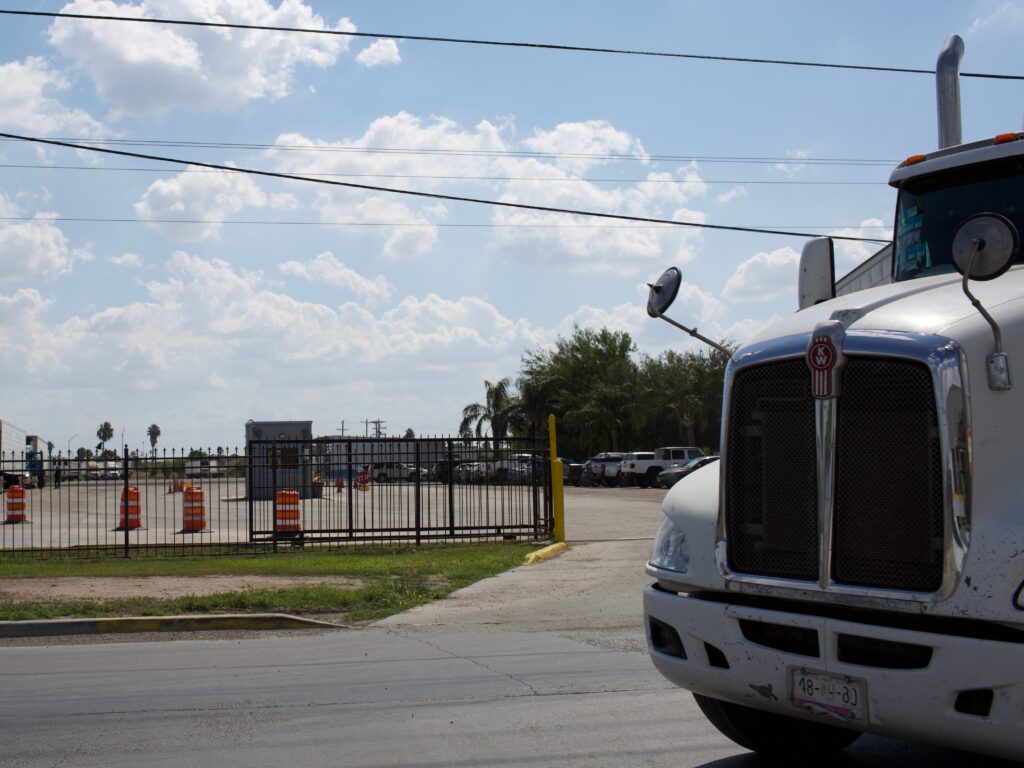
Photo Credit | Kristen Mosbrucker-Garza
The Rio Grande Valley’s industrial economy is directly tied to Mexico’s manufacturing base.
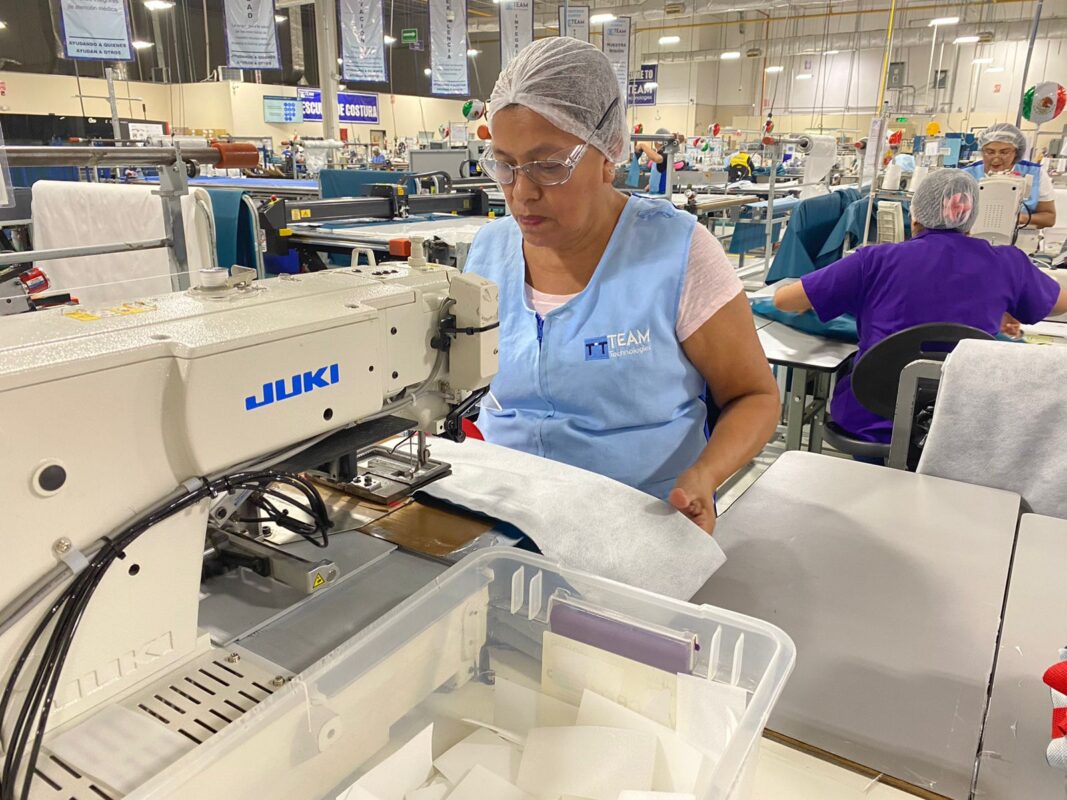
Every day, thousands of trucks cross through ports of entry, carrying auto parts, electronics, and raw materials assembled in maquiladoras across Reynosa and Matamoros.
A 30% tariff would increase production costs, disrupt supply chains, and strain binational companies that depend on just-in-time delivery systems.
For Valley manufacturers, logistics operators, and workers, the outcome of these negotiations could determine whether the region sustains its momentum as a nearshoring hub or faces a slowdown heading into 2026.
Executives on both sides of the border warn that higher costs could ripple across sectors — from transportation and warehousing to retail and energy — altering the competitive balance that has long defined the Tamaulipas–Texas corridor.
Tariffs shake confidence in a binational engine
For maquiladora operators in Reynosa and Matamoros — cities that anchor a supply chain connecting Tamaulipas with McAllen and Brownsville — the uncertainty has already prompted cautious spending and delayed expansion plans.

“These tariffs are affecting maquiladora revenues, prompting many — including ours — to seek suppliers within the USMCA region to increase the Regional Value Content of finished goods,” said David Marín Flores, import-export manager at Hitachi Energy Productos de México, S.A. de C.V. “That allows us to apply treaty preferences and reduce the economic impact on exports to the U.S., since products that qualify under USMCA are exempt from the 25% tariffs.”
Marín said reduced market demand and stricter border inspections have led some plants to scale back hours or temporarily suspend hiring while they wait for clarity on tariff policy.
A delicate binational balance
The maquiladora sector remains one of Mexico’s most powerful economic engines, employing more than 248,000 workers in 414 facilities across Tamaulipas, according to index Nacional, the National Council of the Maquiladora and Export Manufacturing Industry. Reynosa alone hosts 155 companies that employ more than 132,000 workers, most in the electronics, automotive, and medical device industries.
Across the river, McAllen’s industrial base continues to expand — albeit more cautiously.
“Companies are reconfiguring their binational presence, making operations more agile and flexible to respond to regulatory and market changes,” said Ralph García, interim chief operating officer at the McAllen Economic Development Corporation. “I haven’t seen any company withdraw from Reynosa — some are delaying decisions, but they continue operating.”
García said McAllen currently counts 23 active industrial projects, including one worth $100 million that will create 500 new jobs. He called it evidence of long-term confidence in the region’s manufacturing future, even as trade uncertainty clouds short-term planning.
Tamaulipas takes a measured approach

In Matamoros, where 122 manufacturing plants employ 83,000 workers, brokers and developers are seeing investors slow their timelines.
“Companies are being very conservative in their planning. Many projects are under evaluation, but most are being pushed to 2026. It’s not a lack of interest — it’s a more rigorous and realistic approach,” said Sara Ramos-MacFarland, senior broker at NAI Mexico.
She explained that global economic uncertainty, recent tariff adjustments and the U.S. political transition have added pressure to investment decisions along the U.S.–Mexico border.
“What’s happening now was anticipated. Companies are scrutinizing every possible scenario,” she said.
Ripple effects in Brownsville–Matamoros
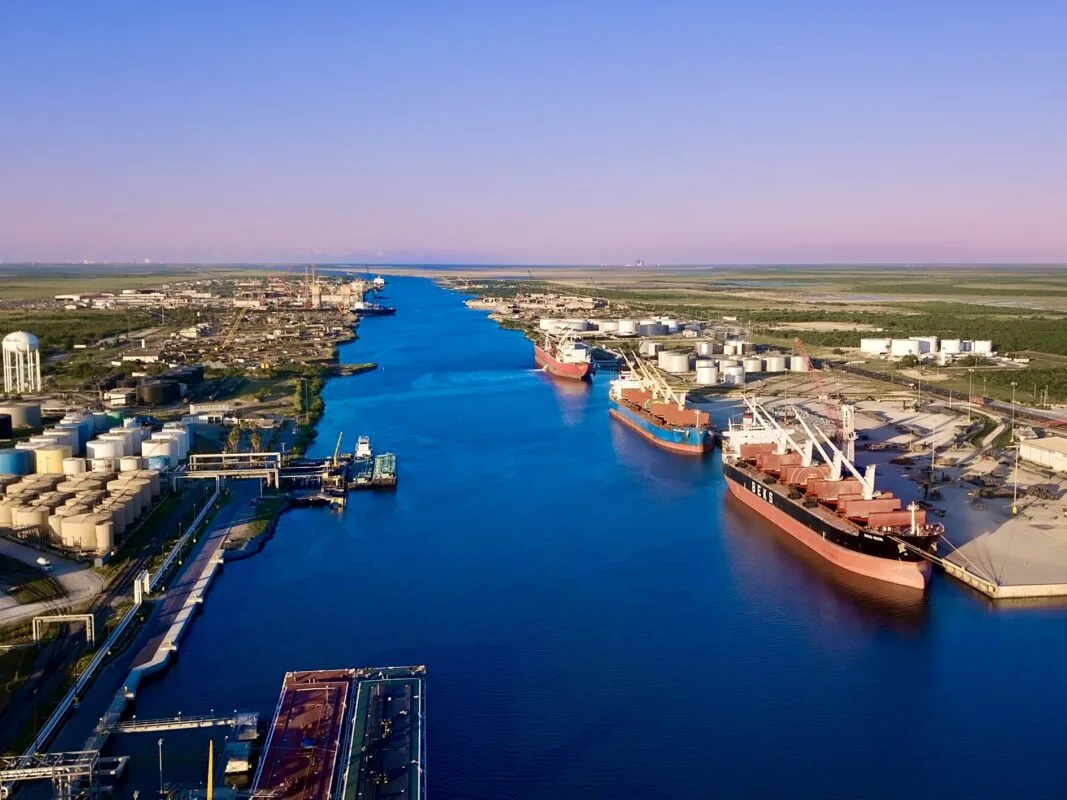
Industrial leaders in Matamoros view Brownsville’s growth — fueled by SpaceX and the Rio Grande LNG export terminal — as a stabilizing force that could offset some trade disruptions.

“Our neighbors’ visibility is a major opportunity to highlight Matamoros’ more than 50 years of skilled labor and the major companies that have operated and expanded here,” said René Xavier González, president of the Matamoros Economic Development Council (CODEM).
Even so, David García, president of the Matamoros Business Coordinating Council (CCEM), said several new projects are “on hold” until tariff negotiations are resolved.
“After comparing Matamoros with Tijuana, Ciudad Juárez, and Nuevo Laredo, they chose Matamoros for strategic market reasons. They’ve already visited; now it’s a matter of deciding where to set up,” David García said.
He added that two expansion projects underway could bring up to 2,500 new jobs, aided by newly upgraded electric infrastructure. But he cautioned that “the new tariffs are causing significant pauses in investment decisions.”
Labor shifts and supply chain pressures
Beyond trade policy, workforce and logistics challenges are emerging as compounding threats.
Jesús Alberto Cervantes Cisneros, industrial and commercial liaison at Parque Industrial Ramírez, said political uncertainty in the U.S. and tougher border enforcement are reshaping labor markets.
“If we don’t create enough jobs in Reynosa, Matamoros, or Río Bravo, that skilled labor will migrate to other cities in Mexico,” Cervantes warned.

Anayancy Ulloa
Reporter
Most Read
- SpaceX is giving Brownsville $220M for water projects. In exchange, the city gave up zoning control of 444 acres near Starbase
- SpaceX seeks to take zoning control over nearly 450 acres from city of Brownsville as a ‘regional’ water deal takes shape
- Port of Brownsville could soon host Nodule City, a first-of-its-kind commercial deep-sea mining hub
- Cameron County is negotiating a $20M Fluidstack data center donation after Harlingen waffles on the same offer
- How much water does SpaceX need to operate near Brownsville? Nearly 20x its current use
Get the latest business news delivered to your inbox every morning for free.
Try 30 Days Free!
Get full access to award-winning journalism covering business, real estate, health care, economic trends, and the people shaping the Rio Grande Valley.
30 Days Free!
$9.95/month
Limited time offer
Subscription renews after your 30 day free trial at $9.95/mo.
Included Benefits
- Unlimited access to all articles
- Daily business news and analysis
- Subscriber-only content and features
Stories That Matter
- McAllen’s $204M water investment expects to seek construction bids in 2027
- Saronic lands Navy landing craft contract, first build at Brownsville’s Port Alpha
- The Rio Grande Valley’s tech industry is small but growing — meet some of the next-gen workforce
- Entrepreneurs enter Mission EDC’s ‘Shark Tank’ competition for $25K top prize
- Mission’s first Small Business Expo puts $25K on the line for local entrepreneurs
- Reynosa’s newest technical high school focuses on AI, semiconductors and bionics
- McCoy’s gives $10K, tools to launch Mid-Valley construction academy
- UT Health RGV performs new digestive procedure for first time in the Valley
- TSTC bets on advanced manufacturing to meet RGV’s industrial boom
- SpaceX reschedules Starship’s first flight around the Earth