For the past two decades, Port of Brownsville leaders have tried to make a big investment in the infrastructure that moves ships up and down the channel that connects the port to the open ocean.
The Gulf Coast in deep South Texas had long been home to one of the nation’s shallowest deepwater ports — until now. A recently completed dredging project deepened the 17-mile-long Brownsville Ship Channel from 42 feet to 52 feet along the main channel and from 44 feet to 54 feet at the entrance channel and jetties.
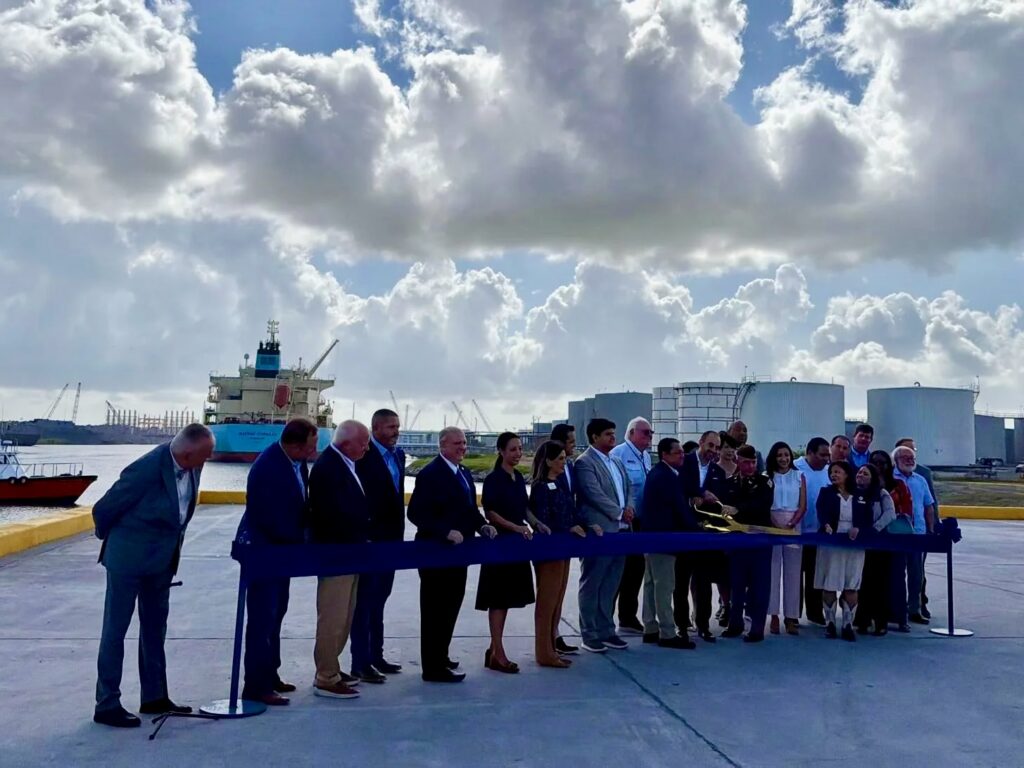
Photo Credit | Kristen Mosbrucker-Garza
To make such a large infrastructure project happen, the federal government allocated $68 million, the Port of Brownsville chipped in $71.5 million and a port tenant, Houston-based NextDecade, paid $400 million to dredge and improve the waterway — that’s more than half a billion dollars of investment. The port is also projected to invest $50 million more along the channel shoreline.
During fiscal year 2025, Port of Brownsville tenants moved 28 million tons of cargo — an increase of 101% — over the past five years. The Brazos Island Harbor Channel Improvement Project is expected to accelerate that growth.
“The return on that investment will be measured not only in cargo volumes and vessel traffic, but in economic opportunity, job creation, and a stronger future for Texas,” Port of Brownsville CEO William Dietrich said Thursday,
The U.S. Army Corps of Engineers Galveston District leaders described the public-private partnership as a “national mode” during a celebration of the project’s completion on a dock along the channel on Thursday.
The project was one of four approved by the funding allocated by the Infrastructure and Investment Jobs Act — otherwise known as the Bipartisan Infrastructure Law — under the Joe Biden administration, and the only port project nationwide of its kind.
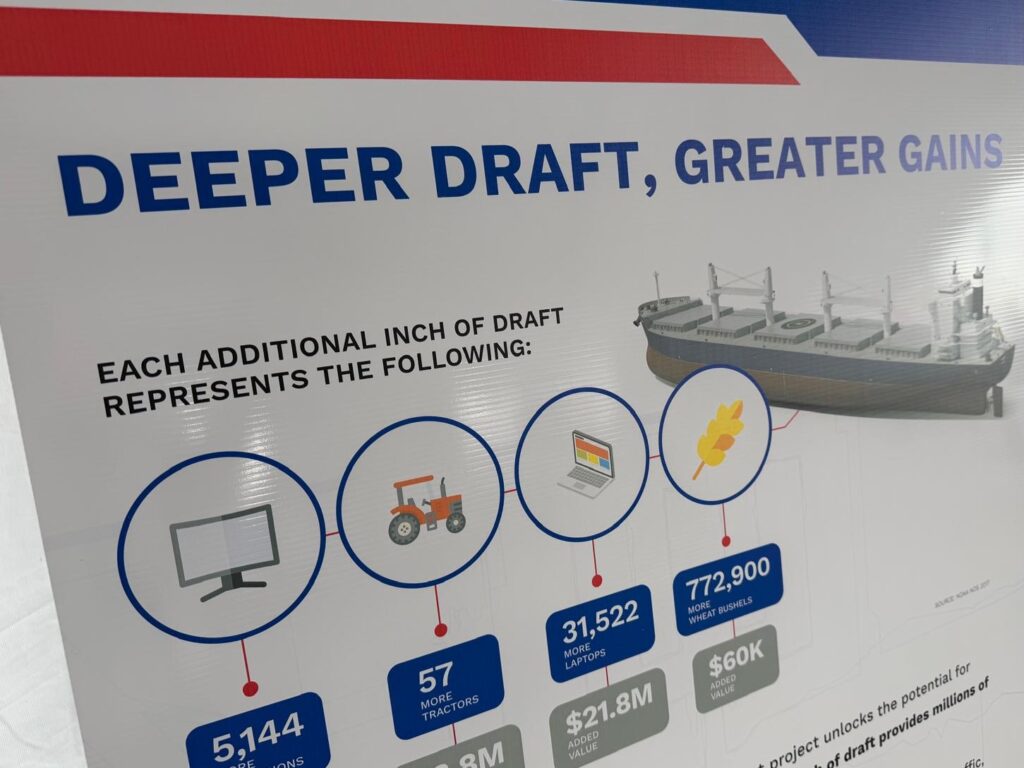
Photo Credit | Kristen Mosbrucker-Garza
U.S. Rep. Vicente Gonzalez, D-Harlingen, whose district includes the Port of Brownsville, helped secure the federal funding for the project.
“This deeper, safer federal channel expands our capacity for international trade, strengthens critical energy infrastructure and demonstrates how modern infrastructure can advance both economic security and U.S. energy dominance,” U.S. Army Brig. Gen. George H. Walter, commander for the U.S. Army Corps of Engineers Southwestern Division, said in a news release.
By comparison, the Port of Corpus Christi is 54 feet deep and the Port of Houston is 45 feet deep. The Port of New Orleans in Louisiana and the Port of Mobile are both 50 feet deep. The move opens the door for tenants of the Port of Brownsville to receive container vessels, which are among the largest.
“It’s going to create a lot of new opportunities for the Valley. The deeper you go, the more cargo you can bring in. You can bring in larger and heavier vessels,” Orlando Ramos-Ginés, U.S. Army Corps of Engineer project manager told the Rio Grande Valley Business Journal.
NextDecade’s LNG export terminal sits along the port channel and is estimated to be worth more than $30 billion already. The Houston energy company agreed to pay 100% of the dredging and improvement cost for 9 miles of the channel back in 2019.

Photo Credit | Kristen Mosbrucker-Garza
Port leaders said that kind of investment was unprecedented in its history for a port tenant. NextDecade’s investment stretches from the western boundary of its Rio Grande LNG site along the ship channel to the gulf.
“It’s a tremendous achievement. This is something that took a little over 20 years to do,” Sergio Tito Lopez, chairman of the Brownsville Navigation District Board, said. “We were stuck with the fact that we didn’t have enough funding capabilities for such a big project. Fortunately for us, NextDecade came up to the plate.”
NextDecade leases about 984 acres from the Port of Brownsville as part of its 30-year term, which offers it options to renew for 10-year periods.
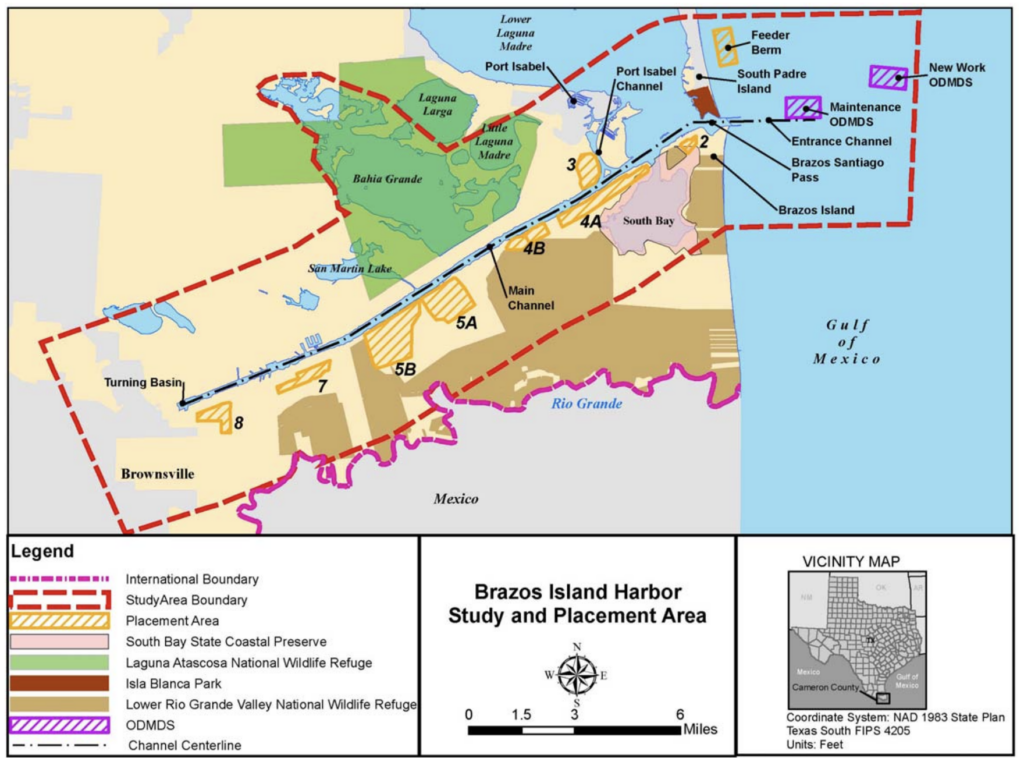
Courtesy of | U.S. Army Corps of Engineers Galveston District
On Thursday afternoon, Rio Grande LNG’s parking lot, which sits along Highway 48 between Brownsville and Port Isabel, was full.
More than 6,000 workers have been working around the clock for the site’s general contractor Bechtel. The federal government recently allowed the project to employee night shifts to speed up construction.
Demand for LNG — liquefied natural gas — has pushed prices to record highs as the U.S. and Iran continue to fight over the Strait of Hormuz in the Middle East. The war has stalled vessel traffic for weeks.
During peak construction, about 7,500 people are expected to work on the site, with about 700 permanent jobs projected for the project. About 70% of the workforce hails from the Rio Grande Valley, according to NextDecade.
“This collaboration has been critical in moving this project from concept to completion,” NextDecade Chief Operating Officer Tarik Skeik said. “We made this investment because we recognized early on the opportunity this project represents, not just for LNG operations, but the entire region.”

Kristen Mosbrucker-Garza
Reporter
Kristen Mosbrucker-Garza is a versatile multimedia news reporter who lives and works along the Texas-Mexico border in Hidalgo County. Mosbrucker-Garza is a news reporter for the Rio Grande Valley Business Journal. During her career she's worked for the McAllen Monitor, San Antonio Business Journal, The Advocate Newspaper in Louisiana, Phoenix New Times, and public media outlets in Baltimore and Philadelphia.
Most Read
- SpaceX’s futuristic city of Starbase finalizes massive 7,100-acre annexation. Here’s what we know.
- SpaceX reschedules Starship’s first flight around the Earth
- How much water does SpaceX need to operate near Brownsville? Nearly 20x its current use
- Could apartment-to-condo conversion help make $100K homeownership in the McAllen metro more affordable? One investor says yes.
- Crunch Fitness is expanding and struggling in the Valley. Here’s why
Get the latest business news delivered to your inbox every morning for free.
Try 30 Days Free!
Get full access to award-winning journalism covering business, real estate, health care, economic trends, and the people shaping the Rio Grande Valley.
30 Days Free!
$9.95/month
Limited time offer
Subscription renews after your 30 day free trial at $9.95/mo.
Included Benefits
- Unlimited access to all articles
- Daily business news and analysis
- Subscriber-only content and features
Stories That Matter
- Mission’s first Small Business Expo puts $25K on the line for local entrepreneurs
- Reynosa’s newest technical high school focuses on AI, semiconductors and bionics
- McCoy’s gives $10K, tools to launch Mid-Valley construction academy
- UT Health RGV performs new digestive procedure for first time in the Valley
- Starbase leaders approved a 45-year land deal with SpaceX for 166 acres, but what will be built there remains a mystery
- TSTC bets on advanced manufacturing to meet RGV’s industrial boom
- Pharr’s cross-border business push earns international recognition
- Pharr doubles bridge capacity as data centers and produce drive new trade demand
- Brownsville eases drought restrictions after nearly three years as Rio Grande reservoir levels improve
- Two Valley businesses turned mangonadas into a school-friendly popsicle. Now they want to take it nationwide