Even in the wake of tariffs, language and visa requirements, nothing has yet appeared to slow down international trade in the Rio Grande Valley. In fact, the evidence indicates there is an ongoing massive growth transformation. One of the most obvious places to look for signs of unrelenting economic progress is the Pharr International Bridge.
Bridge Director Luis Bazán recently confirmed to the Rio Grande Valley Business Journal that the span’s ambitious expansion project is approximately 80% complete, with a final completion date slated for the first quarter of 2026. The $150 million investment will nearly double the bridge’s capacity, resolving long-standing issues with bottlenecks at one of the nation’s most vital ports of entry.
“We expect the project to be completed in the first quarter of 2026, with operations beginning around March,” Bazán said
The project appears to have moved swiftly since its August 2024 groundbreaking.
Currently, the bridge handles a staggering volume of commerce, with roughly 5,000 trucks crossing daily. The expansion is designed specifically to slash wait times and streamline the flow of goods through the implementation of new, cutting-edge infrastructure.
A cornerstone of the new project is the introduction of two dedicated FAST (Free and Secure Trade) lanes, which will run from Mexico into the United States. These lanes are reserved for certified conveyances that have undergone rigorous federal vetting.
“With the expansion, we’re building two FAST lanes,” Bazan said. “That’s where the zero-wait concept becomes real. Ultimately, it’s about moving trade faster and bringing more business through the region.”
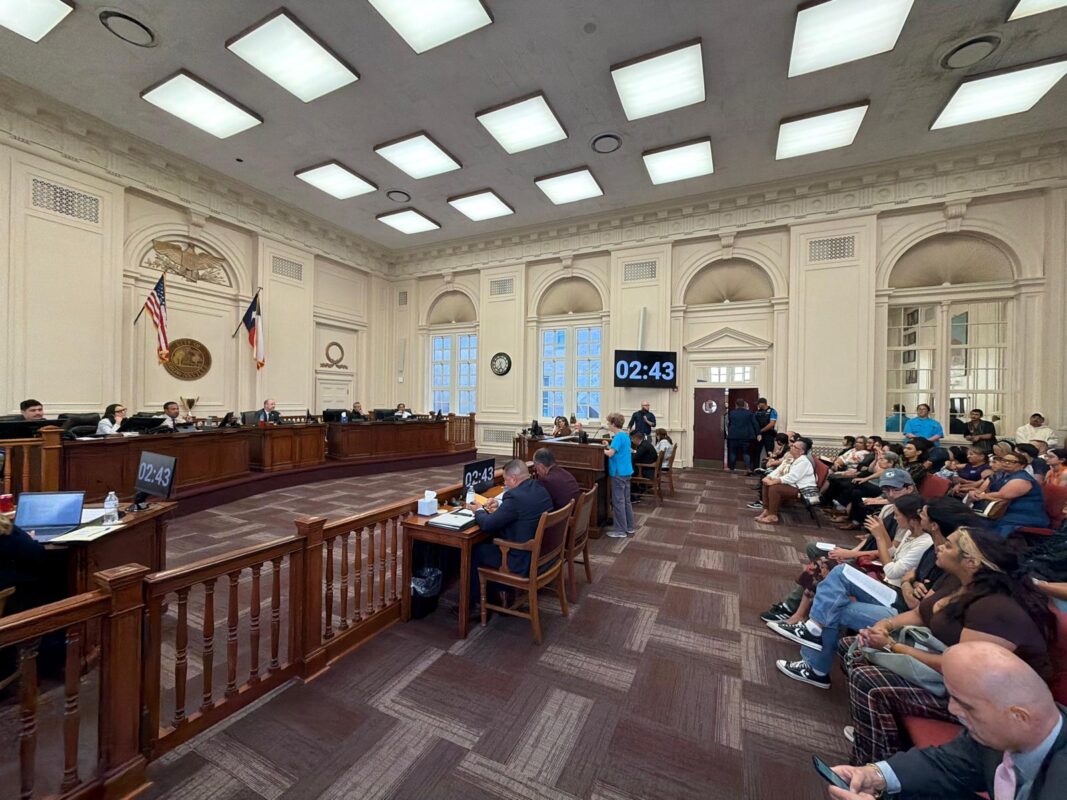
While the physical construction is centered in Pharr, the economic ripples are felt across the entire Rio Grande Valley and the entirety of Texas. Recent data shared during a visit from the Texas Comptroller highlighted the region’s economic impact when it comes to its
Annual trade value from the Pharr bridge, according to the comptroller, is approximately $50 billion, a figure that supports a portion of the roughly 92,000 jobs created by trade at three of the Valley’s bridges: Pharr, Anzalduas International Bridge, and the Hidalgo-Reynosa International Bridge.
Pharr, Bazan said, has also seen consistent year-over-year growth of 3% to 5%, with double-digit compound annual growth since 2001.
Watch the Rio Grande Valley Business Journal’s podcast with Pharr Bridge Director Luis Bazan.
Bazán pointed out that having policymakers see the bridge in person is vital for continued support.
“Seeing these operations firsthand helps policymakers truly understand the scale and importance of this port,” he said.
Despite concerns regarding potential federal tariff changes or language enforcement for drivers, the bridge’s operations remain resilient. Bazán claimed that they do not expect direct tariff impacts until later in 2026, if at all, citing “too many unknowns at the federal level right now.”
Additionally, concerns regarding English-language requirements for truck drivers have not materialized into major delays in the Valley.
“Most drivers operate regionally, and Spanish remains the dominant language here,” Bazán said. He did add, however, that the port is proactively working with partners to provide English training to ensure long-term compliance and fluidity.
The bridge project is entering its final phases as the new year begins, and the mood of operations, construction, and businesses that use the roadway is one of high-speed momentum. The expansion is viewed as an essential foundation for the next generation of North American trade, which puts the Rio Grande Valley at the center of global economies.
“We’re just getting started,” Bazán said. “There’s more investment, more projects, and more growth ahead.”

James Moore
jmoore
Most Read
- SpaceX is giving Brownsville $220M for water projects. In exchange, the city gave up zoning control of 444 acres near Starbase
- SpaceX seeks to take zoning control over nearly 450 acres from city of Brownsville as a ‘regional’ water deal takes shape
- Port of Brownsville could soon host Nodule City, a first-of-its-kind commercial deep-sea mining hub
- Cameron County is negotiating a $20M Fluidstack data center donation after Harlingen waffles on the same offer
- How much water does SpaceX need to operate near Brownsville? Nearly 20x its current use
Get the latest business news delivered to your inbox every morning for free.
Try 30 Days Free!
Get full access to award-winning journalism covering business, real estate, health care, economic trends, and the people shaping the Rio Grande Valley.
30 Days Free!
$9.95/month
Limited time offer
Subscription renews after your 30 day free trial at $9.95/mo.
Included Benefits
- Unlimited access to all articles
- Daily business news and analysis
- Subscriber-only content and features
Stories That Matter
- McAllen’s $204M water investment expects to seek construction bids in 2027
- Saronic lands Navy landing craft contract, first build at Brownsville’s Port Alpha
- The Rio Grande Valley’s tech industry is small but growing — meet some of the next-gen workforce
- Entrepreneurs enter Mission EDC’s ‘Shark Tank’ competition for $25K top prize
- Mission’s first Small Business Expo puts $25K on the line for local entrepreneurs
- Reynosa’s newest technical high school focuses on AI, semiconductors and bionics
- McCoy’s gives $10K, tools to launch Mid-Valley construction academy
- UT Health RGV performs new digestive procedure for first time in the Valley
- TSTC bets on advanced manufacturing to meet RGV’s industrial boom
- SpaceX reschedules Starship’s first flight around the Earth