Mexico’s economy is not just slowing — it is losing the ability to grow at the pace it once did, according to a new analysis that points to weakening investment and a shrinking foundation for future expansion.
That shift could reshape investment across the U.S.-Mexico border, especially in manufacturing hubs like Reynosa, where growth depends on new factories — not just existing ones.

“Mexico is not only facing a short-term economic slowdown, but also a structural reduction in its long-term growth capacity,” said Gabriela Siller, director of economic analysis at Banco BASE, a Mexico-based bank that focuses on currency markets, cross-border payments, and economic analysis.
The analysis, presented Thursday, argues the issue is not just current performance, but how much the economy can realistically grow going forward.
Mexico started 2026 with a 0.77% drop in gross domestic product (GDP) — the total value of goods and services produced. At the same time, agriculture, manufacturing, and services all declined.
That rarely happens. It signals weakness across the entire economy.
Growth ceiling is dropping
Siller said Mexico’s long-term growth capacity is falling — effectively lowering the economy’s speed limit.
Before 2018, Mexico averaged about 2.2% annual growth. Under current conditions, reaching that level is becoming unlikely.
The drivers are structural: investment is down, informality is high, productivity is weak, and institutional challenges are weighing on confidence.
Those factors reinforce each other.
Less investment means fewer expansions. That limits formal job creation, reduces income, and weakens spending — locking in slower growth.
The trend is already visible.
Investment has declined for 17 straight months and remains nearly 10% below its peak, limiting how much new capacity the economy is adding.
Public infrastructure spending is also falling. It dropped 44.9% in early 2026 compared to a year earlier, reducing the foundation needed for future growth.
Nearshoring isn’t building enough capacity
Mexico continues to attract foreign investment as companies move closer to the U.S.
But where that money is going is raising concerns.
In 2025, Mexico received $40.87 billion in foreign direct investment. Only 18% went into new projects. The rest was reinvested earnings or internal transfers.
That means much of the capital is not creating new factories, equipment, or expansion.
There was also a $5 billion divestment in late 2025 — a net outflow that adds pressure to already weak investment trends.
For border regions like Reynosa, that distinction is critical.
Growth depends on new projects. Without them, expansion slows.
Pressure is spreading across the economy
The labor market reflects that strain.
About 54.8% of workers are in informal jobs — more than half the workforce in lower-productivity roles that contribute less to overall output.
At the same time, fewer people are working in formal jobs, and some are leaving the workforce entirely. That reduces income growth and limits spending.
Siller also said consumption is weakening and increasingly depends on credit — especially credit cards — rather than income growth, raising the risk of household strain.
Remittances are also losing purchasing power. Inflation and a stronger peso mean that money sent from abroad does not go as far.
Manufacturing, one of Mexico’s main growth engines, is starting to cool.
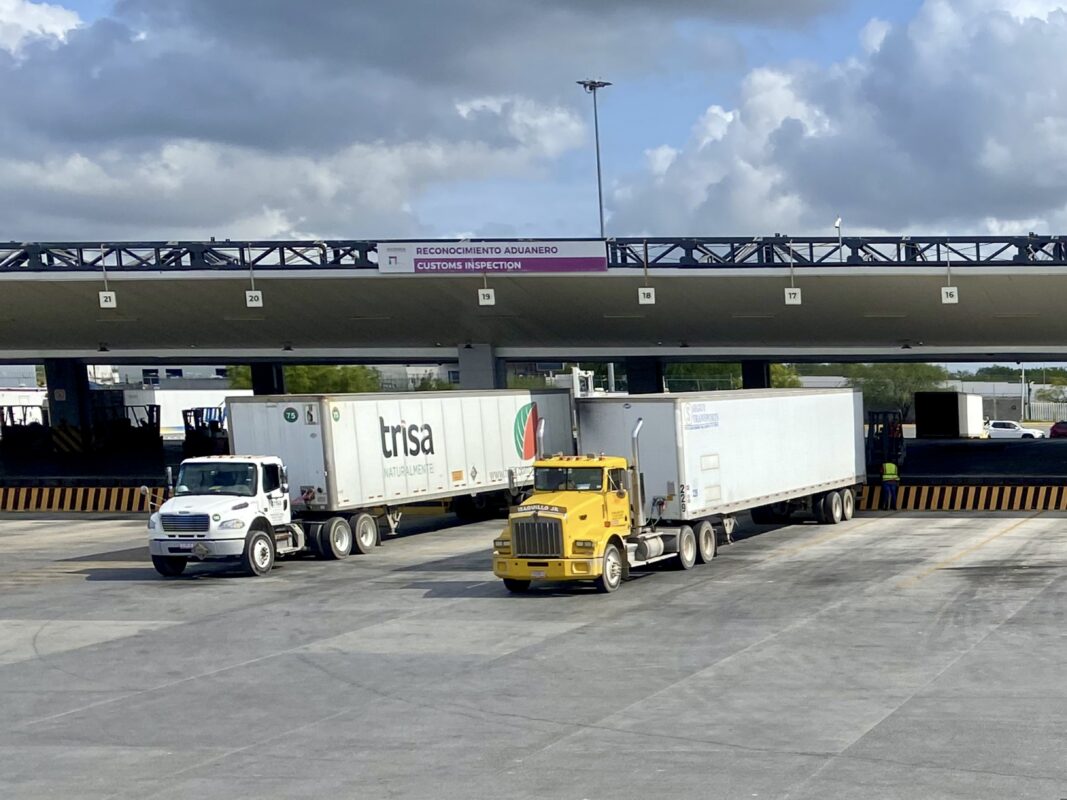
Exports are still growing, driven largely by computer equipment. But Banco BASE warned that growth may not last without new investment to build more factories and expand production.
That shift is critical for the border economy.
Growth will depend less on producing more with existing factories and more on attracting new ones.
Banco BASE estimates Mexico’s economy will grow about 1% in 2026.
A temporary boost from the 2026 FIFA World Cup could add a small lift. It will not change the underlying constraints.
For the Reynosa–McAllen binational region, this is not a collapse. It is a reset.
Trade continues. Manufacturing continues.
But growth now depends on something the data shows is missing: new factories and expansion.

Anayancy Ulloa
Reporter
Most Read
- SpaceX is giving Brownsville $220M for water projects. In exchange, the city gave up zoning control of 444 acres near Starbase
- SpaceX seeks to take zoning control over nearly 450 acres from city of Brownsville as a ‘regional’ water deal takes shape
- Port of Brownsville could soon host Nodule City, a first-of-its-kind commercial deep-sea mining hub
- Cameron County is negotiating a $20M Fluidstack data center donation after Harlingen waffles on the same offer
- How much water does SpaceX need to operate near Brownsville? Nearly 20x its current use
Get the latest business news delivered to your inbox every morning for free.
Try 30 Days Free!
Get full access to award-winning journalism covering business, real estate, health care, economic trends, and the people shaping the Rio Grande Valley.
30 Days Free!
$9.95/month
Limited time offer
Subscription renews after your 30 day free trial at $9.95/mo.
Included Benefits
- Unlimited access to all articles
- Daily business news and analysis
- Subscriber-only content and features
Stories That Matter
- McAllen’s $204M water investment expects to seek construction bids in 2027
- Saronic lands Navy landing craft contract, first build at Brownsville’s Port Alpha
- The Rio Grande Valley’s tech industry is small but growing — meet some of the next-gen workforce
- Entrepreneurs enter Mission EDC’s ‘Shark Tank’ competition for $25K top prize
- Mission’s first Small Business Expo puts $25K on the line for local entrepreneurs
- Reynosa’s newest technical high school focuses on AI, semiconductors and bionics
- McCoy’s gives $10K, tools to launch Mid-Valley construction academy
- UT Health RGV performs new digestive procedure for first time in the Valley
- TSTC bets on advanced manufacturing to meet RGV’s industrial boom
- SpaceX reschedules Starship’s first flight around the Earth