Tamaulipas is bringing together government, its flagship university and the livestock industry in a $44.5 million effort to change what happens to the state’s cattle before they reach market.
Instead of relying primarily on the sale of live cattle, the proposed project would create a more complete meat supply chain within Tamaulipas — encompassing cattle finishing, slaughter, refrigeration, cutting and deboning, packaging and ultimately marketing meat under a homegrown brand: Carne Tam.
The 810 million-peso project is being promoted by the Tamaulipas Regional Livestock Union, the state government and the Autonomous University of Tamaulipas, with participation from cattle producers.
The university would contribute its federally inspected slaughterhouse along with research, training and technical and financial studies. Producers would supply and finish cattle, while Agroindustrias de Tamaulipas is being considered for a role in marketing the finished meat.
The livestock union has said the project remains in the structuring stage, with operations expected to begin around mid-2027.
The effort is taking shape after New World screwworm restrictions disrupted the trade of Mexican cattle with the United States.
Project promoters say Carne Tam is not intended to eliminate live-cattle exports. Instead, it would give producers another route to market while keeping more stages of the cattle business — and the value generated by those stages — in Tamaulipas.
Building a cattle supply chain at home
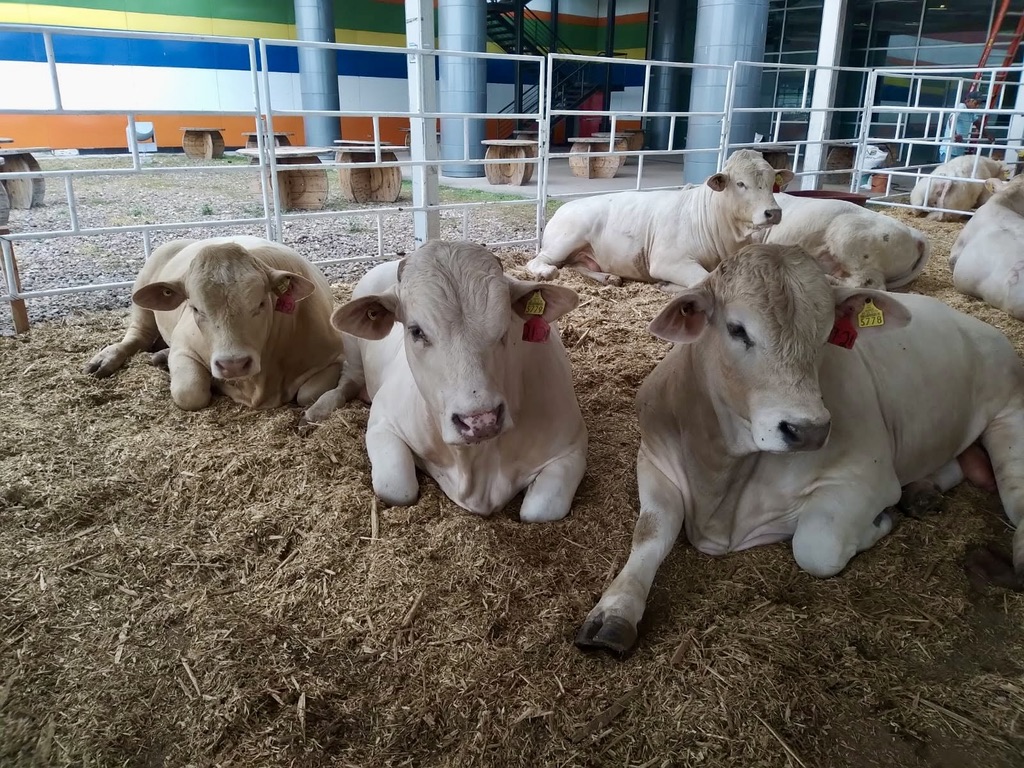
Tamaulipas produces more than 250,000 calves annually, according to José Ramón Guerrero Gamboa, president of the Tamaulipas Regional Livestock Union.
Plans for Carne Tam include an integrated livestock center, auction facilities, genetic improvement, cattle-finishing infrastructure, a feed plant and facilities for processing and packaging meat.
The finished product could be marketed under the Carne Tam brand for both domestic consumption and export markets.
University brings processing infrastructure
The Autonomous University of Tamaulipas would play a central role in the proposed project.
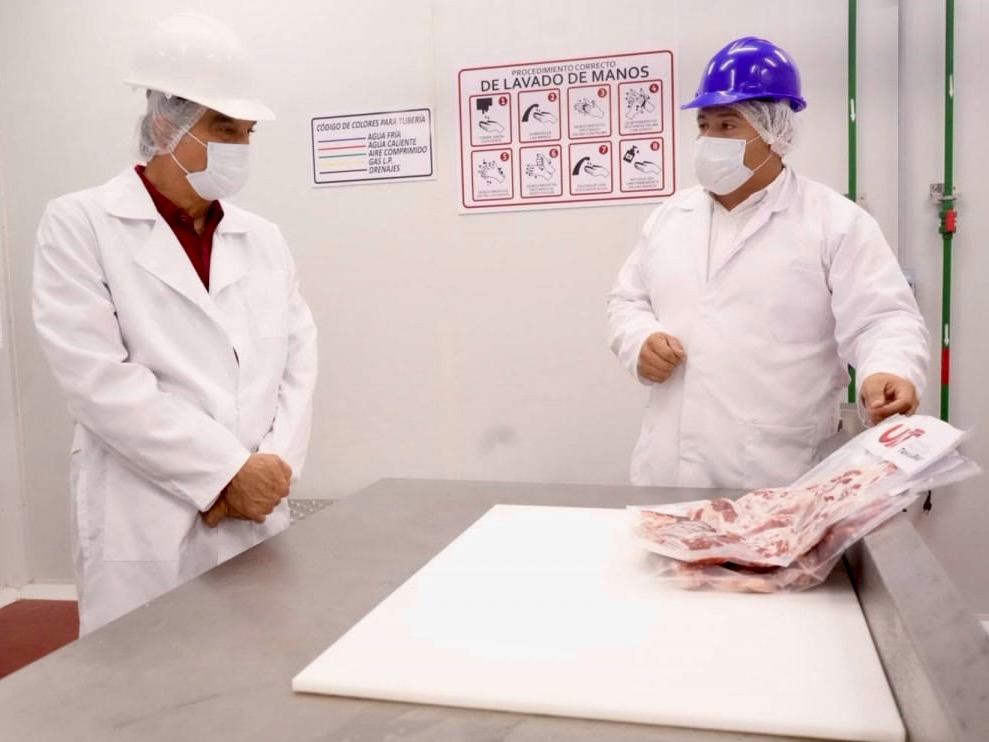
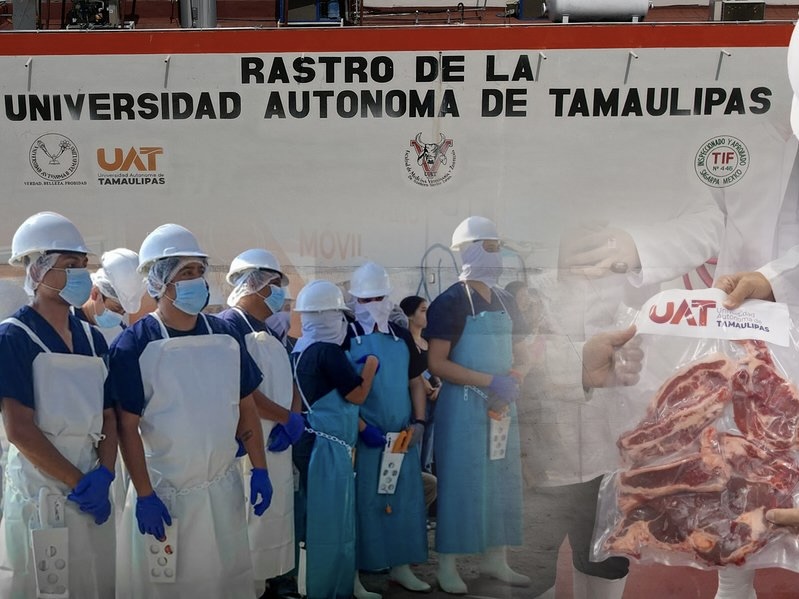
UAT Rector Dámaso Anaya Alvarado said the university would provide technical and financial studies, research and training while also making the Federal Inspection Type, or TIF, slaughterhouse at its Faculty of Veterinary Medicine and Animal Science available to the project.
The university’s facility already has infrastructure for slaughter, refrigeration and processing and has added a deboning room.
“Thanks to this slaughterhouse and the deboning room, we can guarantee the cold chain and market meat under optimal conditions,” Anaya said, according to other news reports published in August.
Producers would remain part of the business
The model also envisions cattle producers remaining involved beyond simply selling their animals.

José Heriberto Cantú López, president of the Local Livestock Association of Reynosa, said his organization is not yet formally participating in Carne Tam but is familiar with the project and the livestock union’s involvement.
“If it is done the way it is supposed to be done, yes,” Cantú López said when asked whether the model could provide producers with higher returns than traditional live-cattle sales.
Under one model being considered, producers could retain their cattle while obtaining financing for the feed needed to bring the animals to slaughter weight.
“We would finish our own cattle, and the loan we would receive would be for feed, to finish our animals until they are taken to slaughter,” Cantú López said.
The producer would then sell the dressed carcass, while the project’s planned commercial structure would handle marketing.
For ranchers without enough pens or finishing capacity, the possibility of using facilities in Ciudad Victoria under a maquila-like arrangement is being considered. Producers would retain ownership of their animals while using shared infrastructure to finish them.
There are also discussions about expanding access to financing so producers with greater capacity could purchase cattle from smaller producers and finish the animals. Those arrangements remain under discussion.
Government and business fill out the model
The Tamaulipas Regional Livestock Union is working with financial institutions including FIRA and Bancomext, along with agricultural authorities, to develop the project’s financial structure.
Loan amounts and interest rates discussed publicly remain proposals and have not been established as final financing terms.
Agroindustrias de Tamaulipas, meanwhile, is being considered for a role in marketing the finished meat.
Several important pieces still have to be worked out. Requirements for cattle entering the program and the terms under which producers could use finishing and processing facilities have not been finalized.
The project also has not publicly identified definitive contracts with specific buyers establishing how much Carne Tam meat would be purchased, at what prices or under what terms.
For now, Carne Tam remains a $44.5 million proposal aimed at giving Tamaulipas cattle producers another way to get their product to market while keeping more of the business within the state.

Anayancy Ulloa
Reporter
Anayancy Ulloa Luna is a contributor to the Rio Grande Valley Business Journal who hails from Reynosa in the Mexican state of Tamaulipas. Ulloa has a long history as a U.S.-Mexico region business expert in marketing, formerly the editorial director of Mexico Industry.
Most Read
- 5×5 Brewing plots $2.5M comeback with new Edinburg brewpub near UTRGV
- Workforce leaders say the Rio Grande Valley job market isn’t what you think
- What Toyota’s $3.6B San Antonio expansion could mean for the Rio Grande Valley
- Turkish shipbuilder Karpower buys 302 acres near Port of Brownsville
- South Padre Island leaders are exploring paid parking for beach visitors. Here’s what you need to know
Get the latest business news delivered to your inbox every morning for free.
Try 30 Days Free!
Get full access to award-winning journalism covering business, real estate, health care, economic trends, and the people shaping the Rio Grande Valley.
30 Days Free!
$9.95/month
Limited time offer
Subscription renews after your 30 day free trial at $9.95/mo.
Included Benefits
- Unlimited access to all articles
- Daily business news and analysis
- Subscriber-only content and features
Stories That Matter
- Google helps fund solar expansion for low-income Hidalgo County homeowners
- New Brownsville industrial park construction moves forward with federal $2.5M grant
- Mission’s first Small Business Expo puts $25K on the line for local entrepreneurs
- McCoy’s gives $10K, tools to launch Mid-Valley construction academy
- UT Health RGV performs new digestive procedure for first time in the Valley
- TSTC bets on advanced manufacturing to meet RGV’s industrial boom
- Pharr’s cross-border business push earns international recognition
- Brownsville eases drought restrictions after nearly three years as Rio Grande reservoir levels improve
- Texas A&M’s $53.5M McAllen research center will tackle water, food security and Valley health
- STC puts AI to work across 55 courses — from construction sites to car repair