More than 9,100 immigration arrests across South Texas and a record quarterly drop in Rio Grande Valley construction jobs are putting the region at the center of a national debate over the economic costs of intensified immigration enforcement.
A new report from America’s Voice, an immigration advocacy organization, points specifically to the Valley as it argues that increased enforcement can have consequences that spread beyond the workers being arrested — affecting construction, local businesses and, potentially, what consumers pay.
The report calls those broader effects the “ICE tax.”
For the Valley, its most significant finding centers on construction.
The report cites more than 9,100 U.S. Immigration and Customs Enforcement arrests across South Texas, nearly one-fifth of the statewide total, while Valley construction employment fell 5% during the third quarter of 2025.
It describes that as the region’s largest quarterly construction employment decline on record.
However, more recent data show parts of the Valley’s construction sector are still losing jobs.
The Rio Grande Valley Business Journal reported last month that mining, logging and construction employment in the Brownsville-Harlingen metro fell 5.1% over the year through June, to 3,700 jobs, even as thousands of workers remain on major LNG construction projects in the Brownsville area.
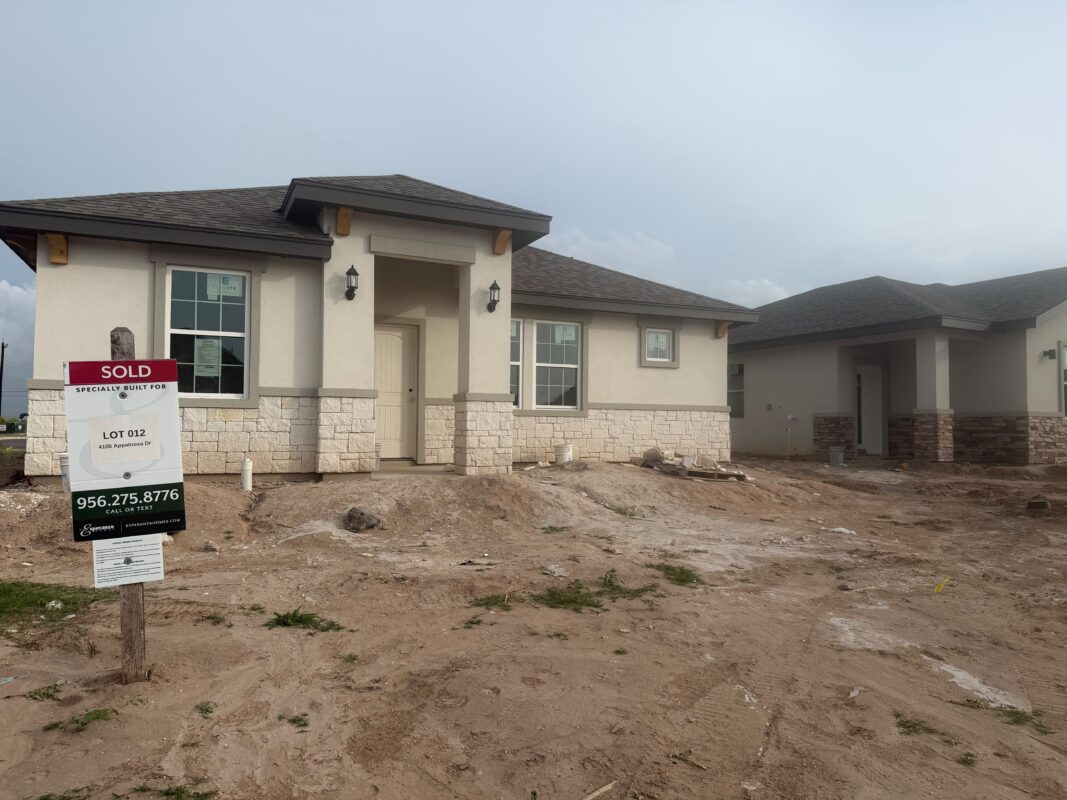
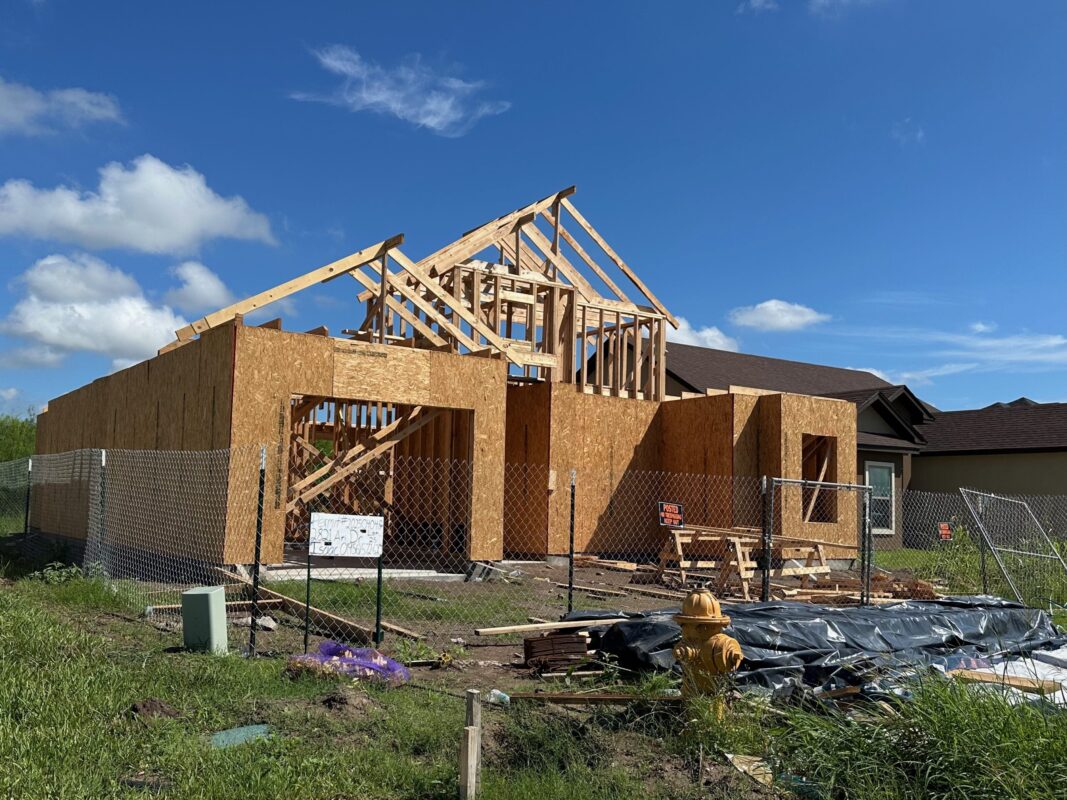
Those numbers come as Valley builders have spent months warning that immigration enforcement is making it harder to keep construction crews on job sites.
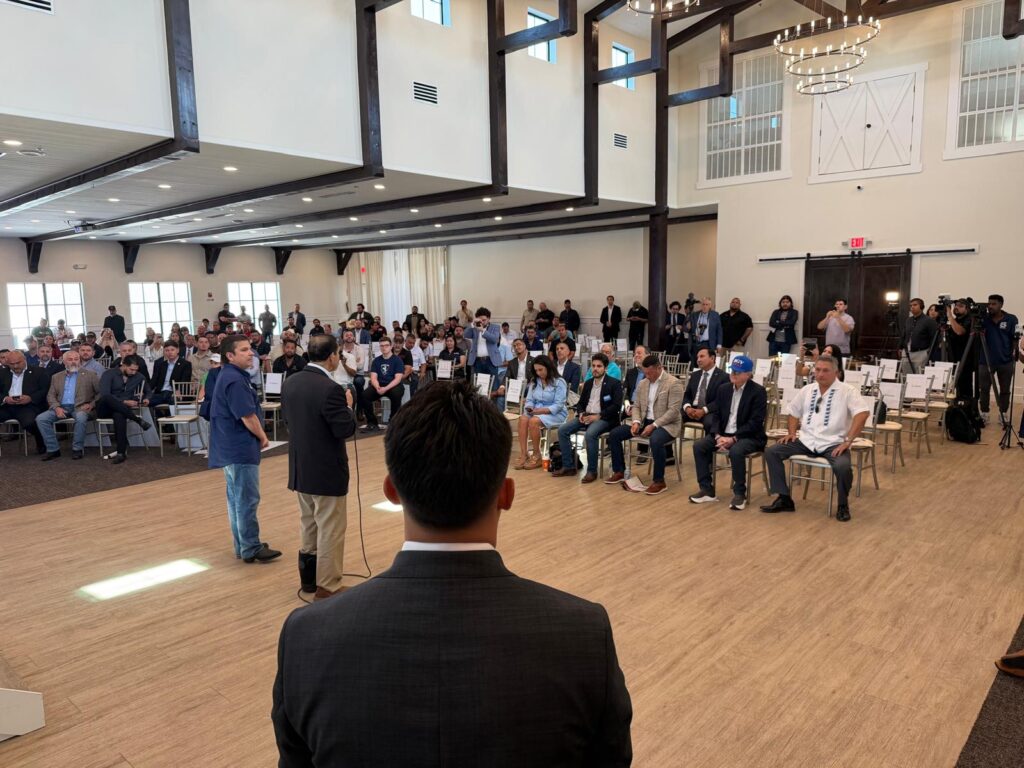
In July, South Texas Builders Association CEO Mario Guerrero warned that renewed enforcement activity was again disrupting residential construction.
Guerrero posted a video that he said showed foundation crews being removed from two Valley job sites on consecutive days. At one site, workers left behind unfinished wet concrete.
The problem can ripple through a construction project because homebuilding depends on specialized crews working in sequence. When one crew does not show up, builders have said, the work that follows can also be delayed.
Why construction is vulnerable
The America’s Voice report says immigrants accounted for about 26% of the nation’s construction workforce before the latest enforcement surge, with about half of those immigrant workers estimated to be unauthorized.
As enforcement increased, homebuilding slowed most sharply in parts of the country with greater reliance on immigrant labor.
Single-family building permits nationally fell 9.5% from March 2025 through June 2026. They dropped 23.5% in the Northeast, 10.4% in the West and 9.3% in the South, compared with 1.6% in the Midwest, where the foreign-born share of the construction workforce is lower.
For Valley builders, the concern is not limited to how many homes get built.
Labor shortages and construction delays can increase how long builders carry loans and other costs before completing and selling a home — expenses that can ultimately make an already expensive housing market more difficult.
The Journal previously reported on those concerns.
The effects can reach local businesses
The report argues that the economic consequences can spread beyond industries that directly employ immigrant workers.
Research from the Wharton School at the University of Pennsylvania examined 5,388 ICE enforcement operations alongside foot-traffic and card-spending data covering 5.4 million businesses.
Consumer spending at the average business in affected metropolitan areas was 6.2% below expected levels after enforcement activity increased, while foot traffic was 2.7% lower.
Small businesses took a bigger hit.
Spending at independent businesses was down 10.85%, compared with 5.02% at chain locations. Foot traffic at independent businesses was down 4.09%.
Fewer workers can mean higher costs
America’s Voice also argues that removing workers from immigrant-heavy industries can eventually put pressure on consumer prices.
The report points to several goods and services that increased substantially faster than core inflation over the year ending in June.
Lettuce prices rose 32.1%, whole milk increased 9% and landscaping and lawn-care services rose 10.8%, while core inflation was 2.6%.
The report acknowledges that other forces — including weather, fuel prices and normal market fluctuations — also affect prices.
The concern for the Valley is ultimately straightforward: when a region loses workers, businesses can have a harder time completing work, customers may spend less and employers can face higher costs.
The America’s Voice report argues those effects are already appearing across the country.
And it points to the Rio Grande Valley — where more than 9,100 immigration arrests have coincided with a record quarterly construction decline and builders continue reporting disruptions on job sites — as one of the places where that economic pressure is becoming visible.

RGV Business Journal Staff
Staff
Most Read
- How much water does SpaceX need to operate near Brownsville? Nearly 20x its current use
- Could apartment-to-condo conversion help make $100K homeownership in the McAllen metro more affordable? One investor says yes.
- Port of Brownsville could soon host Nodule City, a first-of-its-kind commercial deep-sea mining hub
- SpaceX’s futuristic city of Starbase finalizes massive 7,100-acre annexation. Here’s what we know.
- Cameron County is negotiating a $20M Fluidstack data center donation after Harlingen waffles on the same offer
Get the latest business news delivered to your inbox every morning for free.
Try 30 Days Free!
Get full access to award-winning journalism covering business, real estate, health care, economic trends, and the people shaping the Rio Grande Valley.
30 Days Free!
$9.95/month
Limited time offer
Subscription renews after your 30 day free trial at $9.95/mo.
Included Benefits
- Unlimited access to all articles
- Daily business news and analysis
- Subscriber-only content and features
Stories That Matter
- New Chedraui store in Valle Hermoso could bring 120 direct jobs
- First look inside McAllen’s downtown revitalization ideas, like new business taxes
- El Pollo Loco plans new $1.5M restaurant in Weslaco
- Mission’s first Small Business Expo puts $25K on the line for local entrepreneurs
- LIVE: Vice President JD Vance in South Texas for Saronic shipyard groundbreaking
- Reynosa’s newest technical high school focuses on AI, semiconductors and bionics
- McCoy’s gives $10K, tools to launch Mid-Valley construction academy
- UT Health RGV performs new digestive procedure for first time in the Valley
- TSTC bets on advanced manufacturing to meet RGV’s industrial boom
- Pharr’s cross-border business push earns international recognition