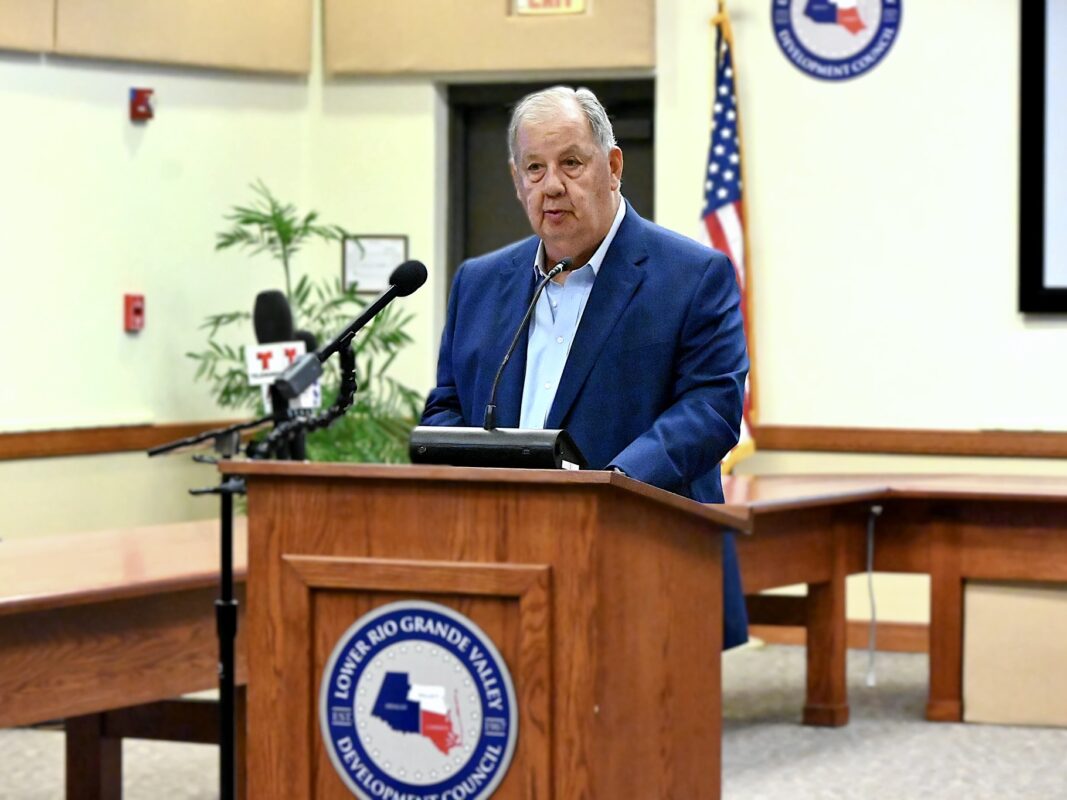
After months of discussion, Mission city leaders were eager to move forward last week with plans to issue at least $17 million in bonds to help fund infrastructure projects, including roads, drainage, and water treatment.
The projects include reconstruction of Bryan Road, construction of Taylor Road, a feasibility study for expanding the South Water Plant, drainage improvements on Citriana Street, and work on Los Ebanos Road.
During a recent meeting that included city council members, the city’s redevelopment authority, and economic development corporation executives overseeing the Tax Increment Reinvestment Zone (TIRZ), leaders voted to move ahead with issuing a new bond series as early as June 2026.
To qualify for borrowing that infrastructure project money, the city was required to extend its TIRZ by an additional 15 years, pushing the expiration date past 2030 to 2045. Hidalgo County is not participating in the extension.
“The TIRZ has to be extended because we couldn’t handle that much [more] debt in such a short time from now until 2030,” said Teclo Garcia, CEO of the Mission Economic Development Corporation. “After 2030, there will be more bonding capacity, and we’ll be able to do more projects in Mission.”
Mission’s redevelopment authority already has three outstanding bonds on the books — issued in 2013, 2017, and 2023 — which will mature by 2030.
Municipalities use tax increment reinvestment zones as an economic incentive for developers to invest in otherwise vacant and sometimes blighted properties. Tax increment financing means using the existing value of the property as the baseline; any additional or incremental value over the years, as the site is developed, is used to fund projects within the zone rather than the city’s general fund.
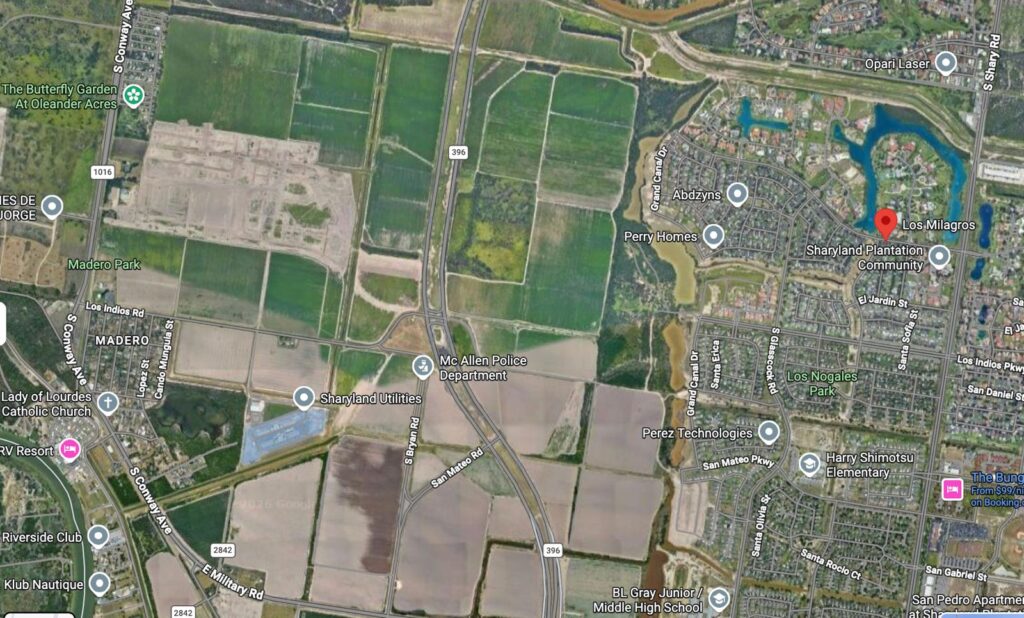
The first TIRZ in the Rio Grande Valley was created in Mission back in 2001 for the Hunt Development Group’s Sharyland Plantation, which sits south of Expressway 83.
At the time, the 7,200 acres — about 96% of which was vacant land — was worth nearly $30 million.
That project now boasts thousands of homes, millions of square feet of industrial space, and 250,000 square feet of retail and commercial space.
In 2019, Laredo-based Killiam Development acquired 3,400 acres from the Hunt Group, and inherited the tax break status of the land since it’s within the TIRZ boundaries. The expansion of the manufacturer Black & Decker falls within the zone, as does Century Recycling’s planned $50 million metal recycling plant.
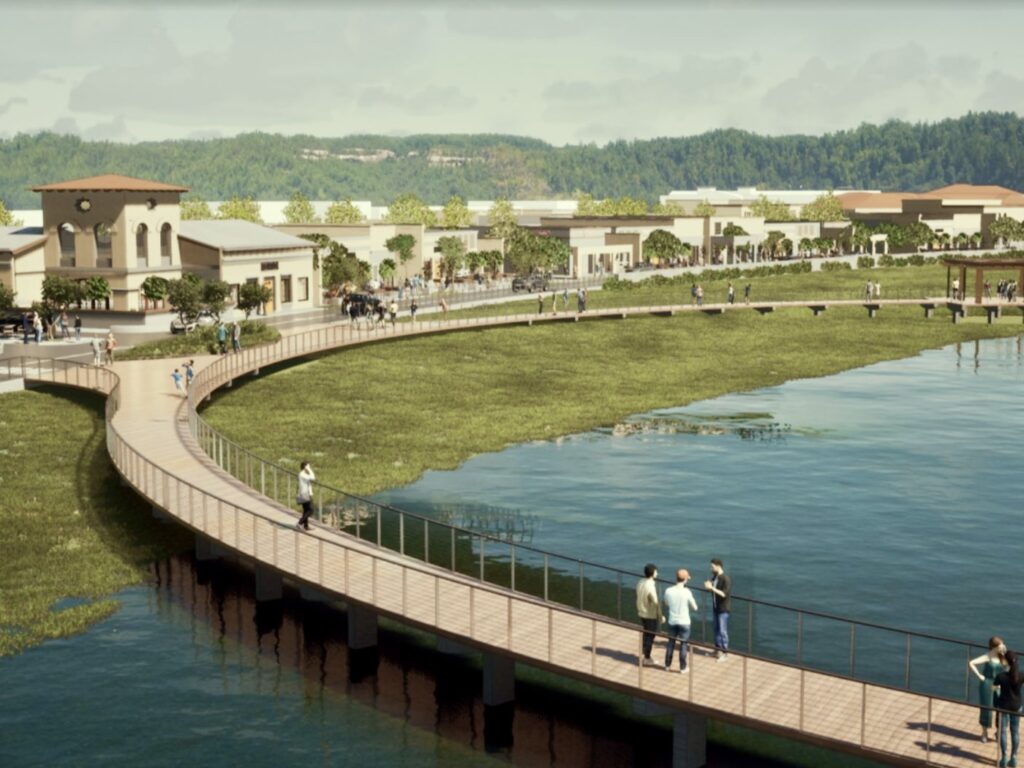
Courtesy of | Killam Development
By 2025, the taxable property value inside the 7,200-acre TIRZ had increased from $30 million to $1 billion. That’s an incremental increase of $986 million. In 2025 alone, the TIRZ generated $5.5 million in revenue for the fund.
Over the 45-year period, the city of Mission is expected to generate $219 million in TIRZ revenue. When Hidalgo County’s portion is included, that total hits $307 million.
To build out the zone’s infrastructure, the city of Mission earmarked $253 million in eligible TIRZ costs.
That includes projects already approved, such as Killiam’s El Milagro expansion, which cost $12.5 million in infrastructure. There are millions more earmarked for park and recreation improvements in downtown Mission, at Bentsen Palm Park, and Madero Park rehabilitation.
The plan also includes $30 million budgeted for a new South Water treatment plant.
Strategic financial planning for the city is key over the next few years, as the city of Mission’s general fund shrank considerably as American Rescue Plan Act funding rolled off, while spending continued, according to the city’s audit for fiscal year 2024, released at the end of March 2026.
For example, the unassigned fund balance for the general fund was negative $1.6 million as of September 2024. The total fund balance was $4.2 million — a decline of $3.1 million over the year, according to the audit.

Kristen Mosbrucker-Garza
Reporter
Kristen Mosbrucker-Garza is a versatile multimedia news reporter who lives and works along the Texas-Mexico border in Hidalgo County. Mosbrucker-Garza is a news reporter for the Rio Grande Valley Business Journal. During her career she's worked for the McAllen Monitor, San Antonio Business Journal, The Advocate Newspaper in Louisiana, Phoenix New Times, and public media outlets in Baltimore and Philadelphia.
Most Read
- SpaceX is giving Brownsville $220M for water projects. In exchange, the city gave up zoning control of 444 acres near Starbase
- SpaceX seeks to take zoning control over nearly 450 acres from city of Brownsville as a ‘regional’ water deal takes shape
- Port of Brownsville could soon host Nodule City, a first-of-its-kind commercial deep-sea mining hub
- Cameron County is negotiating a $20M Fluidstack data center donation after Harlingen waffles on the same offer
- How much water does SpaceX need to operate near Brownsville? Nearly 20x its current use
Get the latest business news delivered to your inbox every morning for free.
Try 30 Days Free!
Get full access to award-winning journalism covering business, real estate, health care, economic trends, and the people shaping the Rio Grande Valley.
30 Days Free!
$9.95/month
Limited time offer
Subscription renews after your 30 day free trial at $9.95/mo.
Included Benefits
- Unlimited access to all articles
- Daily business news and analysis
- Subscriber-only content and features
Stories That Matter
- McAllen’s $204M water investment expects to seek construction bids in 2027
- Saronic lands Navy landing craft contract, first build at Brownsville’s Port Alpha
- The Rio Grande Valley’s tech industry is small but growing — meet some of the next-gen workforce
- Entrepreneurs enter Mission EDC’s ‘Shark Tank’ competition for $25K top prize
- Mission’s first Small Business Expo puts $25K on the line for local entrepreneurs
- Reynosa’s newest technical high school focuses on AI, semiconductors and bionics
- McCoy’s gives $10K, tools to launch Mid-Valley construction academy
- UT Health RGV performs new digestive procedure for first time in the Valley
- TSTC bets on advanced manufacturing to meet RGV’s industrial boom
- SpaceX reschedules Starship’s first flight around the Earth