Companies that move goods across the South Texas border saw little immediate change after the U.S. Supreme Court struck down President Donald J. Trump’s tariff authority last week, as products qualifying under the United States-Mexico-Canada Agreement remained exempt under the new structure.
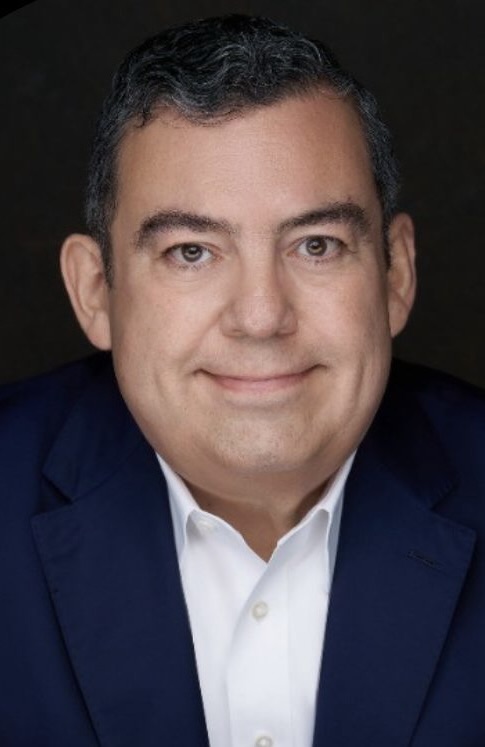
Jorge Torres, a trade and customs consultant, warned Monday that last week’s ruling was not an end to tariffs, but rather the start of a more complicated trade negotiation.
“The tariff story is not over. On the contrary, it brings another layer of uncertainty because they are probably not going to sit idly by,” the president of Interlink Trade Services said about the Trump administration.
And sit, it did not.
On Tuesday, the U.S. rolled out another tariff under Section 122 of the Trade Act, which allows the president to impose a duty of up to 15% for 150 days without congressional approval.
Who pays — and who doesn’t
Despite the shift in legal authority, products that qualify under USMCA rules of origin were exempt under the prior tariff structure and remain exempt under Section 122.
For Mexico and Canada, the exemption status did not materially change.
“If it is a USMCA product… it will not pay the Section 122 tariff, which puts it in a more favorable position than other countries,” Torres said about Mexico and its qualifying imports.
For Valley brokers and trade compliance teams, documentation and certification remain critical, Torres said.
“Companies should conduct the necessary analyses so their products qualify for preferential treatment… and continuously monitor developments,” he said.
Same rate — for now
The new tariff can go as high as 15%, but that hasn’t happened.
“The president threatened through social media that he was going to increase it to 15%, which is the maximum under Section 122, but that has not happened yet,” Torres said. “There are possibilities that it could increase, but there still isn’t (any action).”
Torres said any increase to 15% would require a new executive order.
For now, the number remains 10%.
Ticking clock
Unlike the emergency authority used before, Section 122 comes with a built-in expiration date.
It lasts 150 days.
After that, extending it would require congressional approval.
Instead of an open-ended emergency tariff, businesses are now operating under a defined window — one that can be used as leverage during trade negotiations, including the upcoming review of the United States-Mexico-Canada Agreement.
That review is scheduled for July 1, 2026 — just 126 days away.
Leverage at play
Torres said the administration is using tariffs as a negotiating tool ahead of the USMCA review.
“He is saying, ‘Do this and this. And if you do and I am satisfied, I will be more lenient on the issue and would not impose additional tariffs,’” Torres said about President Trump.
During his State of the Union address Tuesday night, President Donald J. Trump said as much.
He described the Supreme Court’s decision as a “very unfortunate ruling” and reiterated that tariffs could serve as leverage in future negotiations.
“It could be far worse for them…” Trump said about negotiating new trade deals with other countries.
He also suggested tariffs could reshape federal revenue policy, saying they could “replace the modern-day system of income tax.”
Pressure point
That leverage can also force Mexico’s hand on security issues.
“The actions the Mexican government takes regarding drug trafficking… could affect the continuity of the USMCA,” he said.
On Sunday, Mexican authorities killed Nemesio Rubén “El Mencho” Oseguera Cervantes, the leader of the Jalisco New Generation Cartel.
The operation comes amid ongoing U.S. pressure on Mexico to intensify enforcement against drug trafficking organizations ahead of the scheduled review of the USMCA.
The cartel leader’s death led to violence and highway blockades across several Mexican states, including Tamaulipas.
Refunds
One major question remains unanswered: what happens to duties paid under the previous tariff authority?
“There is nothing official about how a reimbursement process would proceed,” Torres said. “We are waiting.”
There is no formal refund process yet.
On Tuesday, FedEx became the latest company to sue the U.S. government for reimbursement of tariffs it paid.
RGV Business Journal Managing Editor Naxiely Lopez-Puente contributed to this report.
Correction: This story has been updated to clarify that USMCA-qualifying goods were exempt under both the previous tariff authority and Section 122.

Anayancy Ulloa
Reporter
Most Read
- How much water does SpaceX need to operate near Brownsville? Nearly 20x its current use
- Could apartment-to-condo conversion help make $100K homeownership in the McAllen metro more affordable? One investor says yes.
- SpaceX’s futuristic city of Starbase finalizes massive 7,100-acre annexation. Here’s what we know.
- Cameron County is negotiating a $20M Fluidstack data center donation after Harlingen waffles on the same offer
- Fluidstack breaks ground on $4 billion Cameron County AI data center
Get the latest business news delivered to your inbox every morning for free.
Try 30 Days Free!
Get full access to award-winning journalism covering business, real estate, health care, economic trends, and the people shaping the Rio Grande Valley.
30 Days Free!
$9.95/month
Limited time offer
Subscription renews after your 30 day free trial at $9.95/mo.
Included Benefits
- Unlimited access to all articles
- Daily business news and analysis
- Subscriber-only content and features
Stories That Matter
- What we know about Zoho Corporation and what could be built at its 1,000-acre campus
- SpaceX bought some water rights from the Rio Grande River. Here’s what we know.
- Foreign-Trade Zone No. 12 expands into Willacy County
- Mission’s first Small Business Expo puts $25K on the line for local entrepreneurs
- Reynosa’s newest technical high school focuses on AI, semiconductors and bionics
- McCoy’s gives $10K, tools to launch Mid-Valley construction academy
- UT Health RGV performs new digestive procedure for first time in the Valley
- TSTC bets on advanced manufacturing to meet RGV’s industrial boom
- Pharr’s cross-border business push earns international recognition
- Brownsville eases drought restrictions after nearly three years as Rio Grande reservoir levels improve