Part 2 series intro: The face of northern Tamaulipas’ rural crisis isn’t found in statistics — it’s found in the farmers who have spent decades keeping the region’s fields alive.
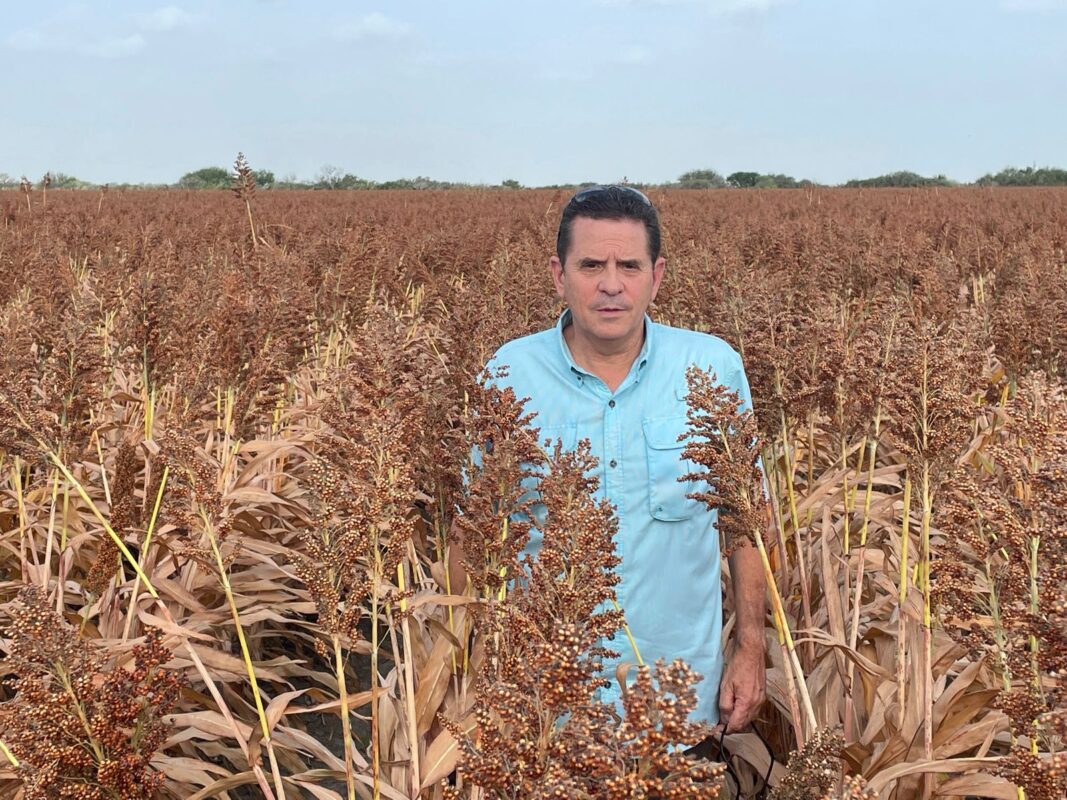
One of them is Rogelio García Moreno, a fourth-generation producer who has worked the land for 41 seasons and now fears the countryside is nearing a breaking point.
His struggle comes at a moment when others in the region are taking their frustrations to the streets.
Over the past week, Mexican farmers and transport drivers have launched blockades near Reynosa, Nuevo Progreso, and San Fernando, disrupting highways that link directly to international bridges used daily by Rio Grande Valley travelers and freight.
Read Part 1 of the RGV Business Journal’s series
Courtesy of | Rogelio García Moreno
REYNOSA — After 41 years in the fields of northern Tamaulipas, Mexico, Rogelio García Moreno says he has never seen the countryside in worse condition.
The fourth-generation farmer, who has weathered droughts, price swings, and decades of policy changes, now describes a crisis unlike any in his lifetime — one he believes is pushing rural communities to the edge.
García shared his story with the Rio Grande Valley Business Journal days before farmers and transport drivers assembled multiple blockades across key trade routes in northern Mexico.
García is not participating in those protests, but the pressures fueling the demonstrations mirror the challenges he confronts daily on his land.
Read Part 1 of the RGV Business Journal’s series on the sorghum crisis in northern Mexico
A life rooted in the land
García does not speak from an office or a policy desk — he speaks from the soil, from his fields, from the dust and sun of northern Tamaulipas.
His family has lived from farming for generations. His great-grandparents migrated to this region in the 1930s and ’40s in search of fertile land. Since then, his family has never stopped planting.
This year marks his 41st planting season.
He began at age 22 — just seven days after graduating from university. He proudly recalls that farming paid for the education of his six siblings. But now, at 64, he says that for the first time, he feels the countryside is on the verge of collapse.
The worst crisis in four decades
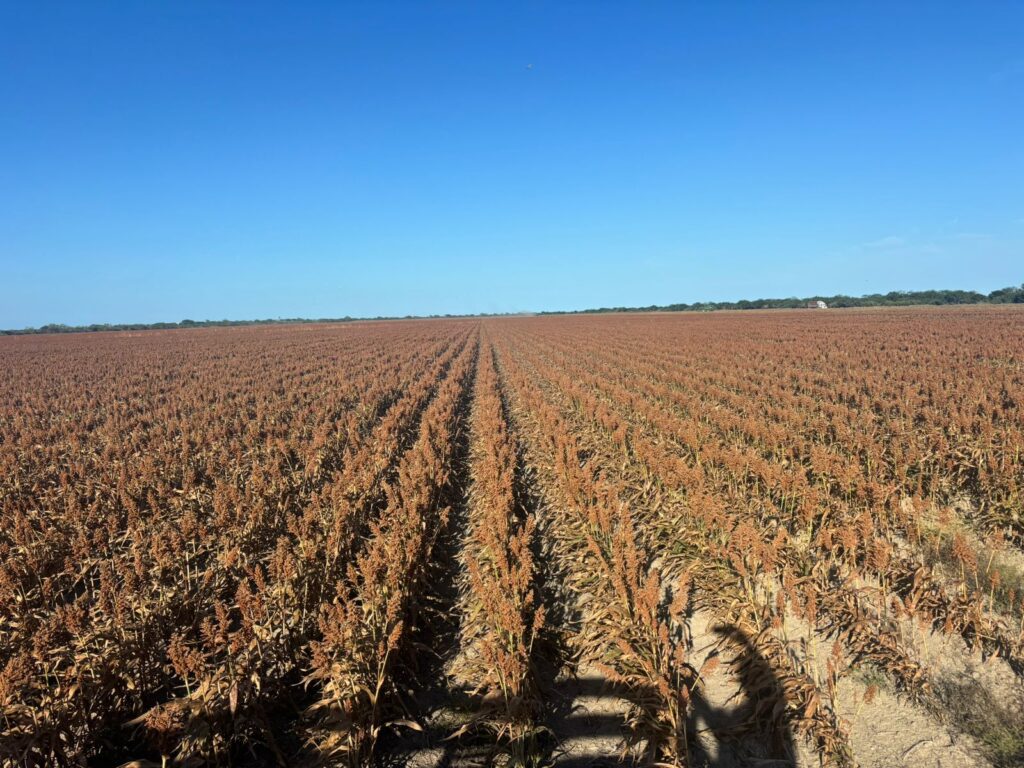
Production costs have skyrocketed. Fertilizers, agrochemicals, and fuel have increased between 45% and 50% in just five years.
Courtesy of | Rogelio García Moreno
Meanwhile, sorghum — the region’s main crop — has dropped sharply in price.
Since 2021, sorghum prices have fallen by about 44%.
In the last four years, they went from about $305 per ton to roughly $186, a decline from 6,200 pesos to about 3,400 pesos.
“Today they pay us the same as 10 or 15 years ago, but everything costs twice as much,” García said. “And it’s not even easy to sell, because we’re competing against American sorghum that arrives cheaper and with better logistics.”
Competing with a giant: the U.S.
Rogelio is blunt: “They make us fight a giant — but with our hands tied and our eyes covered.”
U.S. sorghum and corn arrive in Mexico with subsidies, cheap credit, and crop insurance.
And the competitive imbalance doesn’t stop there.
Mexico produces up to 27 million tons of corn per year, while the U.S. produces over 430 million. That’s nearly 15 times as much.
That scale also shapes who controls the price.
Mexico’s grain market is linked to prices on the Chicago Board of Trade, the benchmark for global grain trading. Because of that tie, Mexican farmers must sell sorghum at U.S. market prices, even when their production costs are higher, leaving them unable to negotiate fair local prices.
And to make matters worse, diesel in Mexico costs almost twice as much as in Texas.
The other silent crisis
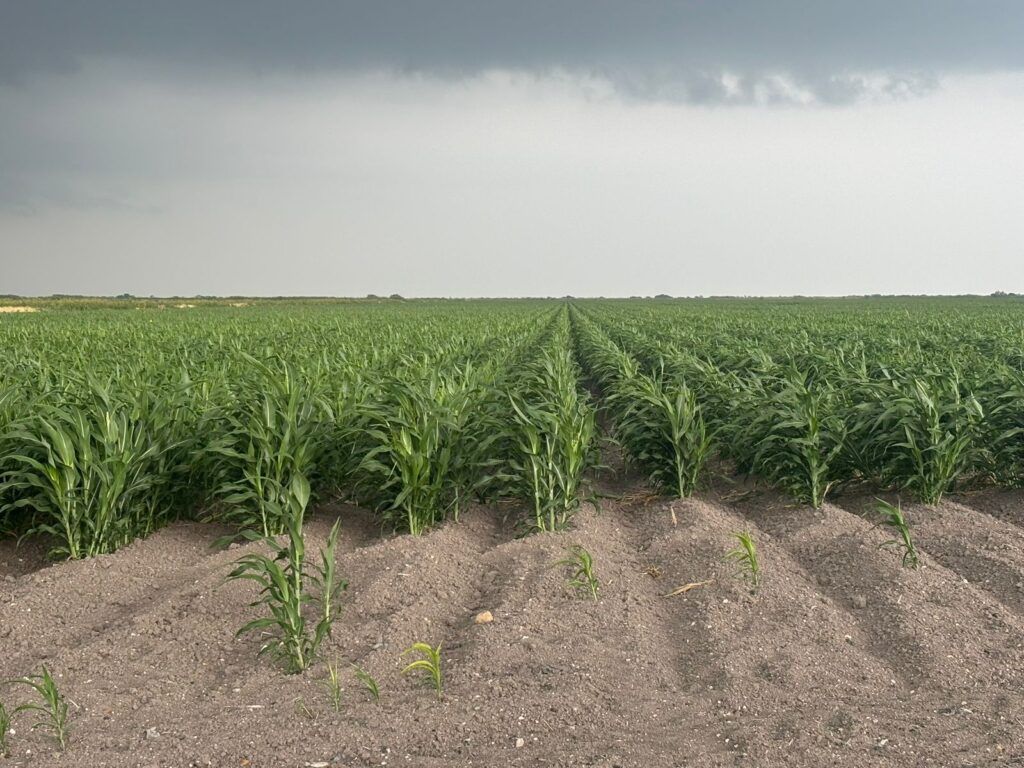
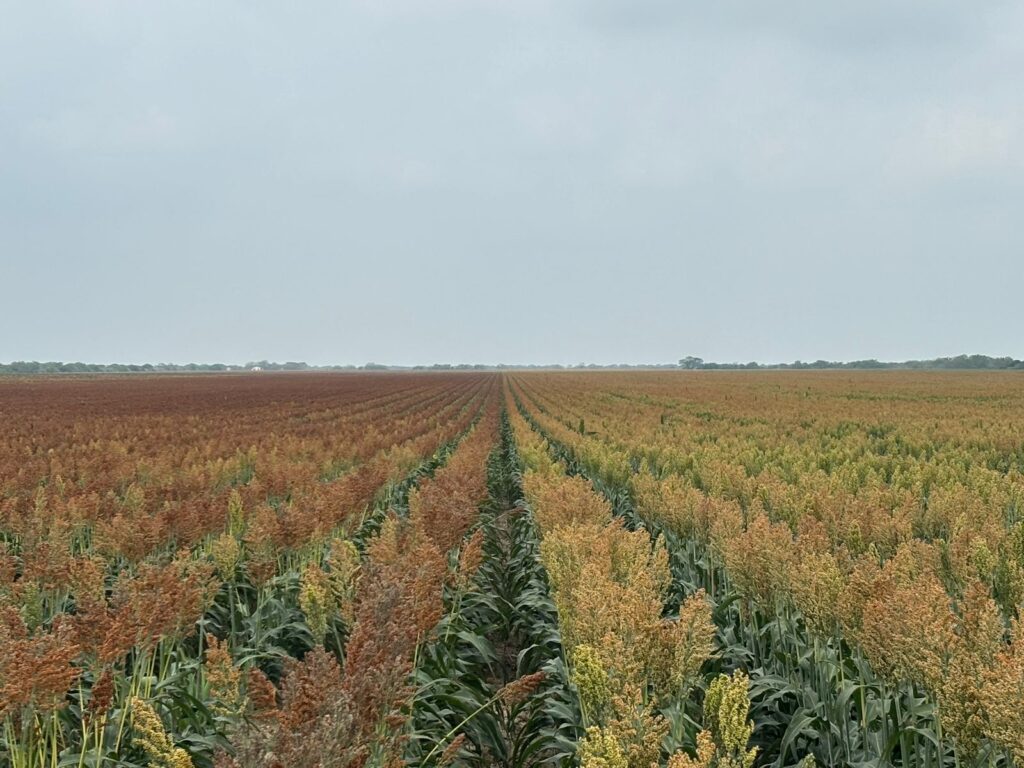
Water scarcity is now as critical as market prices.
Courtesy of | Rogelio García Moreno
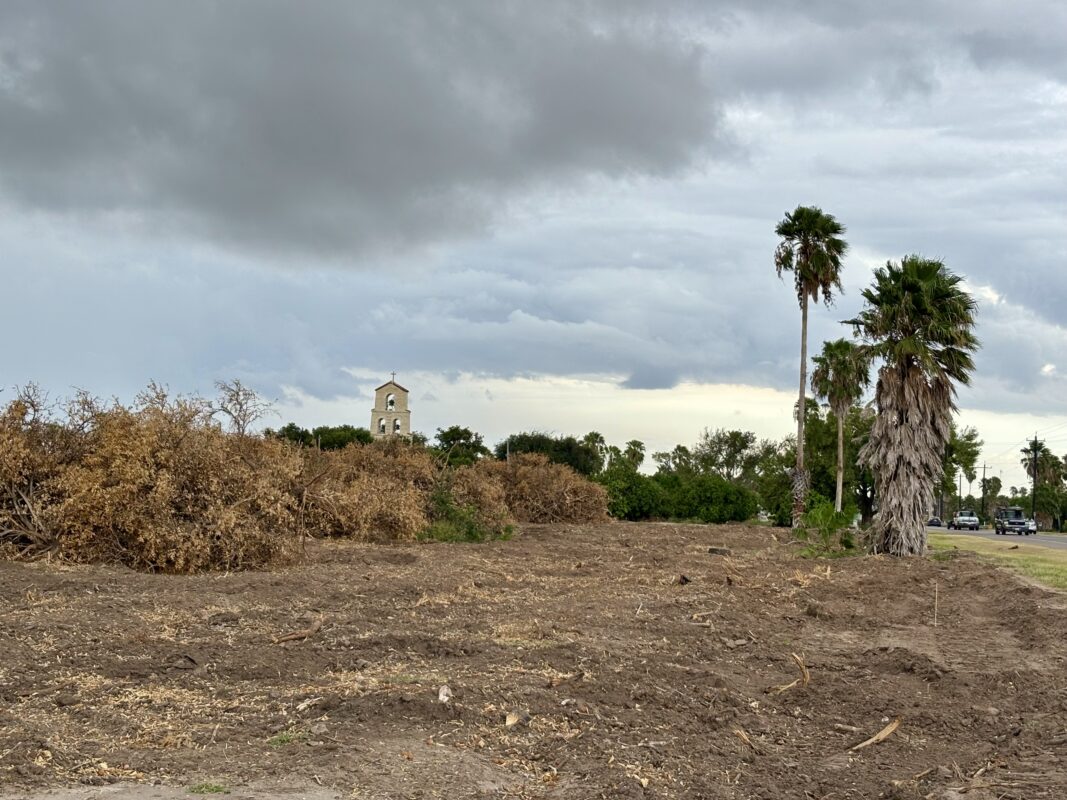
Upstream in Chihuahua, authorities are holding back flows from the Río Bravo basin, even as Mexico owes water deliveries to the U.S. under the 1944 U.S.–Mexico Water Treaty.
But reservoir levels are critically low, and irrigation is restricted.
Without water, there is no sorghum — no corn, no beans, no livestock.
“The water exists, but the treaty isn’t being enforced,” García said. “There’s no authority making sure the law is followed.”
An aging countryside
The economic crisis is also causing a generational collapse.
“Four decades ago, many young people were entering agriculture,” García said. “Today, there are almost none. Land is being rented out, sold, or simply left idle.”
Young people are leaving aging rural towns, and many are migrating to other cities or the U.S.
Farmers over the age of 60 are the ones keeping the fields alive.
“Who will be here in 15 years?” the fourth-generation farmer asked himself. “I’m 64, I feel strong, but I don’t see young people wanting to stay.”
A rural economy shutting down
The crisis is not only affecting farmers, but the entire local economy.
“Ask the taco vendor, the mechanic, the tire repair guy — they’ll all tell you: farmers have no money,” García said.

Courtesy of | Rogelio García Moreno
Sales at supply stores, workshops, and fuel stations have plummeted. Money no longer circulates in rural communities.
Rental rates have collapsed to the point where some landowners no longer expect profit — they simply want the land kept clean.
Decades ago, a farmer could buy a tractor with 300 tons of sorghum. Today, they need 1,800–2,000 tons.
Banks no longer lend to farmers.
“They’ll finance a house or a car… but if you say you’re a farmer, they tell you: ‘goodbye, my friend,’” García said.
What the countryside needs
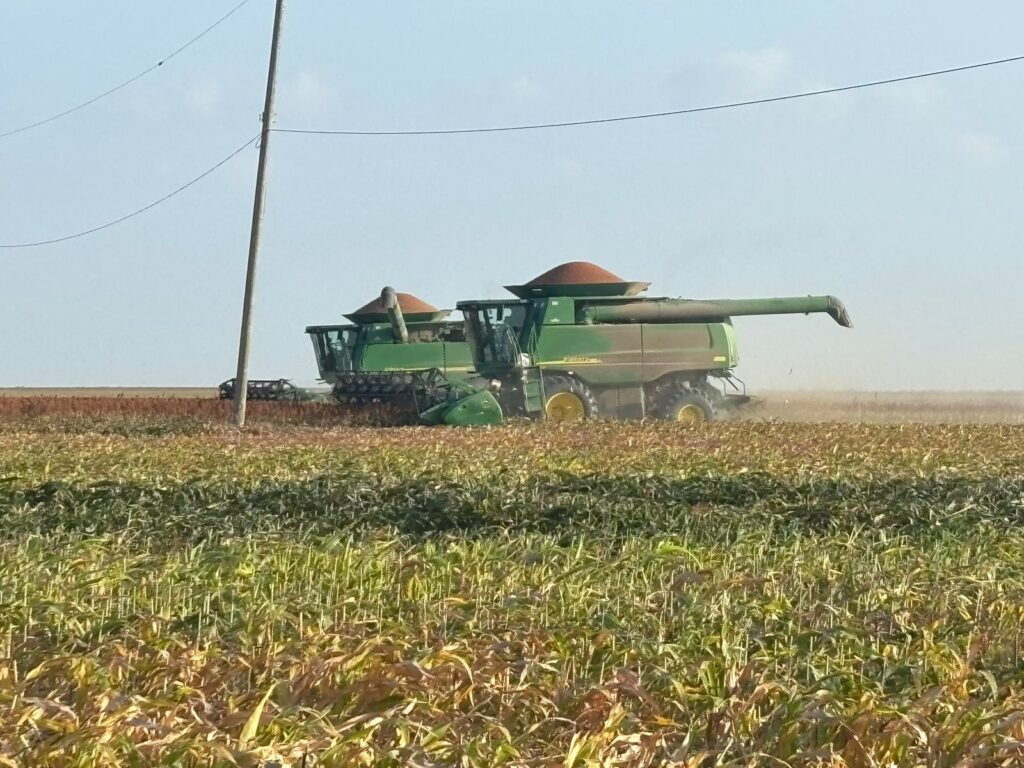
Rogelio isn’t asking for handouts — he’s asking for strategy.
He wants regionalized public policies instead of one-size-fits-all programs, along with access to credit, water, infrastructure, and fair pricing mechanisms.
Courtesy of | Rogelio García Moreno
At the core, he says, is recognizing the industry’s impact on society.
“We talk about food sovereignty… but without farmers, who will guarantee it?”García asked.
Still, despite everything, he refuses to give up.
“I don’t know how to do anything else. I wake up every day hoping the government will finally say: You’re right — we must help farmers,” he said.
He hopes conditions eventually improve — that water returns, prices strengthen, and younger people stay in the countryside.
Still, the challenges he describes and his hope for the future are not his alone.
García’s situation reflects that of many farmers in northern Tamaulipas who keep planting despite drying fields, thin margins, and an uncertain outlook.

Anayancy Ulloa
Reporter
Most Read
- SpaceX is giving Brownsville $220M for water projects. In exchange, the city gave up zoning control of 444 acres near Starbase
- SpaceX seeks to take zoning control over nearly 450 acres from city of Brownsville as a ‘regional’ water deal takes shape
- Port of Brownsville could soon host Nodule City, a first-of-its-kind commercial deep-sea mining hub
- Cameron County is negotiating a $20M Fluidstack data center donation after Harlingen waffles on the same offer
- How much water does SpaceX need to operate near Brownsville? Nearly 20x its current use
Get the latest business news delivered to your inbox every morning for free.
Try 30 Days Free!
Get full access to award-winning journalism covering business, real estate, health care, economic trends, and the people shaping the Rio Grande Valley.
30 Days Free!
$9.95/month
Limited time offer
Subscription renews after your 30 day free trial at $9.95/mo.
Included Benefits
- Unlimited access to all articles
- Daily business news and analysis
- Subscriber-only content and features
Stories That Matter
- McAllen’s $204M water investment expects to seek construction bids in 2027
- Saronic lands Navy landing craft contract, first build at Brownsville’s Port Alpha
- The Rio Grande Valley’s tech industry is small but growing — meet some of the next-gen workforce
- Entrepreneurs enter Mission EDC’s ‘Shark Tank’ competition for $25K top prize
- Mission’s first Small Business Expo puts $25K on the line for local entrepreneurs
- Reynosa’s newest technical high school focuses on AI, semiconductors and bionics
- McCoy’s gives $10K, tools to launch Mid-Valley construction academy
- UT Health RGV performs new digestive procedure for first time in the Valley
- TSTC bets on advanced manufacturing to meet RGV’s industrial boom
- SpaceX reschedules Starship’s first flight around the Earth