The Mexican government raised import tariffs on hundreds of products at the start of the year, making it more expensive and more complicated for companies operating in Mexico to import parts and ship out finished goods.

Domínguez García
Those changes are already affecting costs, paperwork, and day-to-day operations for export manufacturers and maquiladoras, many of which are located just across the border in Reynosa and Matamoros.
Those changes also affect the Rio Grande Valley, where many businesses are tied into the same cross-border supply chains through logistics, warehousing, transportation, and supplier relationships.
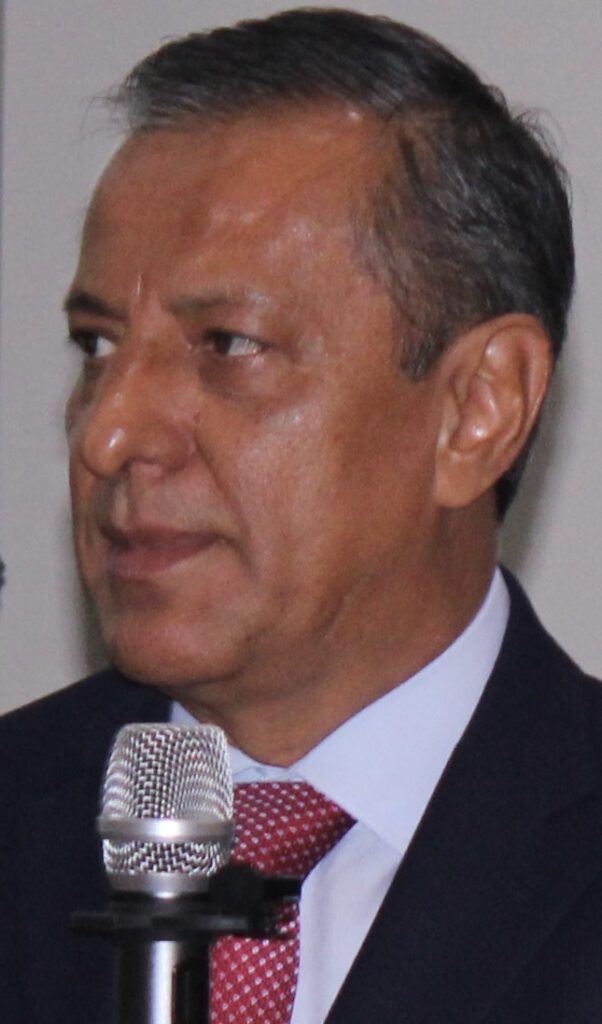
“It is a very drastic change, because in a matter of weeks it will impact the cost of all our merchandise,” said Salvador Eugenio Domínguez García, regional manager of foreign trade for Latin America at Copeland Corporate de México.
The global company manufactures heating, cooling, and refrigeration components in Reynosa.
Mexico’s tariff changes take effect
The new tariffs, which took effect Jan. 1, apply mainly to imported goods from countries that do not have a free trade agreement with Mexico, including China, India, Vietnam, and other Asian countries.
The tariffs affect 1,463 classifications across 17 sectors, including textiles and apparel, automotive and auto parts, steel and metalworking, electronics, household appliances, plastics, chemicals, furniture, and other consumer goods, according to Mexico’s Ministry of Economy.
Lorenzo Bermea, a manager at Mexican customs brokerage firm Almanza Villarreal Agencia Aduanal S.C., said the Mexican government is trying to protect jobs, generate additional tax revenue, encourage companies to use more domestically produced inputs, and reduce Mexico’s trade imbalance, particularly with Asia.
What is exempt from the new tariffs
Not all imports are affected by the higher Mexican tariffs.
Bermea said goods that qualify under the U.S.–Mexico–Canada Agreement (USMCA), certain materials used by maquiladora operations under the IMMEX program, packaging used for transportation, and scrap or waste materials are among the exemptions.
He also noted that Mexico has kept in place mechanisms that allow some companies to apply for reduced tariff rates under specific programs, depending on how and where the goods are used.
Higher costs and tighter enforcement
For manufacturers, the tariff increases are paired with stricter enforcement of Mexican customs rules.
Domínguez said companies are required to pay the correct import taxes and comply fully with the new requirements, warning that mistakes can lead to serious penalties.
“In the just over twenty years of experience I have, 2024 and 2025 have been the most challenging in the field of foreign trade,” he said, citing rising tariffs, additional measures in the United States, and tighter oversight by Mexican authorities.
He added that the growing complexity is also influencing investment decisions, as companies weigh country risk and the ease of doing business.
More paperwork for importers
Beyond tariffs, manufacturers are also facing more detailed documentation requirements from Mexican customs authorities.

David Marín Flores, import-export manager at Hitachi Energy Productos de México S.A. de C.V., said companies are now required to provide far more information about the products they import.
“They demand more information from us, in this case technical; if you import a chair, they ask for the technical specifications,” Marín said.
He also pointed to a new electronic value declaration system that is currently in a testing and extension period and is scheduled to become mandatory April 1. The system will require importers to submit detailed digital reports explaining how their goods are valued, giving Mexican authorities greater visibility into trade transactions.
How maquiladoras are responding
From the maquiladora sector, Marisol Gómez, a member of the foreign trade committee of INDEX Reynosa, said uncertainty remains part of the operating environment.

“The United States is somewhat volatile with its policy; one day there may be a favorable statement and the next day one that is not,” Gómez said, adding that free trade agreements still provide some level of protection.
She said the new Mexican tariffs are not aimed at one specific country but apply broadly to goods without trade agreements, and are more likely to affect consumer goods than maquiladora operations.
As a response, Gómez said companies are focusing on proving that their products qualify under free trade agreements, looking for suppliers within treaty countries, and preparing permits and documentation earlier to avoid delays.
Industry representatives say the changes mark a tougher operating environment for export manufacturers in Mexico — one defined by higher costs, stricter oversight, and less room for error as companies adjust to Mexico’s new trade rules in 2026.

Anayancy Ulloa
Reporter
Most Read
- SpaceX’s futuristic city of Starbase finalizes massive 7,100-acre annexation. Here’s what we know.
- SpaceX reschedules Starship’s first flight around the Earth
- How much water does SpaceX need to operate near Brownsville? Nearly 20x its current use
- Could apartment-to-condo conversion help make $100K homeownership in the McAllen metro more affordable? One investor says yes.
- Crunch Fitness is expanding and struggling in the Valley. Here’s why
Get the latest business news delivered to your inbox every morning for free.
Try 30 Days Free!
Get full access to award-winning journalism covering business, real estate, health care, economic trends, and the people shaping the Rio Grande Valley.
30 Days Free!
$9.95/month
Limited time offer
Subscription renews after your 30 day free trial at $9.95/mo.
Included Benefits
- Unlimited access to all articles
- Daily business news and analysis
- Subscriber-only content and features
Stories That Matter
- Mission’s first Small Business Expo puts $25K on the line for local entrepreneurs
- Reynosa’s newest technical high school focuses on AI, semiconductors and bionics
- McCoy’s gives $10K, tools to launch Mid-Valley construction academy
- UT Health RGV performs new digestive procedure for first time in the Valley
- Starbase leaders approved a 45-year land deal with SpaceX for 166 acres, but what will be built there remains a mystery
- TSTC bets on advanced manufacturing to meet RGV’s industrial boom
- Pharr’s cross-border business push earns international recognition
- Pharr doubles bridge capacity as data centers and produce drive new trade demand
- Brownsville eases drought restrictions after nearly three years as Rio Grande reservoir levels improve
- Two Valley businesses turned mangonadas into a school-friendly popsicle. Now they want to take it nationwide