By José Luis Martínez
Property values across the Rio Grande Valley have grown by billions of dollars since 2020, dramatically increasing how much land, homes, businesses, and industrial sites are worth on paper.
That growth, however, has not been evenly shared.
Changes in property values varied widely by county and by type of property, reflecting where development and investment have been strongest.
County appraisal data reviewed by the Rio Grande Valley Business Journal show that while home values rose across every county, commercial, industrial, and agricultural properties followed very different paths, shaped by population growth, development patterns, and local economic activity.
These shifts come as the Valley continues to add people, jobs, and trade activity in the years since the pandemic. Businesses are still adjusting to supply-chain changes, while trade uncertainty and water disputes between the U.S. and Mexico remain part of the region’s broader economic landscape.
How property values are measured
To track these changes, the Rio Grande Valley Business Journal reviewed annual county appraisal reports from Hidalgo, Cameron, Starr, and Willacy counties covering homes, businesses, industrial sites, and land.
Licensed appraisers set these values each year based on a property’s location, features, and past sales. The value assigned on Jan. 1 is what determines each owner’s property tax bill.
These appraisals are a once-a-year snapshot and do not reflect month-to-month swings in the housing market.
Research from the National Bureau of Economic Research shows appraisal values can differ from actual market prices and often change in ways that help keep city and county revenues stable.
Even with these limits, appraisal data helps show how the mix of property in each county has changed over time.
Home values rise across every county
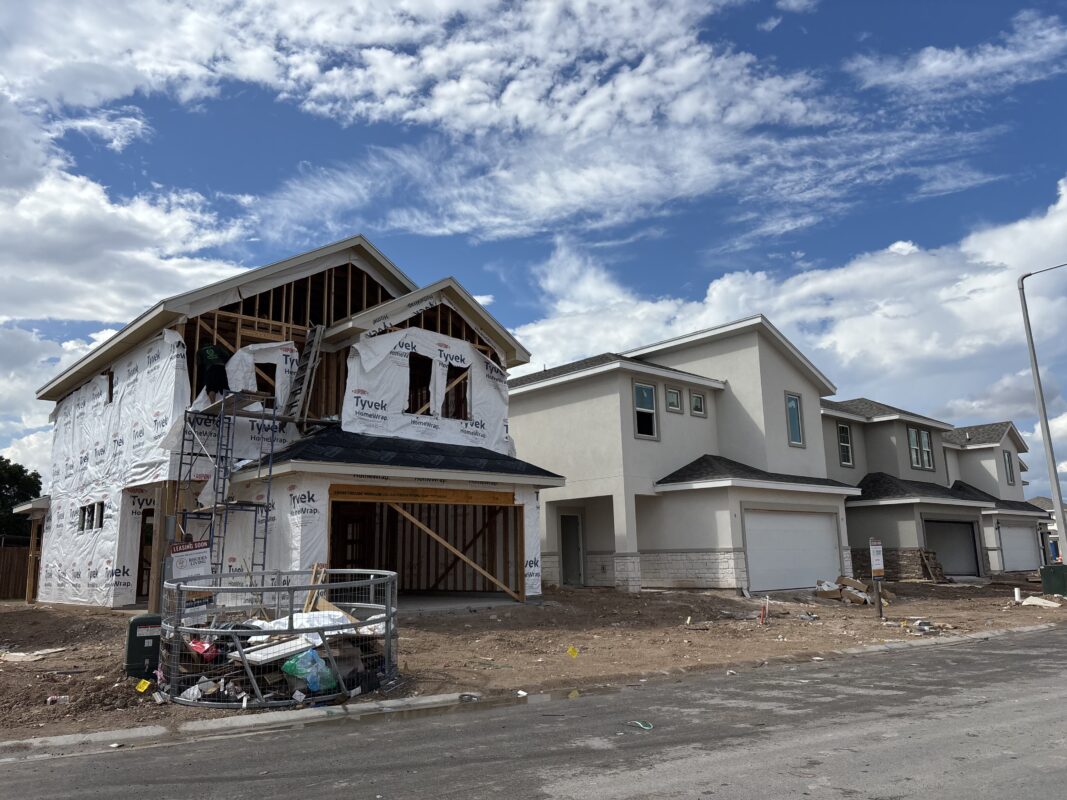
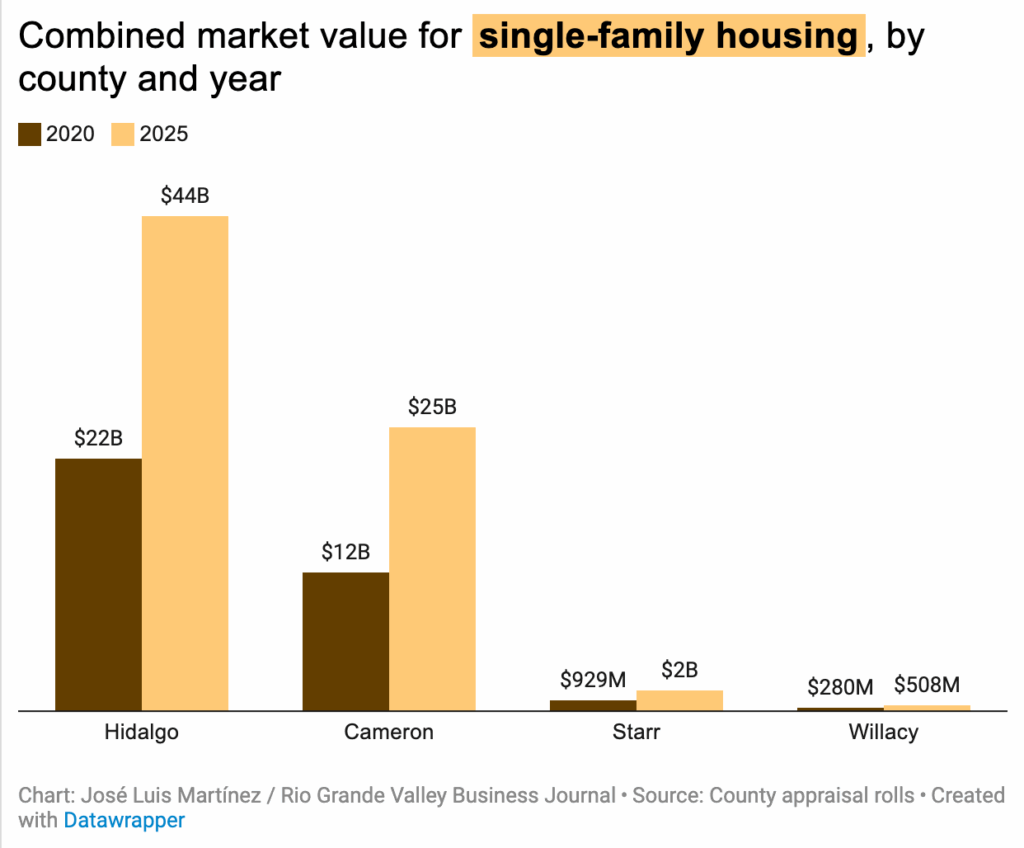
One clear trend is the rise in the value of single-family homes. From 2020 to 2025, every county saw home values increase by at least 80%, with two counties more than doubling.
Hidalgo and Cameron counties each now have tens of billions of dollars in single-family home value, while Starr County surpassed $1 billion in recent years.
In Hidalgo County, about half of all homes are valued between $150,000 and $350,000. Another 43% are valued below $150,000, according to appraisal data.
That matches sales data showing the median home price reached $249,000 by October 2025 — the highest level in more than 10 years, according to the Texas Real Estate Research Center. The data notes that home sales in the Valley last year were higher than in pre-pandemic years, although not at levels seen in the first years after the pandemic.
Affordability falls as prices climb
The early rise in home values followed national trends as low interest rates during the pandemic pushed demand higher.
Now that interest rates are higher, many homeowners are staying put to keep their low mortgage rates, reducing the number of homes for sale as new construction lags.
While homeowners have gained wealth on paper, housing has become less affordable for others.
The Texas Real Estate Research Center measures affordability by comparing local incomes with the cost of buying a typical home.
Those measures show affordability has fallen every year since 2020 in Hidalgo and Cameron counties, especially for first-time buyers.
Apartment and rental properties grow unevenly
As buying becomes harder, more residents turn to renting apartments and condos.
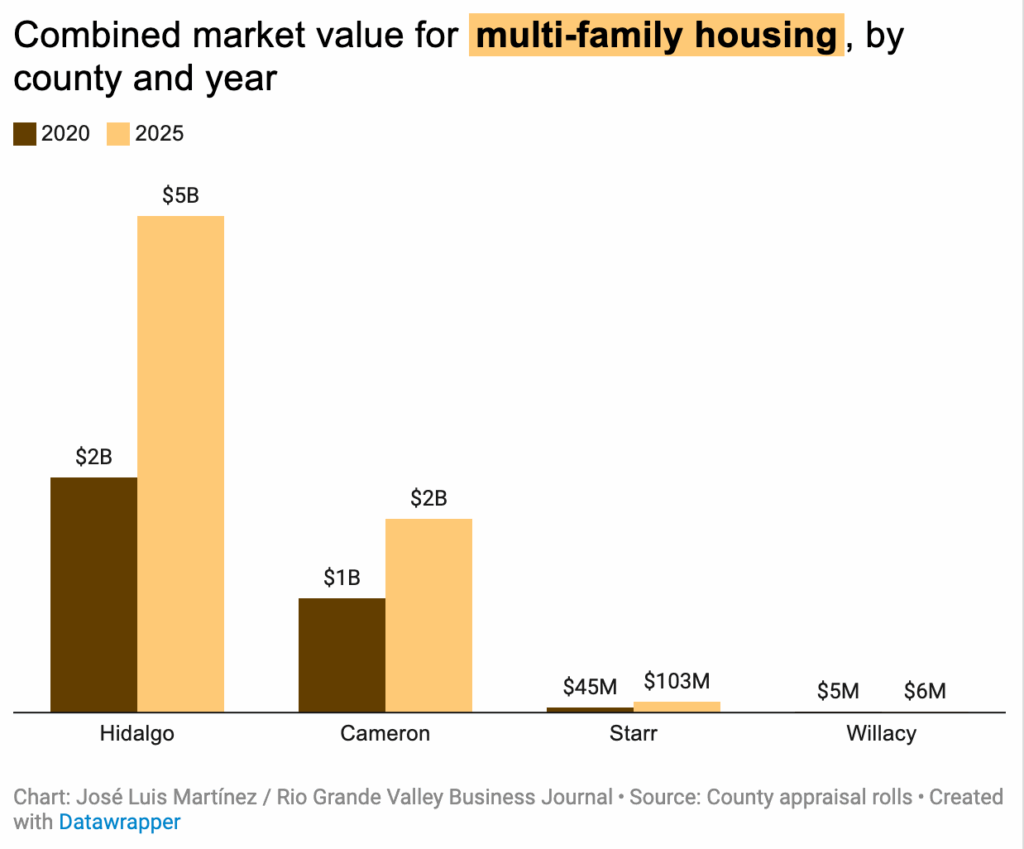
Apartment and condo values rose in every county, though at very different rates.
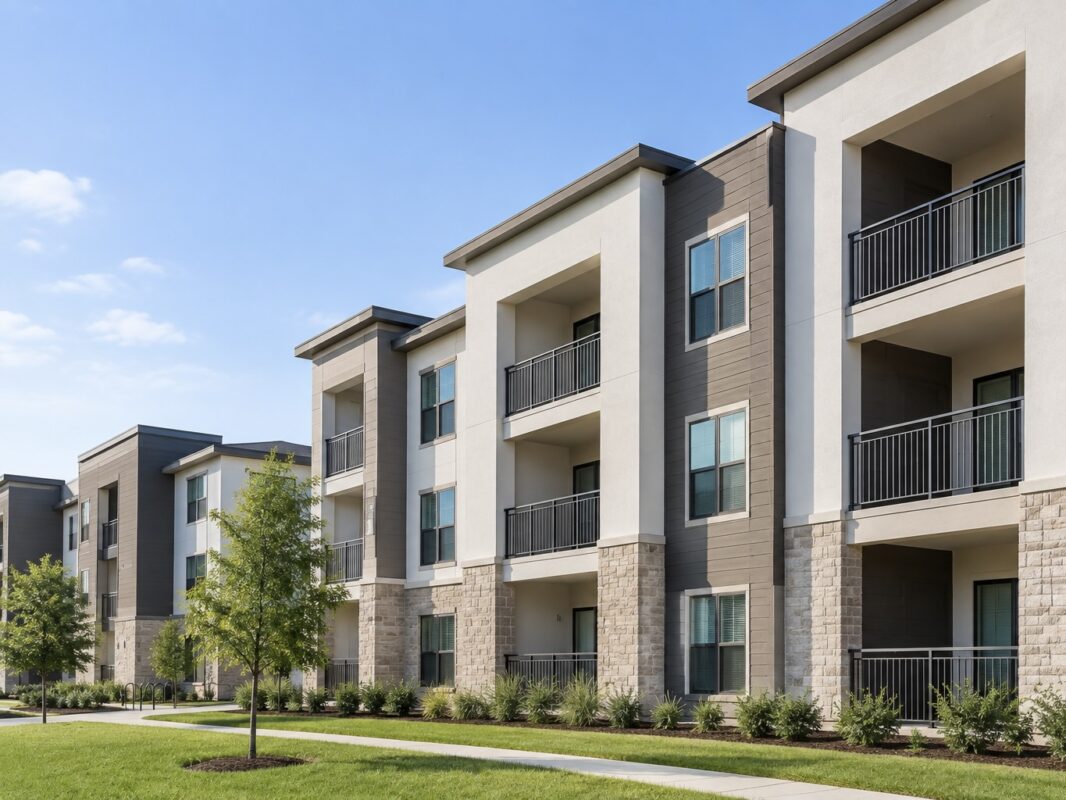
Since 2020, multi-family values have more than doubled in Hidalgo and Starr counties. Cameron County rose about 69%, while Willacy grew 21%.
Commercial property values increase, but vacancies remain
In some areas, more housing has also brought more business activity.
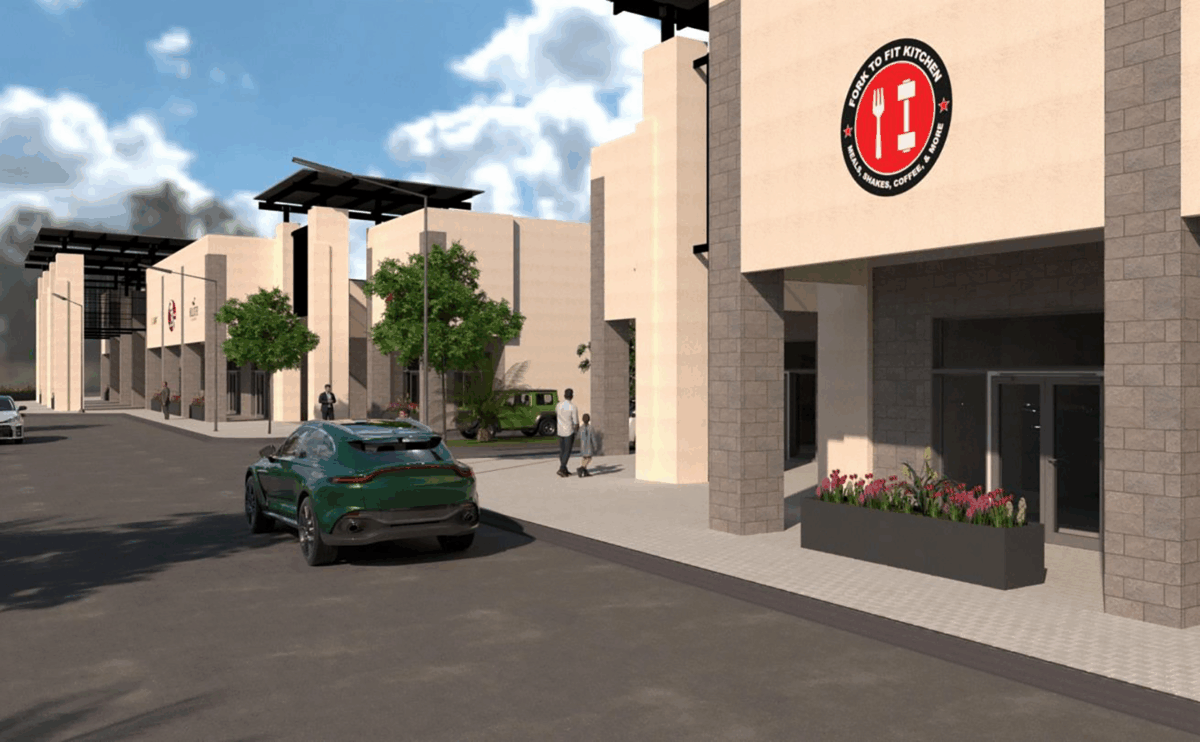
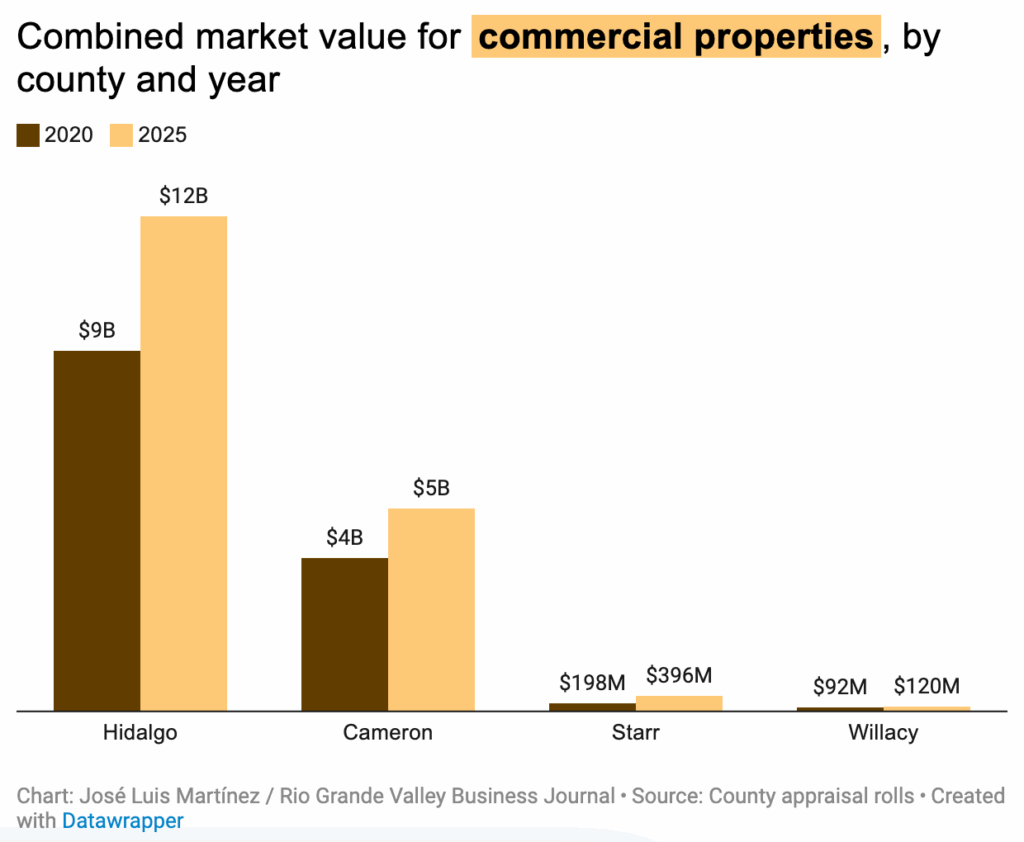
Commercial property values rose between 30% and 40% in three counties, while Starr County’s commercial value doubled.
Starr County’s growth was the fastest, but it started from a much smaller base.
Starr County added about $198 million in commercial value, growing from $197 million to $395 million. Hidalgo County grew more slowly at 37%, but that still meant an additional $3.3 billion because of its much larger business base.
Higher commercial property values do not always mean buildings are being filled.
A Texas A&M researcher found the Valley has been slower than the U.S. and major Texas metro areas to fill vacant commercial space over the past year, even as rents increased.
Rising commercial property values also do not guarantee higher pay for workers.
Federal Reserve Bank of Dallas data show wage growth has slowed in both Brownsville and McAllen. In Brownsville, wages are still rising but more slowly. In McAllen, average earnings have declined. Unemployment in both areas remains above the state average.
Industrial growth splits the Valley
Industrial and manufacturing property values showed the biggest differences by county.
Industrial property values fell in Hidalgo and Starr counties and rose 19% in Willacy. Cameron County saw the largest increase, with values tripling from $285 million in 2020 to more than $1 billion this year.
In Cameron County, that growth is tied to LNG export projects, increased trade through the Port of Brownsville, and expansion in the aerospace industry linked to SpaceX.
Lower operating costs can also attract industrial development.
An analysis published by Site Selection ranked the Brownsville–Harlingen area as having the second-lowest operating costs in the country, with the McAllen–Edinburg–Mission area ranking ninth.
Agricultural land values rise near growing cities
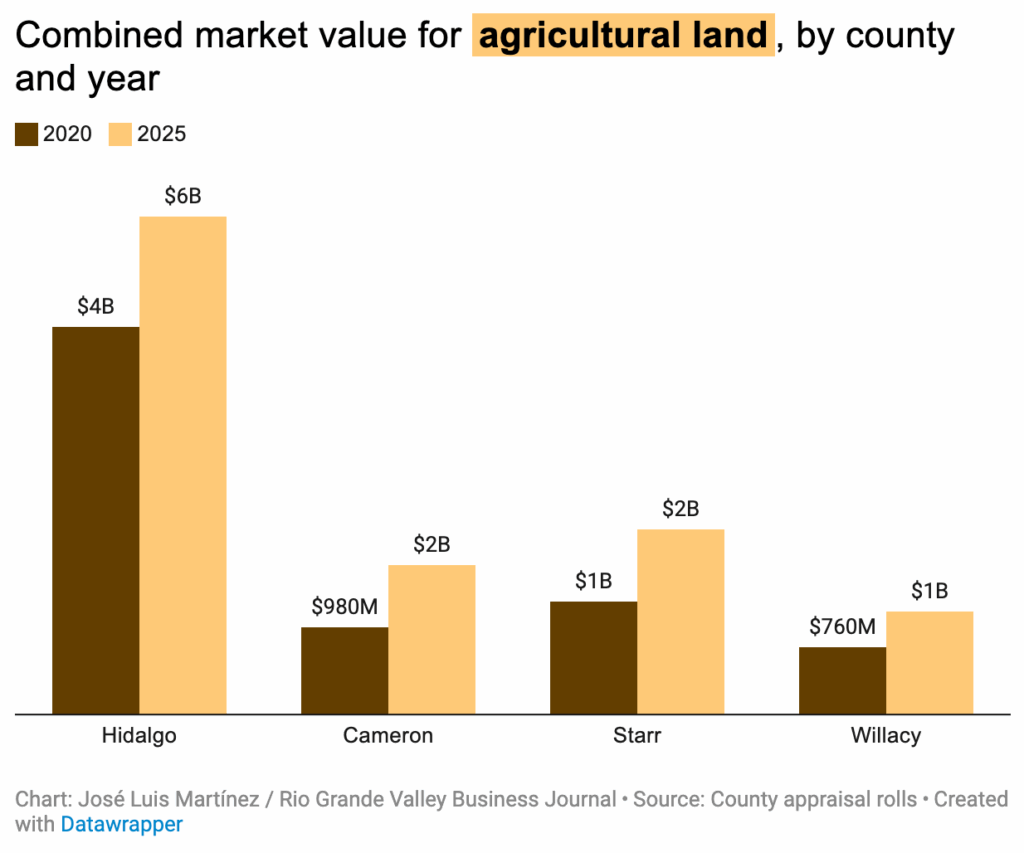
Agricultural land values increased across all counties.
A Texas A&M Natural Resources Institute report found that farmland values tend to rise as nearby urban areas like McAllen and Brownsville expand. Across Texas, land values rose an average of 55% between 2017 and 2022.
What the 2026 appraisal cycle will show
Property values are now being appraised for 2026, providing the next snapshot of how real estate values across the Valley continue to change.
Those new valuations will show whether recent trends in housing, business development, industry, and land use are continuing — or beginning to shift — as higher interest rates, trade uncertainty, and cross-border pressures remain part of the regional economy.
Most Read
- SpaceX is giving Brownsville $220M for water projects. In exchange, the city gave up zoning control of 444 acres near Starbase
- SpaceX seeks to take zoning control over nearly 450 acres from city of Brownsville as a ‘regional’ water deal takes shape
- Port of Brownsville could soon host Nodule City, a first-of-its-kind commercial deep-sea mining hub
- Cameron County is negotiating a $20M Fluidstack data center donation after Harlingen waffles on the same offer
- How much water does SpaceX need to operate near Brownsville? Nearly 20x its current use
Get the latest business news delivered to your inbox every morning for free.
Try 30 Days Free!
Get full access to award-winning journalism covering business, real estate, health care, economic trends, and the people shaping the Rio Grande Valley.
30 Days Free!
$9.95/month
Limited time offer
Subscription renews after your 30 day free trial at $9.95/mo.
Included Benefits
- Unlimited access to all articles
- Daily business news and analysis
- Subscriber-only content and features
Stories That Matter
- McAllen’s $204M water investment expects to seek construction bids in 2027
- Saronic lands Navy landing craft contract, first build at Brownsville’s Port Alpha
- The Rio Grande Valley’s tech industry is small but growing — meet some of the next-gen workforce
- Entrepreneurs enter Mission EDC’s ‘Shark Tank’ competition for $25K top prize
- Mission’s first Small Business Expo puts $25K on the line for local entrepreneurs
- Reynosa’s newest technical high school focuses on AI, semiconductors and bionics
- McCoy’s gives $10K, tools to launch Mid-Valley construction academy
- UT Health RGV performs new digestive procedure for first time in the Valley
- TSTC bets on advanced manufacturing to meet RGV’s industrial boom
- SpaceX reschedules Starship’s first flight around the Earth